HighIII Kinetic Conflicts & Defence6 October 2026, Tuesday
Mali's army and Russia's Africa Corps re-enter Kidal after six months
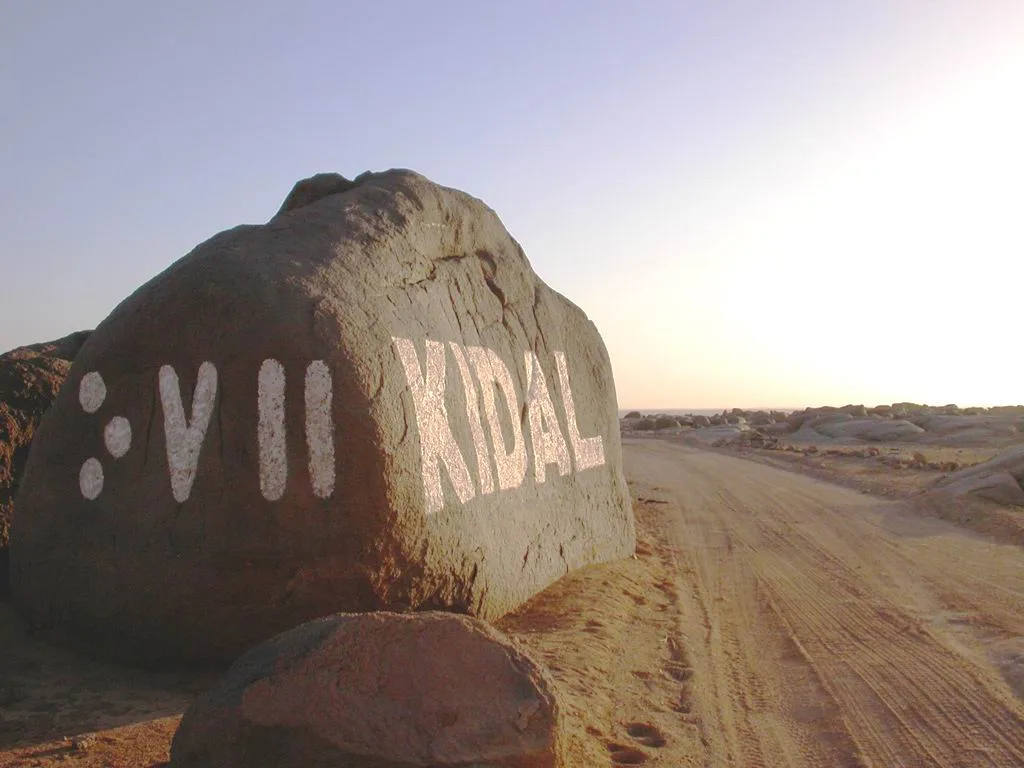
The predominantly Tuareg Azawad Liberation Front (FLA) announced on 6 October a controlled withdrawal from Kidal; Malian troops and Russia's Africa Corps entered the town the same day. The town had been in rebel hands since April.
According to an Africanews report on 6 October drawing on AFP, Mali's general staff said it had conducted a large-scale air and ground operation in the Kidal region with its Russian partners. A staff officer told AFP that troops had reached the town "earlier than planned". The FLA, in its 6 October statement, attributed the withdrawal to Africa Corps' disproportionate air power. It stressed that the pull-back took place without direct combat with the army. Arab News reports that fewer than 100 civilians remained in the town during the operation.
The FLA had seized Kidal in coordinated attacks with the al-Qaeda-linked JNIM in April 2026. According to Africanews, Mali's defence minister was killed in those April attacks, and in July the rebels briefly took the town of Anefis. Al Jazeera notes that the secular nationalist FLA, founded in 2024, has acted alongside JNIM against the junta since April despite their ideological differences. Mali's security crisis began in 2012, and the country went through two military coups in 2020 and 2021.
After 6 October the binding constraint lies not in Kidal but in the south. According to the Wikipedia compilation of the 2026 Mali offensives, JNIM has been setting up blockade points around Bamako since 28 April. In September, more than 100 soldiers were killed in an attack on the military camp at Dioura. The FLA's 6 October statement describes the withdrawal as a temporary measure to preserve manpower and logistical capacity. In that light, the 6 October handover looks less like a lasting shift of control in the north than a repositioning driven by Russian air power.
Talay assessment
Bottom line
Retaking Kidal is a symbolic gain for the junta and for Moscow. But the FLA's withdrawal without a fight shows the war in the north has not ended; it has only changed form. Mali's binding constraint is JNIM's blockade around Bamako, and this operation does nothing to ease it. The most likely path is the FLA reverting to hit-and-run tactics in the countryside and the army growing more dependent on Russian air power.
Likely effects
- Russia's standing in the SahelUncertain1–6 months
After the April retreat, Africa Corps has secured its first visible gain on the ground; Moscow will present it as proof that its security partnerships in Africa work.
- Security in northern MaliNegativeWeeks
With the FLA withdrawing intact and its JNIM partnership in place, the cycle of road ambushes and air strikes continues; holding the town does not mean holding the countryside.
- Humanitarian situationNegativeWeeks
Fewer than 100 civilians remaining in the town shows most of the population has fled; as air operations continue, the risk of displacement and civilian casualties rises.
Possibilities, ranked
- 1Guerrilla phase in the north55%
The FLA disperses into the countryside; the army and Africa Corps hold the town but cannot secure the roads leading to Kidal.
Watch: Reports of convoy ambushes and drone strikes on roads in the Kidal region
- 2Army advances north30%
The army enters other towns in the Kidal region and the FLA's supply lines tighten.
Watch: Statements from Mali's general staff on entering new settlements in the region
- 3FLA–JNIM counter-offensive15%
The two groups launch another coordinated assault on Kidal or another urban centre.
Watch: The FLA or JNIM claiming an attack on a town in the north
Probabilities are calibrated judgement based on the sources, not measurement, and are revised as new information arrives. Not investment advice.
Market reaction
Indicators affected
- Civilians left in Kidal▼ <100
- FLA's hold on the town▼ ≈6 months