I Geo-Economics & Chokepoints·Analysis·Türkiye and Its Neighbourhood
Political sovereignty came in a day, economic sovereignty took thirty-one years
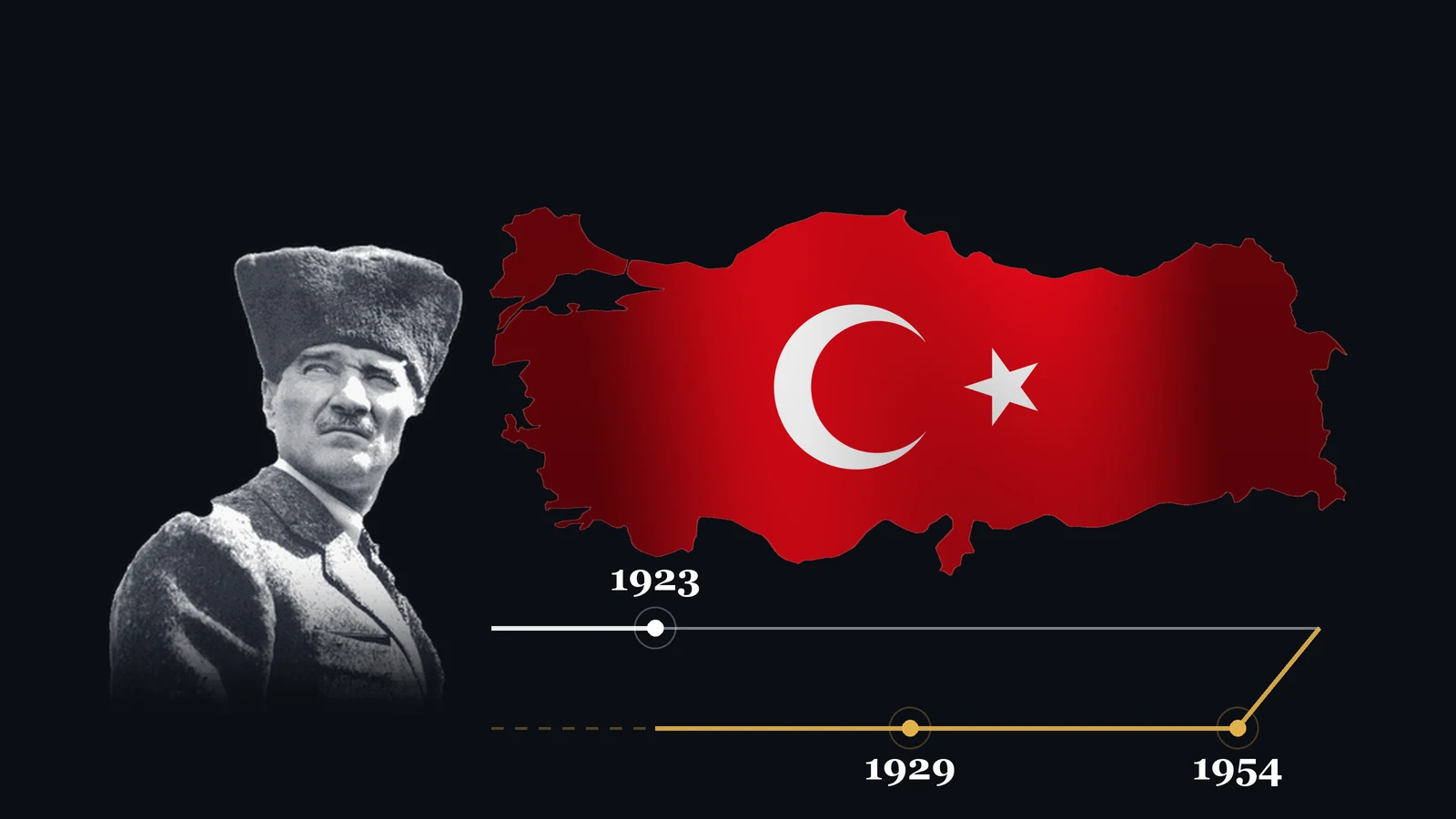
The Treaty of Lausanne abolished the Capitulations without exception and the Republic was declared on 29 October 1923. Yet tariff autonomy waited until 1929, and the last instalment of the Ottoman public debt until 25 May 1954. Thirty-one years separate the two calendars.
Türkiye & Neighbourhood Desk · 29 October 2026 · 9 min read · 13 sources
Why it matters
The noise compresses the founding into one date. The signal sits in two clocks running inside the same treaty. Article 28 of Lausanne abolished the Capitulations outright, while the commercial regime froze tariff-setting for five years, counted from entry into force on 6 August 1924. Tariff autonomy arrived on 1 October 1929; the final debt instalment was paid on 25 May 1954. Sovereignty is established by proclamation and completed by the capacity to pay.
Implications
- Article 28 of Lausanne abolished the Capitulations fully and in every respect. The treaty was signed on 24 July 1923, ratified by the Grand National Assembly on 23 August 1923 under law no. 340, and entered into force on 6 August 1924.
- The same treaty's commercial regime bound Turkish customs duties for five years. The convention lapsed in August 1929 and Türkiye's own tariff took effect on 1 October 1929, at a general duty level above the schedule it replaced.
- Türkiye's share of the Ottoman public debt was fixed at 107.5 million gold Ottoman lira under the 1928 Paris agreement. It was restructured in 1933 and settled with a final instalment on 25 May 1954.
Noise
Independence was completed on 29 October 1923.
Signal
The Capitulations were abolished in one stroke and without exception.
One treaty, two clocks
The Treaty of Lausanne was signed on 24 July 1923, and its Article 28 abolished the Capitulations in every respect and without exception. The judicial and fiscal privileges held by foreigners ended in law at that moment. This part of the text closes in a single sentence on a single date, and it is the part the founding narrative carries.
The commercial regime of the same treaty set a second clock running. The right to set customs tariffs freely was frozen for five years, and those five years ran not from the day of signature but from entry into force on 6 August 1924. A US State Department exchange dated 25 July 1928 records that the regime would expire at the end of August 1929. Tariff sovereignty therefore began five years after 1923, not with it.
Debt was the third item. The obligations of the Ottoman state were not cancelled but apportioned. The agreement reached in Paris on 13 June 1928 assigned 107.5 million of a 161.3 million gold Ottoman lira total to Türkiye. A newly founded state thus inherited a debt it had not contracted.
What the intervening six years bought
The gap between 1923 and 1929 was not idle. With the tariff instrument out of reach, Ankara worked with the tools it did hold. The İzmir Economic Congress convened on 17 February 1923, five months before Lausanne was signed, and drew 1,135 delegates. Debating an economic programme while political sovereignty was still unsettled shows the sequencing was deliberate.
The measures that followed produced protection without touching duties. The Cabotage Law, no. 815, was adopted on 19 April 1926 and took effect on 1 July 1926, reserving carriage in Turkish waters for the Turkish flag. The Law for the Encouragement of Industry, no. 1055, was enacted on 28 May 1927 with a fifteen-year term. İş Bankası was founded on 26 August 1924 with 1 million lira of capital and two branches. The Industry and Mining Bank followed on 19 April 1925 under law no. 633.
These measures share one feature. None of them touches taxes on foreign trade. With the binding constraint sitting on tariffs, the state advanced where no constraint applied. By the time tariff freedom finally arrived on 1 October 1929, the institutional ground for using it was already laid. The central bank comes at the end of that sequence. Law no. 1715 passed on 11 June 1930 and the bank opened for business on 3 October 1931.
Why the debt took thirty-one years
Closing the tariff leg in 1929 did not complete economic sovereignty, because the second leg ran on a payment schedule. The restructuring agreed in Paris on 22 April 1933 wrote off roughly 28.2 million lira of principal. The remaining 78.3 million lira was spread over fifty years at an interest rate of 7.5%.
The final instalment was paid on 25 May 1954, thirty-one years after the Republic was proclaimed. Throughout that span one budget line served an obligation the state had not created, and every year that line displaced other spending.
New borrowing had begun well before the old debt closed. The Republic's first foreign loan was 10 million dollars raised from the United States in 1930. So 1954 marks the closing of an accounting item rather than the end of an era, and the relationship with external finance never broke.
What it says today
The lesson of the founding period is sequencing rather than thrift. A state advances with the instrument it holds; where it holds none, it moves where no constraint binds. The distance between the declared part of sovereignty and the paid part is measured in years.
The scale is beyond comparison today. The share assumed in 1928 was 107.5 million gold Ottoman lira; World Bank data put Türkiye's gross external debt stock at 514.99 billion dollars in 2024. The institutional relationship has been formalised as well. Türkiye joined the IMF on 11 March 1947, has concluded nineteen arrangements since, and holds a quota of 4,658.6 million SDR, with no programme currently active.
Only the mechanism is unchanged. What matters is not the size of the external obligation but the capacity to roll it over. That capacity is measured in reserves, in the credit premium and in the cost of borrowing. In 1923 the answer was to advance with other tools while waiting for the tariff; the same question is now put with different tools in the same form.
In remembrance
We remember Gazi Mustafa Kemal Atatürk, founder of the Republic, and his comrades-in-arms with respect, gratitude and longing.
Probabilities
Scenarios
| Scenario | Probability | Trigger | Market impact |
|---|---|---|---|
| H1The constraint holds, substitutes multiply | 55% | External borrowing stays expensive, the 5-year credit premium settles above 280 basis points and rolling over through foreign funding gets dearer. | Policy weight shifts from price and interest tools towards regulation, incentives and selective credit allocation; the founding era's sequencing repeats with different instruments. |
| H2Rolling over gets easier | 30% | Global yields retreat or the domestic fiscal framework is anchored in numbers; the risk premium narrows and access to external finance cheapens. | The constraint loosens, the incentive to build substitute instruments fades and policy returns to price tools. |
| H3Sharp squeeze | 15% | An external shock or a jump in the energy bill erodes the reserve buffer quickly and the cost of rolling over moves up a step. | Spending composition narrows to compulsory items, investment is postponed and the constraint stops being a choice and becomes an imposition. |
Module A
Constraints Matrix
STRUCTURAL AVG 3.7 · TACTICAL AVG 2.7Structural constraints dominate: the outcome is set more by these limits than by the actors' preferences.
Hard structural constraintspersistent · beyond the actors' will
Capacity to roll over external obligations · Türkiye
5/5World Bank data put Türkiye's gross external debt stock at 514.99 billion dollars in 2024; what decides the outcome is not the amount but the cost of rolling it over.
The cost of borrowing · Türkiye
4/5In the founding era the constraint was the tariff; today it is pricing. The 5-year credit premium and domestic yields together narrow the options for rolling over.
Institutional commitment framework · Türkiye
2/5Türkiye joined the IMF on 11 March 1947, has concluded nineteen arrangements since and holds a quota of 4,658.6 million SDR; no programme is currently active.
Tactical frictiontemporary · eases over time
Inherited obligation months
3/5The 107.5 million gold Ottoman lira assumed in 1928 was a debt the state had not contracted, and it occupied a budget line for thirty-one years.
Delay in the instrument months
3/5Tariff autonomy could not be used until 1 October 1929; until the constraint lifted, policy ran on substitute instruments.
Time to build an institution months
2/5The central bank law passed on 11 June 1930, but the bank only opened for business on 3 October 1931; sixteen months sat between legislation and practice.
Module B
Signal vs Noise
SIGNAL 75% · NOISE 25%
- NOISE
Independence was completed on 29 October 1923.
The commercial regime of the same treaty bound customs tariffs for five years, with the clock running from 6 August 1924; the tariff arrived on 1 October 1929. The last instalment of the Ottoman public debt was paid on 25 May 1954.
FRUS 1928, Vol. III — correspondence on the commercial regime with Türkiye
- SIGNAL
The Capitulations were abolished in one stroke and without exception.
Article 28 of Lausanne states that the Capitulations are abolished in Türkiye fully and in every respect; judicial and fiscal privilege ended in law with that article.
- SIGNAL
While the constraint held, policy turned to substitute instruments.
The Cabotage Law, no. 815, was adopted on 19 April 1926 and took effect on 1 July 1926; the Law for the Encouragement of Industry, no. 1055, was enacted on 28 May 1927 with a fifteen-year term. Both produce protection without touching duties.
- SIGNAL
New borrowing had started before the old debt closed.
The Republic's first foreign loan was 10 million dollars raised from the United States in 1930, while the last instalment of the Ottoman public debt fell on 25 May 1954. The relationship with external finance ran without a break.
TDV Encyclopedia of Islam — Düyûn-ı Umûmiyye, the Ottoman public debt
Module C
Asset-Class and Positioning Implications
| Asset class | Exposure | Transmission channel | H1 | H2 | H3 | Expected | Conviction | Horizon | What to watch |
|---|---|---|---|---|---|---|---|---|---|
| Sovereign debt | Türkiye external obligation curve | The decisive variable is not the stock of debt but the cost of rolling it over, and the credit premium measures that cost directly. | − | + | −− | −0.55 | ●●● | 3–12 months | The 280 basis point threshold on the 5-year credit premium |
| FX | The lira and imported input costs | The exchange rate raises the lira value of external debt service and the imported input bill at the same time. | − | + | −− | −0.55 | ●●● | 0–3 months | USD/TRY at the 52 level and the trend in reserves |
| Credit | Domestic corporate funding | As external funding gets dearer, rolling over shifts onshore and domestic borrowing costs pass into corporate balance sheets. | − | + | −− | −0.55 | ●●● | 3–12 months | The 35 level on the ten-year domestic bond yield |
| Equities | Producers dependent on imported inputs | Protection and incentives open room for domestic producers while imported input costs squeeze margins; the two effects pull opposite ways. | 0 | + | −− | 0.00 | ●●● | 3–12 months | The scope of sectoral incentive packages and the import unit value index |
Second-order effects
And then what?
Starting point
The distance between the declared part of sovereignty and the paid part is measured by a state's capacity to roll over its external obligations; the years from 1923 to 1954 showed that distance can run to thirty-one years.
- 1
Budget compositionwithin months
As the cost of rolling over rises, non-interest budget items tighten and spending priority shifts from multi-year investment to immediate obligations. The 1933 restructuring wrote off roughly 28.2 million lira of principal, yet the remaining burden was still spread over fifty years.
Watch: The share of interest payments in the budget and the real change in investment spending
- 2
Regulation and incentiveswithin months
A tightening budget turns to the instruments no constraint covers, namely protection, incentives and state-built institutions. The Cabotage Law of 1926 and the Law for the Encouragement of Industry of 1927 were enacted while the tariff constraint was still in force.
Watch: The number of non-tariff trade measures and sectoral incentive packages
- 3
Institutional capacitywithin months
As those instruments become institutions, the ground is ready the moment the constraint lifts. When tariff freedom arrived on 1 October 1929, banking and industrial legislation was already in place and the central bank opened within two years.
Watch: The mandate of newly created regulatory bodies and the dates they first act
What breaks the chain
The chain breaks if the cost of access to external finance falls and the rollover problem disappears; the constraint then stops binding and the incentive to build substitute instruments fades.
Triggers
Thresholds to watch
| Indicator | Threshold | Today | What it means |
|---|---|---|---|
| Türkiye 5-year CDS | > 280 | 258 | The cost of rolling over external obligations; the pricing constraint is today's counterpart of the founding era's tariff constraint. |
| USD/TRY | > 52 | 49.84 | A faster currency move raises imported input costs and the lira value of external debt service at the same time. |
| Türkiye 10-year yield | > 35 | 33.03 | The domestic cost of borrowing; it shows how expensive the option of rolling over from local sources has become. |
Sources
- BYU WWI Document Archive — Treaty of Lausanne, 1923
- TDV Encyclopedia of Islam — Treaty of Lausanne
- TDV Encyclopedia of Islam — Düyûn-ı Umûmiyye, the Ottoman public debt
- FRUS 1928, Vol. III — correspondence on the commercial regime with Türkiye
- FRUS 1929, Vol. III — the new Turkish customs tariff
- Grand National Assembly of Türkiye — the 1921 Constitutional Law and its amendments
- Grand National Assembly of Türkiye — records of the İzmir Economic Congress
- mevzuat.gov.tr — official text of the Cabotage Law, no. 815
- Journal of the Atatürk Research Center — industrial policy in the early Republic
- Central Bank of the Republic of Türkiye — about the bank, history
- World Bank — Türkiye gross external debt stock (DT.DOD.DECT.CD)
- IMF — Türkiye country page
- UK Hansard — Tariffs (Turkey), 16 December 1929
Sourcing and verification rules: methodology · Report an error: contact
Related reports
IGeo-Economics·Analysis·Türkiye and Its Neighbourhood
Made in EU bargaining puts Türkiye's customs union to the test
Türkiye completed alignment with EU machinery rules on 27 October; the same day ACEA sought an exemption for European investments in Türkiye. Some 73.7% of automotive exports go to the EU, and Türkiye has no vote at the table writing the rule.
Türkiye & Neighbourhood Desk · 28 October 2026 · 7 min
IGeo-Economics·Analysis·Türkiye and Its Neighbourhood
The Crete–Cyprus cable is blocked by contested seabed, not engineering
France's idea of postponing the Great Sea Interconnector made the headlines. The project was already slipping before the Libya vote. Some 40% of the survey work sits on seabed that Türkiye disputes, and Cyprus has tied its payment to a navigational warning.
Türkiye & Neighbourhood Desk · 27 October 2026 · 8 min
IGeo-Economics·Analysis·Eurasia
Washington turns Kyiv's connectivity and Moscow's energy access into bargaining chips
Ahead of the mid-November round in Abu Dhabi, the US is pulling two levers at once. Kyiv's satellite link was throttled for 10 days, while Moscow saw the door open to diesel sales and an LNG swap. Ukraine is answering by striking missile feedstock in Siberia.
Eurasia Desk · 25 October 2026 · 8 min