VI Energy Politics & Supply Security·Analysis·Eurasia
Water shortfalls drive Central Asia's winter gap, and Moscow and Beijing pay
On 26 November Tajikistan discussed small reactors with Rosatom; Kyrgyzstan floated a power line from China. Neither yields a kilowatt-hour before end-2027. Until then, Russian gas fills the winter gap left by a 16% fall in Uzbek output.
Energy & Shipping Desk · 28 November 2026 · 7 min read · 7 sources
Talay Insight Analysis DeskAI-assisted analysis, reviewed by an editorPublisher of record: Lu Apps LLCTrack recordRequest a correction
Why it matters
Noise: talks with Rosatom on a small nuclear plant, with no capacity, site, cost or timeline. Signal: Uzbekistan's gas output fell 16% in January–September and Kazakhstan's 9%. The region's two largest producers can no longer meet their own needs, and Gazprom's deliveries to the region rose 70%. The binding constraint is not power plants but the coincidence of low winter water and depleting gas wells in the same season. The EU's 2027 bans make Moscow eager to fill that gap.
Implications
- Kyrgyzstan expects to import 4.1 billion kWh in 2026, about 21% of consumption; the 3 kW peak cap on households could last until 2029.
- The IEA expects Russian gas to Uzbekistan to exceed 10 billion cubic metres in 2026, up from 6.48 billion in 2025. The region is becoming more tied to a single pipeline.
- The Chinese line comes online in December 2027 at the earliest and the Uzbek small reactor at the end of 2029; there is no new capacity for two winters.
Noise
Talks with Rosatom on a small nuclear plant will solve Tajikistan's winter gap.
Signal
The region's major gas producers can no longer meet their own needs, and Russian gas is filling the gap.
The noise is nuclear, the signal is in the gas wells
The headline is Rosatom. On 26 November Tajik Energy Minister Daler Juma met Rosatom's Central Asia representative in Dushanbe to discuss small nuclear power plants. The ministry disclosed no capacity, site, cost or timeline. In neighbouring Uzbekistan the physical start-up of the first small unit is planned for the end of 2029. Nuclear power will not solve this decade's winters.
The real signal is on the gas side. According to the IEA, Uzbekistan's gas output fell 16% in January–September 2026, a loss of more than 5 billion cubic metres. Kazakhstan's commercial output declined about 9% over the same period. The region's two largest producers can no longer meet their own demand, and Gazprom is filling the gap. Its deliveries to Kazakhstan, Kyrgyzstan and Uzbekistan rose about 70% in the first eight months of 2026 compared with 2025.
The constraint: water arrives in summer, demand peaks in winter
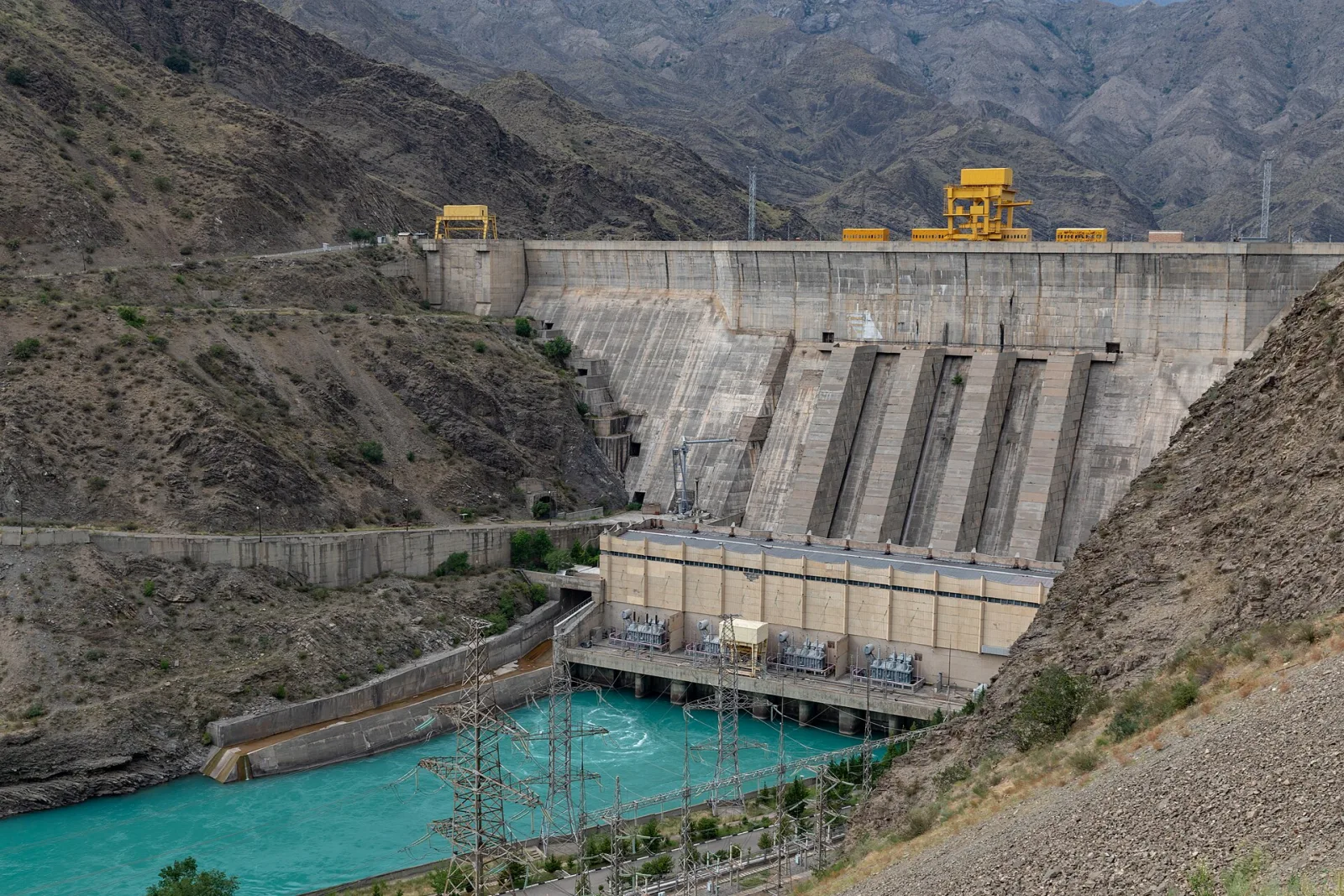
Kyrgyzstan's problem is timing. Some 77% of annual inflow to the Toktogul reservoir arrives between April and September, while daily consumption in midwinter is 2.5 times the midsummer level. In 2025 consumption reached 19.3 billion kWh against domestic output of 15.4 billion kWh. The 3.9 billion kWh difference came from four neighbours. The government expects to import 4.1 billion kWh in 2026, about 21% of consumption of 19.6 billion kWh (Talay calculation).
Households bear the cost of the constraint. The per-household cap at peak hours was cut from 5 kW to 3 kW, and Energy Minister Rysbekov said in October that it could last until 2029. The picture in Tajikistan is similar: EBRD data show hydropower generated 94% of its electricity in 2023. The country bought 306 million kWh from Uzbekistan in the winter of 2025–26, down from 350 million kWh the winter before. The sources do not explain the decline, but the selling country has been a net gas importer since 2023.
The bill goes to Moscow
Uzbekistan's gas imports are growing fast. Gazprom supplied the country with 6.48 billion cubic metres in 2025, 15% more than a year earlier, and the IEA expects that figure to exceed 10 billion cubic metres in 2026. According to Spot.uz, gas imports from Russia and Turkmenistan rose 15.2% in January–August to 1.21 billion dollars. The monthly bill jumped from 38.3 million dollars in July to 206.1 million dollars in August.
This gas arrives through a single corridor. Part of the Soviet-era Central Asia–Centre pipeline now runs in reverse, flowing south. On 13 October a pipeline exploded in Russia's Penza region. Uzbek ministries said on 14 October that deliveries were continuing as contracted. There was no disruption, but the episode showed how dependent the region has become on one route.
Moscow's eagerness stems from Europe. According to the IEA, the EU bans term contracts for Russian LNG from 1 January 2027 and ends pipeline gas imports in the last quarter of 2027. The agency expects Russian gas exports to the EU to fall by 30 billion cubic metres in 2027. The 10 billion cubic metres bound for Uzbekistan equal a third of that loss (Talay calculation). Pipeline deliveries to Türkiye also fell 17% in the first eight months. For Gazprom, Central Asia is no longer a side market but a refuge for lost volume.
The Beijing line and the timing gap
Kyrgyzstan is opening a second door in China. On 26 November the two countries' electricity working group met for the first time in Qingdao. The Kyrgyz ministry proposed that the cross-border line enter commercial operation in December 2027. The March 2023 memorandum covered exports to China; the direction has now reversed. The line's capacity, length and cost were not disclosed, and the source of financing is unclear.
The schedule for new capacity leaves an empty window. World Bank financing for the Rogun dam rose to 650 million dollars in June, but the plant is still under construction. A contract for Kazakhstan's 2,400 MW Balkhash plant was signed in September, with construction able to start in 2027 at the earliest. The Uzbek small reactor is slated for the end of 2029 and the Chinese line for December 2027. The winter of 2026–27 and most of 2027–28 will be met by existing plants, swaps with neighbours and Russian gas.
What comes next, and what would refute this reading
The first test is December–February data: if Kyrgyz imports exceed the expected 4.1 billion kWh, the gap is widening. The second is Uzbek output. Uzbekneftegaz plans to drill new wells and overhaul 16 existing ones, targeting an extra 4.36 million cubic metres of gas a day. That comes to about 1.6 billion cubic metres a year (Talay calculation), less than a third of the 5 billion cubic metre decline. The third test is a financing signature and capacity disclosure for the Chinese line.
The development that would refute this reading is concrete. If Uzbek output stops falling in the final quarter and Russian gas ends 2026 well below 10 billion cubic metres, the dependence thesis weakens. If Kyrgyz imports in 2026 stay below 3.9 billion kWh, the constraint is demand management rather than water. In that case Moscow and Beijing are not writing the bill; they are merely offering options.
Probabilities
Scenarios
| Scenario | Probability | Trigger | Market impact |
|---|---|---|---|
| H1A winter bridged by imports | 55% | The decline in Uzbek output slows but does not stop; Russian gas ends 2026 at around 10 billion cubic metres and Kyrgyz imports come in close to 4.1 billion kWh. | Winter passes with peak caps but no major blackouts; dependence on Russia deepens another notch. Refuted if Uzbek output turns positive in the final quarter. |
| H2The gas chain snaps | 25% | A cold January or a fault on the Central Asia–Centre pipeline; Uzbekistan halts electricity swaps. | Extended outages in Tajikistan and Kyrgyzstan and industrial shutdowns; emergency supply talks with Russia and Kazakhstan. Refuted if the pipeline runs without faults until the end of February. |
| H3Water and wells bring relief | 20% | A wet winter, and Uzbekneftegaz's additional 4.36 million cubic metres a day of output comes on stream. | Imports fall below 2025 levels and the nuclear and Chinese projects lose urgency. Refuted if Kyrgyz imports exceed 4.1 billion kWh. |
Module A
Constraints Matrix
STRUCTURAL AVG 4.2 · TACTICAL AVG 2.7Structural constraints dominate: the outcome is set more by these limits than by the actors' preferences.
Hard structural constraintspersistent · beyond the actors' will
Seasonal water inflow
5/577% of annual inflow to Toktogul arrives in April–September; midwinter consumption is 2.5 times the midsummer level.
Falling Uzbek gas output
5/5The IEA reports a 16% drop in January–September 2026, a loss of more than 5 billion cubic metres; the country has been a net importer since 2023.
Reliance on hydropower
4/5Hydropower accounted for 94% of Tajikistan's generation in 2023; river flows drop in winter just as demand rises.
Single-route Russian gas · Russia
4/5Russian gas arrives through the reversed section of the Central Asia–Centre pipeline; the Penza explosion on 13 October showed how fragile the route is.
The EU's 2027 bans · European Union
3/5The ban on term contracts for Russian LNG starts on 1 January 2027 and the pipeline gas exit comes in the last quarter of 2027; the IEA expects a 30 billion cubic metre fall in exports to the EU.
Tactical frictiontemporary · eases over time
Sudden jump in the bill weeks
3/5Uzbekistan's monthly gas import bill rose from 38.3 million dollars in July to 206.1 million dollars in August.
Household peak cap months
3/5Kyrgyzstan cut the household cap at peak hours from 5 kW to 3 kW; the minister says it could last until 2029.
Undisclosed project parameters months
2/5The capacity and cost of the Kyrgyz–Chinese line and the capacity, site and timeline of the Tajik nuclear project have not been disclosed.
Module B
Signal vs Noise
SIGNAL 60% · NOISE 40%
- NOISE
Talks with Rosatom on a small nuclear plant will solve Tajikistan's winter gap.
No capacity, site, cost or timeline was disclosed at the 26 November meeting; even the start-up of Uzbekistan's first small unit is planned for the end of 2029.
Asia-Plus — Tajikistan in talks with Rosatom on small nuclear power plants
- SIGNAL
The region's major gas producers can no longer meet their own needs, and Russian gas is filling the gap.
IEA: Uzbek output fell 16% in January–September and Kazakh commercial output about 9%; Gazprom's deliveries to the region rose about 70%.
Trend — Eurasian gas production to rise 1.5% in 2026, IEA says
- SIGNAL
Kyrgyzstan has switched from planning exports to China to importing from China.
The 2023 memorandum covered exports; on 26 November December 2027 was proposed for an import line, with 2026 imports expected at 4.1 billion kWh.
The Times of Central Asia — Kyrgyzstan electricity imports from China could begin in 2027
- SIGNAL
Uzbekistan's gas import bill is growing fast.
Gas imports from Russia and Turkmenistan rose 15.2% in January–August 2026 to 1.21 billion dollars; the August bill was 206.1 million dollars.
- NOISE
The Chinese line will close Kyrgyzstan's winter gap.
The line's capacity and cost have not been disclosed; it comes online in December 2027 at the earliest and contributes nothing in winter 2026–27.
Kabar — Electricity imports to Kyrgyzstan from China: project to launch in 2027
Module C
Asset-Class and Positioning Implications
| Asset class | Exposure | Transmission channel | H1 | H2 | H3 | Expected | Conviction | Horizon | What to watch |
|---|---|---|---|---|---|---|---|---|---|
| Commodities | Russian pipeline gas flows to Central Asia | Falling Uzbek output and Gazprom's rising deliveries to the region | + | ++ | − | +0.85 | ●●● | 3–12 months | Gazprom's Central Asia volume statements and the IEA's quarterly gas report |
| FX | Central Asian currencies broadly | Dollar-denominated gas and electricity import bills | − | −− | + | −0.85 | ●●● | 0–3 months | Uzbekistan's monthly gas import bill |
| Sovereign debt | External debt burden of Tajikistan and Kyrgyzstan | Loan-financed energy infrastructure | − | − | 0 | −0.80 | ●●● | 12+ months | Loan agreements signed for nuclear and grid projects |
Second-order effects
And then what?
Starting point
Uzbekistan's gas output fell 16% in January–September 2026, Kyrgyzstan expects to import 4.1 billion kWh of electricity in 2026, and both countries are covering their winter gap with Russian gas and swaps with neighbours.
- 1
Electricity swapswithin weeks
At the winter peak Uzbekistan prioritises its own gas and power needs; electricity supplied to Tajikistan and Kyrgyzstan through swaps shrinks, and outages and peak caps tighten in both countries.
Watch: Tajikistan's Uzbek imports in winter 2026–27 falling below 306 million kWh, and Kyrgyz outage announcements
- 2
Pipeline gaswithin weeks
The gap shifts to Russian gas via the Central Asia–Centre pipeline; Uzbek and Kazakh import bills grow, and a fault on the single route risks turning into a regional supply crisis.
Watch: Uzbekistan's monthly gas import bill and Gazprom's Central Asia volume statements
- 3
Infrastructure financewithin months
To close the gap for good, governments commit to Russian nuclear and Chinese grid projects on multi-year loans; energy debt returns as a budget and external debt burden.
Watch: A Tajik feasibility study or intergovernmental agreement and a financing deal for the Kyrgyz–Chinese line
What breaks the chain
The chain breaks at the first step if Uzbek output recovers in the final quarter through new and refurbished wells, or if a wet winter replenishes reservoirs and pulls Kyrgyz imports below 3.9 billion kWh.
Triggers
Thresholds to watch
| Indicator | Threshold | Today | What it means |
|---|---|---|---|
| US dollar broad index | +5% in 3 months | 123.60 | Dollar-denominated gas and electricity imports become more expensive in local currency terms; Uzbekistan's gas bill and Kyrgyzstan's import costs rise. |
Sources
- The Times of Central Asia — Kyrgyzstan electricity imports from China could begin in 2027 (27 November 2026)
- Kabar — Electricity imports to Kyrgyzstan from China: project to launch in 2027
- Asia-Plus — Tajikistan in talks with Rosatom on small nuclear power plants (27 November 2026)
- The Times of Central Asia — Tajikistan nuclear power talks held amid winter shortages
- Trend — Eurasian gas production to rise 1.5% in 2026, IEA says (3 November 2026)
- The Times of Central Asia — Gazprom Central Asia gas supplies rise in 2026 (8 September 2026)
- Spot.uz — Gas imports to Uzbekistan (15 October 2026)
Sourcing and verification rules: methodology · Report an error: contact
Related reports
VIEnergy & Supply·Analysis·Middle East and North Africa
OPEC+'s spare capacity is now within range of Houthi strikes
The Houthi claim on Ras Tanura added 3.5% to Brent in a day, though no damage has been confirmed. The real constraint lies elsewhere: OPEC+'s spare barrels reach the world through two gates, and both were hit in November.
Energy & Shipping Desk · 26 November 2026 · 6 min
VIEnergy & Supply·In-depth analysis·Eurasia
Capacity sets the floor for 2027 quotas; export routes set the ceiling
On 29 November OPEC+ will tie 2027 quotas to an independent capacity audit for the first time. Russia's quota sits 650,000 barrels a day above the IEA's capacity estimate, while Iraq wants a 6 million-barrel baseline.
Energy & Shipping Desk · 24 November 2026 · 12 min
VIEnergy & Supply·In-depth analysis·Eurasia
Ukraine targets the overflow valve as pipelines cap Russian exports
Refinery losses run at 1.5–2.2 million barrels a day, and the ports have absorbed only part of that. The Kaleykino strike puts the pumping network that carries the surplus to port in the crosshairs.
Energy & Shipping Desk · 20 November 2026 · 11 min