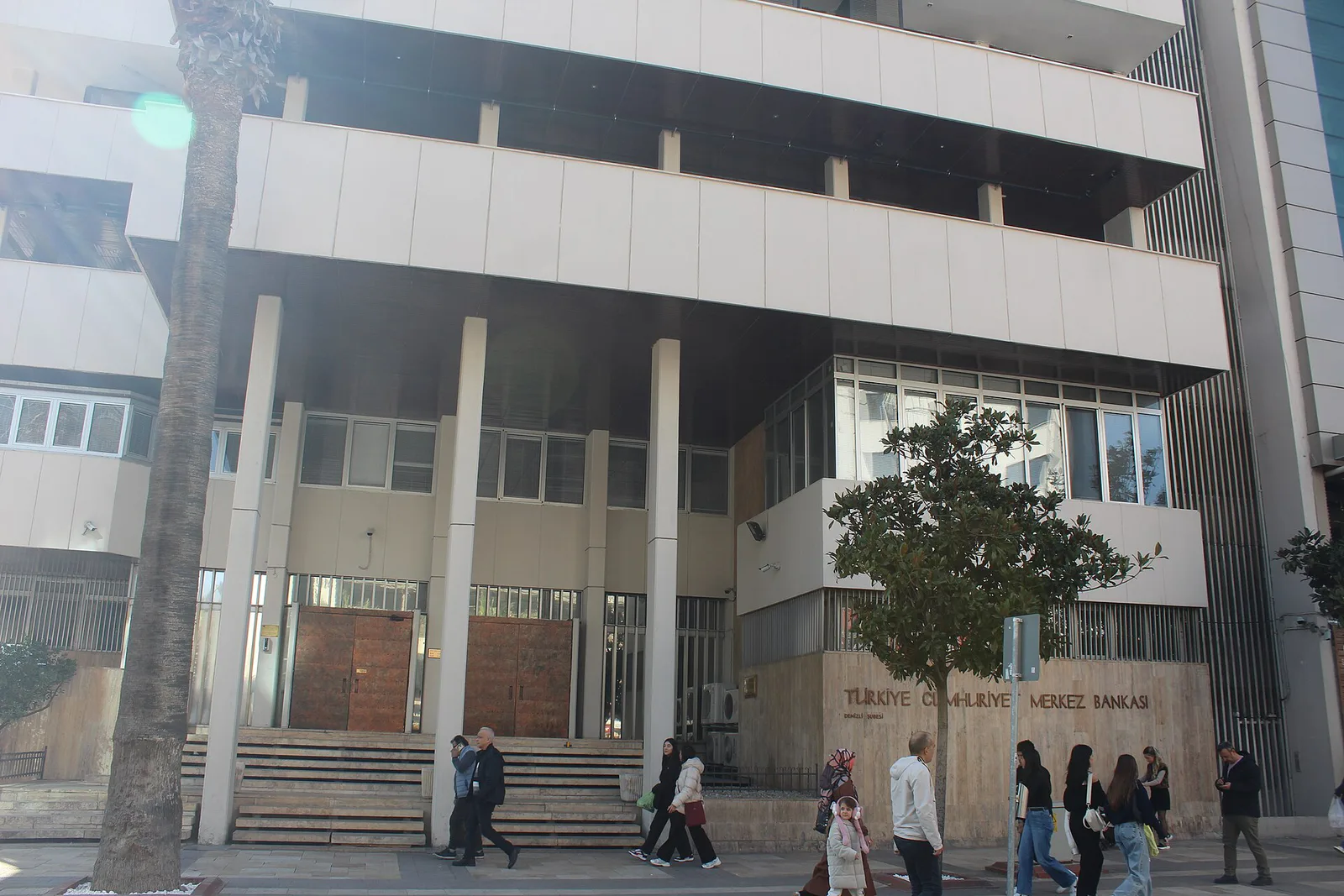
IV Macro Policy & Sovereign Debt·Analysis·Türkiye and Its Neighbourhood
Melting net reserves, not inflation, now set the pace of CBRT cuts
The CBRT cut its policy rate to 36% on 22 October. Data released the same day showed net reserves excluding swaps fell 4.9 billion dollars in a week; carry inflows will now decide the size of the December move.
Macro & Debt Markets Desk · 23 October 2026 · 8 min read · 9 sources
Why it matters
Noise: the CBRT cut by the expected 100 basis points to 36%, and the cut itself is the headline. Signal: net reserves excluding swaps fell from 44.23 billion dollars to 39.34 billion in the week to 16 October, taking the year-to-date loss to 23.26 billion. Foreigners have sold equities for three weeks, and the gap between the policy rate and inflation has narrowed to 6.27 points. What binds the easing path is not disinflation but a thinning buffer for defending the lira.
Implications
- The policy rate fell from 37% to 36%; the gap between the rate and annual inflation of 29.73% narrowed from 7.27 points to 6.27, eroding carry returns.
- Net reserves excluding swaps fell 4.9 billion dollars in the week to 16 October to 39.34 billion; gross reserves dropped 2.48 billion dollars to 169.1 billion.
- Non-residents sold 88.8 million dollars of equities in the week to 16 October, extending the selling into a third week; foreign holdings of Turkish equities fell to 33.98 billion dollars.
Noise
The 100 basis point cut shows the easing cycle accelerating.
Signal
The buffer for defending the lira is thinning fast.
The noise is the cut, the signal is in reserves
On 22 October the CBRT lowered its one-week repo rate from 37% to 36% and moved the corridor down by the same amount. The decision was no surprise: 32 of the 37 economists in the Matriks survey expected exactly this step. The committee cited leading indicators confirming a decline in the underlying trend, along with weak domestic demand. The same statement flagged energy prices, pushed up by geopolitical tensions, as an upside risk.
The real news arrived at 14:30. Weekly CBRT data showed gross reserves falling 2.48 billion dollars to 169.1 billion in the week to 16 October, with 2.42 billion of the drop coming from foreign currency holdings. Ahlatcı Yatırım calculates that net reserves excluding swaps fell 4.9 billion dollars in a week to 39.34 billion. That measure strips out FX swaps with banks and represents the buffer genuinely available to defend the currency. It has lost 23.26 billion dollars since the start of the year.
Constraint 1 · Carry is shrinking, the buffer is thinning
The lira's stability rests on the carry trade, in which foreign investors hold high-yielding lira assets and earn more than they lose on depreciation. The cut narrowed the gap between the policy rate and September's annual inflation of 29.73% from 7.27 points to 6.27. In a note on 22 October Commerzbank argued the lira is still overvalued in real terms. It wrote that nominal depreciation of roughly 20% a year lags inflation, and it expects 52 by year-end.
ING argued the same day that demand for carry will persist, forecasting a year-end policy rate of 35% and a dollar/lira rate of 51.50. The two banks draw different conclusions from the same data. What they share is the recognition that each cut lets the CBRT shrink carry returns by its own hand. As returns compress, continued inflows come to depend on the reserves themselves: investors hold their positions only for as long as they believe the central bank can defend the currency.
Constraint 2 · Foreign flows have already reversed
Non-residents sold 88.8 million dollars of equities in the week to 16 October, after 248.2 million the week before, extending the run to a third week. In bonds, Hibya puts the selling at 44.4 million dollars and Dünya at 60 million; the two figures conflict. The market value of foreign equity holdings fell in a week from 35.92 billion dollars to 33.98 billion. On decision day the BIST 100 fell 2.4% intraday to 11,295 points.
This comes after the fund crisis and MSCI's freeze of its Türkiye indices. Commerzbank writes that fund outflows have largely moved into lira deposits rather than foreign currency, which is why they have not derailed the cut. ING notes that developments in the funds pose a downside risk to domestic demand in the final quarter, with counterparty risk as the main channel of contagion.
What it means for Ankara
The CBRT's choice lies between supporting disinflation and protecting the buffer. In the Matriks survey 29 of 33 economists expect another cut on 10 December, and the year-end median is 35%. That path assumes net reserves excluding swaps stabilise around 39 billion dollars. If reserves keep melting for another two or three weeks, the December move will either shrink or be postponed; upside risk from energy prices makes that outcome more likely.
Fiscal policy tightens the constraint. In the 2027 budget submitted to parliament on 21 October, interest spending of 3.975 trillion lira on its own exceeds the 3.868 trillion lira deficit. High rates strain the budget while low rates strain the currency, and the weekly reserve data trace the narrow corridor between the two. The summary of the meeting on 30 October and the Inflation Report on 12 November will show how much weight the committee gives to the reserve trend.
What would falsify this reading
A return of net reserves excluding swaps above 44 billion dollars within the next 3 weeks, together with foreigners turning buyers again in equities and bonds, would show the constraint loosening. October inflation would then become the main driver, and a cut of 100 basis points or more in December would become plausible. Conversely, if dollar/lira breaches 52 before the year is out, the buffer will have proved inadequate and the cut will have been paid for through the exchange rate.
Probabilities
Scenarios
| Scenario | Probability | Trigger | Market impact |
|---|---|---|---|
| H1Reserves stabilise, cautious cuts continue | 55% | Net reserves excluding swaps stabilise around 39 billion dollars and foreign selling stops. | The CBRT cuts by 50–100 basis points on 10 December, and the year closes around 35%. |
| H2Buffer thins, the cycle stalls | 30% | Reserves keep melting for another two or three weeks, energy prices stay high and foreign outflows spread to bonds. | The committee holds rates in December and hardens its language. |
| H3Disinflation accelerates | 15% | October inflation falls markedly, carry inflows return and reserves climb past 44 billion dollars. | December brings a cut of more than 100 basis points. |
Module A
Constraints Matrix
STRUCTURAL AVG 4.3 · TACTICAL AVG 2.7Structural constraints dominate: the outcome is set more by these limits than by the actors' preferences.
Hard structural constraintspersistent · beyond the actors' will
Net reserves excluding swaps · Türkiye
5/539.34 billion dollars in the week to 16 October, down 23.26 billion since the start of the year. The capacity to defend the lira caps the pace of cuts.
Carry return · Türkiye
4/5The gap between the policy rate and inflation narrowed from 7.27 points to 6.27; Commerzbank sees the lira as overvalued in real terms.
Interest burden on the budget · Türkiye
4/5Interest spending of 3.975 trillion lira in 2027 exceeds the entire 3.868 trillion lira budget deficit.
Tactical frictiontemporary · eases over time
Foreign equity outflows weeks
3/5Sales of 88.8 million dollars in the week to 16 October; the run is in its third week and holdings stand at 33.98 billion dollars.
Energy price risk months
3/5The decision statement identified energy prices, pushed up by geopolitical tensions, as an upside risk to inflation.
Contagion from the fund crisis months
2/5ING wrote that developments in the funds pose a downside risk to domestic demand in the final quarter, with counterparty risk as the main channel.
Module B
Signal vs Noise
SIGNAL 60% · NOISE 40%
- NOISE
The 100 basis point cut shows the easing cycle accelerating.
32 of 37 economists in the Matriks survey expected exactly a cut from 37% to 36%; the decision was priced in.
Banka Dünyası — CBRT rate decision announced, policy rate at 36%
- SIGNAL
The buffer for defending the lira is thinning fast.
Net reserves excluding swaps fell from 44.23 billion dollars to 39.34 billion in the week to 16 October; the year-to-date loss is 23.26 billion.
Hibya — Gross reserves fall to 169.1 billion dollars, net reserves ex-swaps to 39.34 billion
- SIGNAL
Foreign equity selling has extended into a third week.
Sales of 88.8 million dollars in the week to 16 October, after 248.2 million the week before.
Dünya — Foreign selling on Borsa Istanbul extends into a third week
- NOISE
The carry trade is unwinding because of the cut.
ING wrote on 22 October that crowded lira positions will keep attracting demand despite lower returns, and expects a year-end dollar/lira rate of 51.50.
Data: USD/TRY ›FXStreet (ING) — Turkish Lira: Easing cycle resumes as carry trade holds
- SIGNAL
The lira remains overvalued in real terms.
According to Commerzbank, nominal depreciation runs at roughly 20% a year against inflation in the 30–35% range; the bank expects 52 by year-end.
Data: USD/TRY ›FXStreet (Commerzbank) — Turkish Lira: Rate cuts raise depreciation risks
Module C
Asset-Class and Positioning Implications
| Asset class | Exposure | Transmission channel | H1 | H2 | H3 | Expected | Conviction | Horizon | What to watch |
|---|---|---|---|---|---|---|---|---|---|
| FX | Turkish lira | Thinner carry and shrinking net reserves set the pace of depreciation | 0 | −− | + | −0.45 | ●●● | 0–3 months | Weekly net reserves excluding swaps and dollar/lira's distance from 52 |
| Sovereign debt | Lira government bond yield curve | The size of the December cut drives the front end; reserves and the budget's interest bill drive the far end | + | −− | ++ | +0.25 | ●●● | 3–12 months | The 34% threshold on the 10-year yield and Treasury auction costs |
| Credit | Türkiye sovereign CDS | Reserve losses feeding into the risk premium | 0 | −− | + | −0.45 | ●●● | 0–3 months | The 260 threshold on 5-year CDS |
| Equities | Turkish banks and the broad index | The run of foreign selling and the easing path shape valuations | + | −− | ++ | +0.25 | ●●● | 0–3 months | Weekly foreign net equity transactions turning positive |
Second-order effects
And then what?
Starting point
The CBRT cut rates to 36% on 22 October; the same week net reserves excluding swaps fell 4.9 billion dollars to 39.34 billion and the rate-inflation gap narrowed to 6.27 points.
- 1
Portfolio flowswithin weeks
Thinner carry slows new inflows; foreign equity selling continues, the balance in bonds stays fragile, and the CBRT steadies the lira by drawing on reserves.
Watch: Foreign net transactions in government bonds and equities in the CBRT's weekly securities statistics
- 2
Monetary policywithin weeks
If reserve losses persist, the committee shrinks or postpones the cut on 10 December; the market's 35% year-end expectation drifts higher.
Watch: The 30 October MPC summary and the year-end rate median in the Matriks survey rising above 35%
- 3
Public borrowingwithin months
Rates staying higher than expected extinguish hopes of trimming the 3.975 trillion lira interest bill for 2027; the Treasury's domestic borrowing costs stay high.
Watch: Average cost at the Treasury's November and December domestic debt auctions
What breaks the chain
A marked fall in October inflation and a return of net reserves excluding swaps above 44 billion dollars would revive carry inflows; the chain would break at the first link.
Triggers
Thresholds to watch
| Indicator | Threshold | Today | What it means |
|---|---|---|---|
| USD/TRY | > 52 | 49.63 | Dollar/lira breaching 52, Commerzbank's year-end forecast, before the year is out would show the cut being paid for through the exchange rate and put the December move at risk. |
| Türkiye 5-year CDS | > 260 | 251 | CDS above 260 would show reserve losses becoming embedded in the risk premium and carry inflows growing more expensive. |
| Türkiye 10-year yield | > 34 | 32.88 | A 10-year yield above 34% would show the market abandoning the easing path and demanding a term premium, the extra return investors require to hold extended-maturity bonds. |
Sources
- Habertürk — CBRT rate cut, details of the October 2026 decision
- Banka Dünyası — CBRT rate decision announced, policy rate at 36%
- Hibya — Gross reserves fall to 169.1 billion dollars, net reserves ex-swaps to 39.34 billion
- Cumhuriyet — CBRT reserves fall 2.5 billion dollars to 169.1 billion
- Dünya — Foreign selling on Borsa Istanbul extends into a third week
- Paratic — Foreigners sell 88.8 million dollars of Turkish equities
- FXStreet (Commerzbank) — Turkish Lira: Rate cuts raise depreciation risks
- FXStreet (ING) — Turkish Lira: Easing cycle resumes as carry trade holds
- Anka Haber — Parliament's Plan and Budget Committee: 2027 deficit projected at 3.868 trillion lira
Sourcing and verification rules: methodology · Report an error: contact
Related reports
IVMacro & Debt·Analysis·Europe
France trades like the periphery, and its marginal buyer sits outside Europe
The France–Germany spread reached 173.58 basis points on 22 October, its widest since 2011, while Belgium's hit a 2012 high. Non-residents hold 57.5% of French debt, the ECB balance sheet is shrinking and markets are pricing rate rises.
Macro & Debt Markets Desk · 23 October 2026 · 9 min
IVMacro & Debt·Analysis·Türkiye and Its Neighbourhood
A rate cut is coming, but Ankara's budget prices slow disinflation
The CBRT is expected to cut by 100 basis points on 22 October. The 2027 budget, tabled in parliament a day earlier, shows interest costs rising 40.7% and accounting for the entire deficit.
Macro & Debt Markets Desk · 22 October 2026 · 8 min
IVMacro & Debt·Analysis·Europe
Britain's rate rise is settled, but the budget has no energy headroom
September inflation rose to 3.5%, locking in a Bank of England rise on 5 November. The binding constraint sits at the Treasury. April–September borrowing overshot the OBR forecast by £6 billion, the 10-year gilt is near 5.4% and the budget lands on 28 October.
Macro & Debt Markets Desk · 22 October 2026 · 8 min