VII Reinsurance & Specialty Risk·Analysis·Americas
AI campuses hit the insurance ceiling, and outage risk sits outside policies
The replacement value of a single AI campus can reach $50 billion, while large insurers' per-risk limits stay in the low single-digit billions. Howden finds that most outages never reach a conventional policy because they involve no physical damage.
Cyber & Critical Infrastructure Desk · 12 November 2026 · 7 min read · 6 sources
Talay Insight Analysis Desk·AI-assisted analysis, reviewed by an editor
Why it matters
Noise: data centre premiums will grow from $10.6 billion to $24.2 billion by 2030, and capacity will follow demand. Signal: the constraint is not premium but value concentrated in a single location. A campus is worth $20–50 billion, while the largest broker programme stops at $5 billion. Power failures cause 45% of outages, and most produce none of the physical damage that triggers a policy. The gap feeds straight into project finance through lenders' demands for full replacement-value cover.
Implications
- As lenders make full replacement-value cover a financing condition, the portion of a $20–50 billion campus above $5 billion is pushed towards capital markets, captives or splitting the campus.
- With roughly $2 billion of annual outage losses tripping the physical damage requirement, parametric and non-damage business interruption cover grows as a new product class.
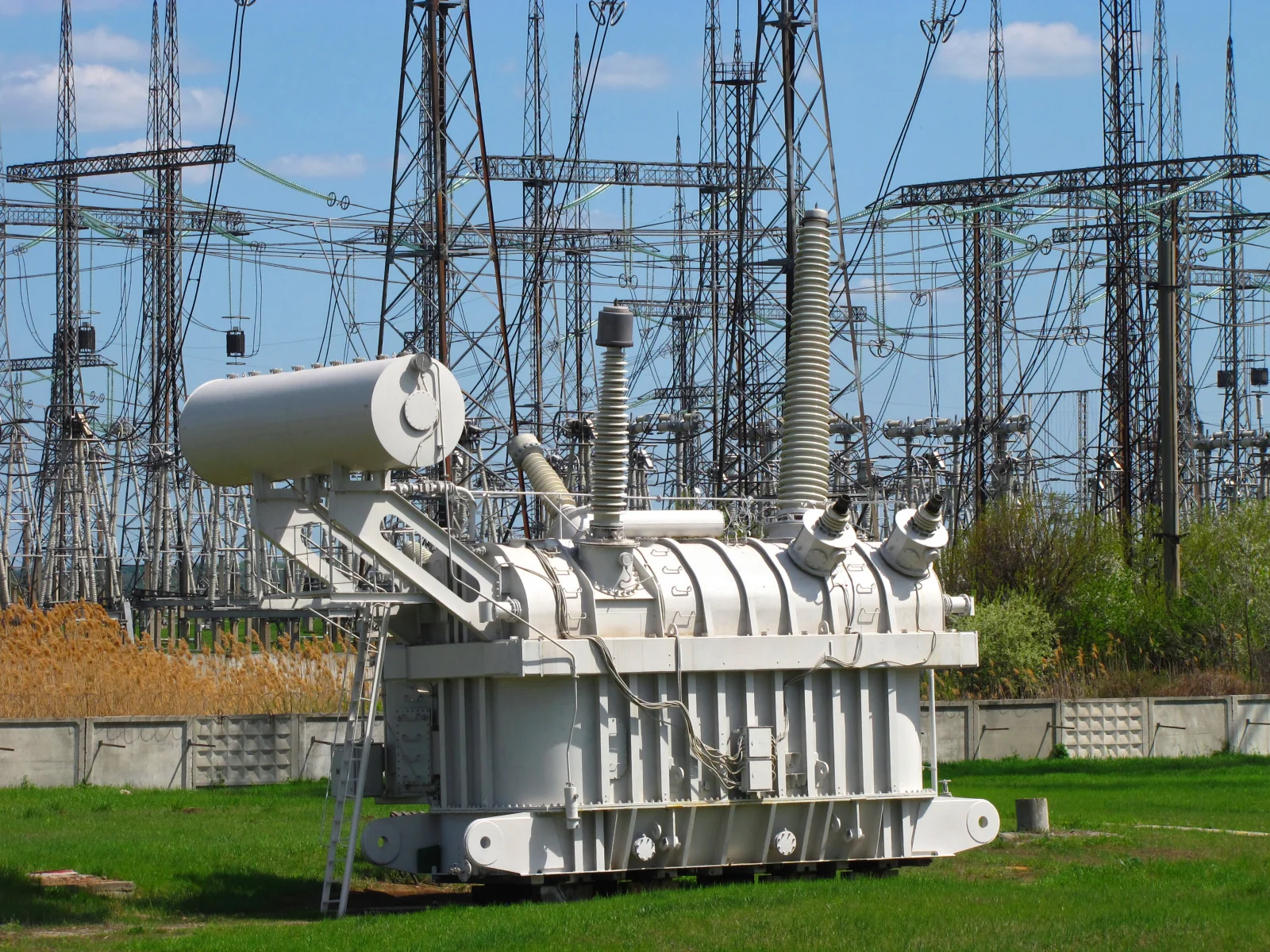
- The cost of the insurance and financing gap lands on transformer, power generation and construction budgets; through 2027 it could feed through to unit prices for compute and cloud services as a second-round effect.
Noise
The data centre premium pool will double, and capacity will follow demand.
Signal
Most outage losses fall outside conventional policies.
Noise and signal
The noise runs like this: data centres are insurance's new growth area, and the premium pool will soon double. In March the Swiss Re Institute wrote that global data centre premiums would rise from $10.6 billion to $24.2 billion by 2030. The picture implies that where demand exists, capacity will follow.
The signal is different: the problem is not the size of the premium but the concentration of value in one place. Swiss Re's sigma 3/2026 report, published on 7 September, puts the replacement cost of a single AI campus at up to $50 billion. S&P Global Ratings estimates the insurable value of such a campus at $20–30 billion. Large insurers' per-risk limits, meanwhile, stay in the low single-digit billions.
Why the ceiling sits at $5 billion
Aon's data centre lifecycle programme opened at $1.5 billion in June 2025, rose to $3.5 billion in April 2026 and to $5 billion in July. Capacity is drawn from Lloyd's, the company market and other facilities. The programme provides a further $1 billion for terrorism and $400 million for cyber and technology professional liability.
Even this limit does not reach a quarter of S&P's $20–30 billion campus value. In July Kelly Kinzer, Zurich's global head of construction and surety, said the market lacks the capacity to insure the largest projects at full value. Lenders, meanwhile, are increasingly making full replacement-value cover a condition of financing.
Swiss Re identifies four sources of accumulation: the size of single assets, geographic clustering, supply chain dependence and shared physical and digital networks. More than 40% of existing and planned US data centre capacity is concentrated in Texas and Virginia. More than 25% of capacity sits in hail zones, and about 40% in areas with at least three tornado days a year.
Outages fall outside the policy
According to a Howden study announced on 11 November, half of all facilities reported a significant outage in the past three years. Each outage costs between $500,000 and $1 million, implying global losses of about $2 billion a year. Of major outages, 45% stem from power and uninterruptible power supply failures, 14% from cooling and 11% from networks.
Under a conventional property policy, business interruption cover only responds if there is physical damage. Howden writes that only a small share of outages produces insured physical damage. Most of the $2 billion annual loss therefore falls outside policies today; the broker proposes parametric cover tied to service level agreements to fill the gap.
The root cause is the grid. In the US, data centre power demand has grown 19% a year since 2000, while grid capacity has grown 2% a year. Data centres' share of US grid capacity rose from 0.1% in 2000 to 5% in 2025. Howden expects about 10 GW of off-grid generation to be built by 2030, adding a new power plant risk for insurers.
The war exclusion has reached the data centre
Howden writes that up to five data centres in the UAE and Bahrain were struck by Iranian drones in 2026, the first known deliberate wartime targeting of commercial data centres. In 2025, capacity built within 10–15 km of conflict zones reached about 60% of the 2020–24 total.
This shows the war exclusion in property policies is no longer an abstract clause. On 10 November Rachel Turk, Lloyd's chief of markets strategy, urged insurers to state clearly what they cover on war, AI and sanctions. She said ambiguity works against insurers in court.
Who closes the gap
At a London panel published by Artemis on 10 November, speakers said capital markets can only tackle the insurability problem, the ability to transfer risk at a reasonable price, from the reinsurance and retrocession end. Retrocession is the protection a reinsurer buys to pass on its own risk. The panel listed four gaps: risk transparency, correlation with investor portfolios, standard structures and the rapid depreciation of chip value.
Swiss Re expects about $200 billion in total premiums from AI data centres and renewable infrastructure over 2026–2030. Meeting that demand depends on how quickly accumulation modelling matures before the 2027 renewal. Accumulation that cannot be modelled may be the one item that keeps prices high even in a softening property catastrophe market.
What would falsify this
If a broker or insurer announces in the first half of 2027 that it has placed more than $10 billion of cover on a single campus, the ceiling thesis weakens. If two major insurers add non-damage business interruption to standard property policies for an extra premium, the outage gap thesis fails. In the other direction, a hail, tornado or war loss above $1 billion at a single campus would quickly pull capacity back.
Probabilities
Scenarios
| Scenario | Probability | Trigger | Market impact |
|---|---|---|---|
| H1Capital markets close the gap | 45% | In the first half of 2027 the first data centre cat bond or parametric outage programme is placed above $1 billion. | The ceiling stretches above $5 billion, outage cover standardises as a separate product, and project finance proceeds smoothly. |
| H2Campuses split, costs land on capex | 40% | Limits stay around $5 billion and lenders insist on full-value cover. | Developers break campuses into parts spread across regions; insurance and financing premiums are added to capex budgets. |
| H3A major loss shuts the door | 15% | A hail, tornado or war loss above $1 billion hits a single campus. | Insurers pull back limits and widen war and cyber exclusions; some projects are left uninsured and delayed. |
Module A
Constraints Matrix
STRUCTURAL AVG 4.0 · TACTICAL AVG 2.7Structural constraints dominate: the outcome is set more by these limits than by the actors' preferences.
Hard structural constraintspersistent · beyond the actors' will
Per-risk limits
5/5Large insurers can write limits only in the low single-digit billions per risk; a $20–50 billion campus needs at least 4–10 carriers.
The physical damage requirement · Howden
4/5Conventional business interruption cover does not respond without physical damage; power failures, which cause 45% of outages, usually fail that test.
Grid capacity
4/5US data centre power demand grew 19% a year against 2% for grid capacity; outage risk has become structural.
The war exclusion · Lloyd's of London
3/5Up to five data centres in the UAE and Bahrain were hit by drones in 2026; capacity near conflict zones runs into the war exclusion.
Tactical frictiontemporary · eases over time
Fragmented submissions months
3/5Buildings, equipment and power plants are insured under separate policies, so accumulation cannot be tracked; Swiss Re counts this as a barrier limiting capacity.
Transformer lead times months
3/5Multi-year lead times for high-voltage transformers lengthen business interruption losses and inflate insurers' worst-case estimates.
No standard structure months
2/5Four speakers on the Artemis panel said there is not yet a standard capital markets structure for tranching large campus risk.
Module B
Signal vs Noise
SIGNAL 60% · NOISE 40%
- NOISE
The data centre premium pool will double, and capacity will follow demand.
The Swiss Re Institute wrote that global data centre premiums would rise from $10.6 billion to $24.2 billion by 2030; over the same period single-campus values approached $50 billion.
Insurance Business — Aon expands data center insurance program to $5bn (20 July 2026)
- SIGNAL
Most outage losses fall outside conventional policies.
Howden says half of facilities had a significant outage in three years, at $0.5–1 million each and about $2 billion a year; most outages involve no physical damage.
- SIGNAL
A single campus is worth four to ten times the largest broker programme.
Swiss Re's sigma 3/2026 puts single-campus replacement cost at up to $50 billion and S&P puts insurable value at $20–30 billion; per-risk limits are in the low single-digit billions.
Reinsurance Business — The US$50bn data-centre problem (7 September 2026)
- SIGNAL
Data centres have become deliberate wartime targets for the first time.
Howden wrote that up to five data centres in the UAE and Bahrain were hit by Iranian drones in 2026, and that capacity built within 10–15 km of conflict zones in 2025 reached 60% of the 2020–24 total.
Howden — Insuring the data centre supercycle (28 September 2026)
- NOISE
Capital markets will soon take on data centre risk.
At the panel Artemis published on 10 November, four speakers said a structure for tranching campus risk has yet to be developed and that entry will start at the reinsurance and retrocession end.
Module C
Asset-Class and Positioning Implications
| Asset class | Exposure | Transmission channel | H1 | H2 | H3 | Expected | Conviction | Horizon | What to watch |
|---|---|---|---|---|---|---|---|---|---|
| Freight & insurance | Data centre construction and BI cover | The limit gap and physical damage requirement keep pricing high | 0 | + | ++ | +0.70 | ●●● | 3–12 months | A placement above $5 billion for a single campus |
| Freight & insurance | Cat bond and parametric product supply | Issuance grows if the new risk class opens to capital markets | ++ | + | − | +1.15 | ●●● | 12+ months | The first data centre catastrophe bond issue |
| Credit | Data centre project finance spreads | Extra equity and wider spreads where full replacement-value cover is not met | − | + | ++ | +0.25 | ●●● | 3–12 months | Data centre project loan pricing and the US 10-year yield |
| Equities | Electrical equipment and grid sector | Campus splitting and off-grid generation lift transformer demand | + | ++ | − | +1.10 | ●●● | 3–12 months | US transformer lead times and hyperscaler capex guidance |
Second-order effects
And then what?
Starting point
A single AI campus has a replacement value of $20–50 billion, the largest broker programme stops at $5 billion, and lenders are making full replacement-value cover a financing condition.
- 1
Project financewithin months
Developers turn to captives, parametric products and cat bonds to close the cover gap above $5 billion; where the gap stays open, lenders demand extra equity or wider spreads.
Watch: The first data centre cat bond for a hyperscale campus, or Aon's programme exceeding its $5 billion limit
- 2
Equipment and construction costswithin months
Extra insurance and financing costs land on construction budgets; campuses are split to reduce accumulation, and demand for off-grid generation and spare transformers rises. Multi-year transformer lead times push equipment prices up.
Watch: US high-voltage transformer lead times and the producer price index for electrical equipment
- 3
Service priceswithin months
Capacity built at higher cost and in more scattered locations feeds into the unit cost of compute; in cloud-importing countries such as Türkiye, corporate IT budgets swell in dollar terms.
Watch: Hyperscalers' 2027 capex guidance and price list changes from major cloud providers
What breaks the chain
The chain stops at the first step if capital markets accept accumulation models and quickly take on layers above $10 billion, or if hyperscalers sharply slow investment in 2027.
Triggers
Thresholds to watch
| Indicator | Threshold | Today | What it means |
|---|---|---|---|
| US 10-year yield | > 4.50 | 4.88 | If the 10-year yield breaks this level, project finance becomes more expensive; the cost of capital for the cover gap grows and the trend towards splitting campuses accelerates. |
| VIX volatility index | > 30 | — | If volatility stays above this level, capital markets investors retreat from new and hard-to-model risk classes, closing the cat bond window for data centres. |
Sources
- Reinsurance News — Data centre outage risks create opportunities for parametric and non-damage BI cover: Howden (11 November 2026)
- Howden — Insuring the data centre supercycle (28 September 2026)
- Reinsurance Business — The US$50bn data-centre problem reinsurers must solve before writing the risk (7 September 2026)
- Insurance Business — Aon expands data center insurance program to $5bn amid capacity crunch (20 July 2026)
- Artemis — Hyperscale capacity hype, defining the ILS role in data centre risk (10 November 2026)
- Reinsurance News — Insurance market must become more risk aware and not risk off, says Lloyd's Turk (10 November 2026)
Sourcing and verification rules: methodology · Report an error: contact
Related reports
VIIReinsurance·Analysis·Europe
A two-speed January renewal as political violence losses outrun premium
Europe's reinsurers head into 1 January 2027 on record profits, with property catastrophe rates expected to fall 7.5–15%. In political violence, roughly $1.5 billion of global premium faces Hormuz losses of up to $3 billion. Freight costs will follow the expensive war line, not cheap cat.
Europe Desk · 11 November 2026 · 8 min
IVMacro & Debt·Analysis·Americas
Hot inflation lifts the short end as the auction hunts for buyers
October CPI rose 0.4% month on month, beating expectations and all but locking in a December hike. The $42 billion 10-year auction that evening tailed by 1 basis point, and the foreign share fell from 80.3% to 61.2% in a month.
Macro & Debt Markets Desk · 11 November 2026 · 8 min
IVMacro & Debt·Analysis·Americas
One inflation print and one auction will decide the Fed's December move
October CPI lands on 10 November and is the last inflation reading before the 9 December decision; the November figure arrives a day after the meeting. The same evening the Treasury sells 42 billion dollars of 10-year notes.
Macro & Debt Markets Desk · 9 November 2026 · 8 min