III Kinetic Conflicts & Defence·Analysis·Eurasia
Bridges burn before Abu Dhabi as Kyiv runs short of interceptors
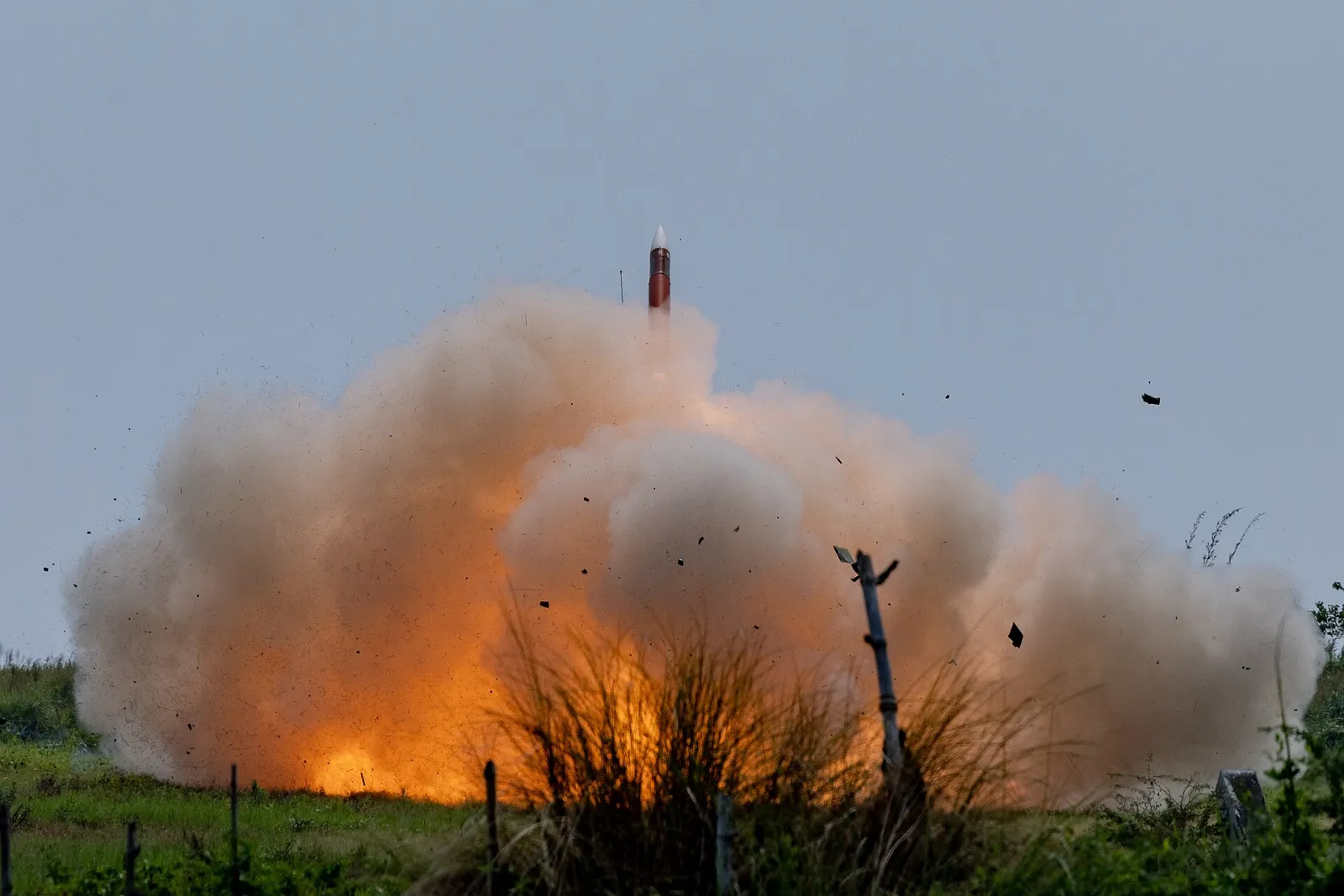
The first trilateral round since February opens in Abu Dhabi on 10–11 November. In the 72 hours before the talks Russia fired 36 ballistic missiles at Kyiv and only 4 were shot down; Ukraine, for its part, struck the Mius bridge on the R-280 on 8 November.
Eurasia Desk · 9 November 2026 · 7 min read · 15 sources
Talay Insight Analysis Desk·AI-assisted analysis, reviewed by an editor
Why it matters
Noise: Abu Dhabi brings a ceasefire closer. Yet the Kremlin has ruled out Oleshky-style local truces, and this is the first trilateral round since February. Signal: only 4 of 36 ballistic missiles fired at Kyiv on 6–7 November were intercepted, and Berlin says it cannot supply more Patriots. Ukrainian military intelligence puts Russian output above 200 missiles a month. The constraint is in the sky, not at the table: Kyiv's interceptor gap stays open until at least early 2027, and Moscow is using that window to build leverage on bridges and substations.
Implications
- Of the 36 ballistic missiles launched at Kyiv and its surroundings overnight on 6–7 November, 4 were intercepted; the North Bridge was damaged and a substation linking the Rivne and Khmelnytskyi nuclear plants to Kyiv was hit.
- Russia has fired more than 500 ballistic missiles at Ukraine since the start of 2026; Germany's defence minister said on 7 November that Berlin cannot provide further Patriot systems.
- On 8 November Ukraine struck the Mius bridge at kilometre 97 of the R-280, the road linking Rostov to occupied Mariupol, Melitopol and Crimea, closing it to all traffic.
Noise
The Abu Dhabi round brings a ceasefire closer
Signal
The ballistic interception rate has collapsed
The sky as the table opens
According to the timetable given by Kremlin spokesman Dmitry Peskov, the US-brokered trilateral round takes place in Abu Dhabi on 10–11 November. Reuters reported on 7 November that it will be the first three-way meeting since February. Deputy Foreign Minister Sergei Ryabkov joins the Russian delegation for the first time; military intelligence chief Igor Kostyukov and Yuri Zhigarlovsky of the General Staff are also on the list.
The 72 hours before the meeting spoke a different language. Zelensky said 36 ballistic missiles were fired at Kyiv and the surrounding region overnight on 6–7 November. The Ukrainian Air Force reported intercepting a total of 4 missiles that night. Of the 172 long-range drones in the attack, 149 were downed, but the ballistic ratio turns that picture on its head.
Target selection has shifted too. Since early October Russia has been striking Kyiv's bridges over the Dnipro; the South Bridge was damaged on 27 October and the North Bridge on 7 November. On 8 November Zelensky asked the prime minister for a free surface-transport programme for the city. Ukrinform reported that traffic on the North Bridge partially reopened only at 17:28 that day.
The arithmetic of interceptors
A Kyiv Independent tally shows Russia has launched more than 500 ballistic missiles at Ukraine since the start of 2026. Ukrainian military intelligence estimates Russia can produce more than 200 cruise and ballistic missiles a month. That estimate could not be independently verified.
Supply is tightening. German Defence Minister Boris Pistorius said on 7 November that any system handed over now could not be replaced in the near term. Berlin is therefore not supplying new Patriot systems, and the matter has been left to the Ukraine Defence Contact Group meeting in mid-November. Zelensky discussed accelerating PAC-2 missile deliveries in Berlin on 4 November; the contract runs over two years.
The Washington channel has slipped to 2027. David Arakhamia, head of Zelensky's parliamentary faction, said on 6 November that the 3 November midterms had doubled the chances of US support. He expects an improvement in the first quarter of 2027 at the earliest; US aid to Ukraine fell 99% in 2025. The winter ahead is the window in which Kyiv's interceptor gap is at its deepest.
Moscow builds its leverage on the grid
In this window Russia is choosing nodes over military targets. According to Zelensky, the Kyiv-region substation hit on 7 November connects the Rivne and Khmelnytskyi nuclear plants to the capital. Substations in the Vinnytsia, Zhytomyr, Rivne, Kharkiv and Dnipro regions were damaged the same day.
The picture widened the following day. DTEK said on 8 November that an overnight attack in Dnipropetrovsk had left more than 600,000 people without power. The Zaporizhzhia nuclear plant lost off-site power the same day and switched to generators with roughly two weeks of diesel fuel, according to the IAEA. Energoatom said the line was reconnected at 17:41.
The logic of this choice tracks the Abu Dhabi calendar. On 6 November the Kremlin said Europe could not even decide who would speak for it. French Foreign Minister Jean-Noel Barrot announced on 8 November that France would be in Abu Dhabi. With Europe's seat at the table still uncertain, winter grid damage narrows Kyiv's negotiating room night after night.
Kyiv's counter-lever is logistics
Ukraine's answer targets Russian logistics. Rostov Governor Yuri Slyusar said drone debris damaged the Mius bridge at kilometre 97 of the R-280 on the morning of 8 November, shutting the approach road entirely. The Sulin substation in Millerovo district was hit the same morning.
The R-280 links Rostov to occupied Mariupol, Melitopol and Crimea. In June the commander of Ukraine's Unmanned Systems Forces said military traffic on the road had fallen 71% in two weeks; that figure is five months old. The General Staff also said on 7 November that it had hit two Iskander launchers and a Pantsir-S1 system in Bryansk.
This lever has limits. As Arakhamia also noted, Washington pressed Kyiv before the election to stop striking Russian refineries. Attacks on bridges and launchers slow the front, but they do not protect Kyiv's own grid.
Ceasefire odds and the Türkiye link
The only concrete precedent is Oleshky. According to Ukraine's ombudsman, the local truce from 27 October to 1 November lasted 5 days, 19 hours and 59 minutes, and both sides observed it. The Kremlin, however, has ruled out similar humanitarian operations for the foreseeable future, so there is no data today to support expecting a general ceasefire from Abu Dhabi.
A narrower energy and infrastructure truce is the likelier outcome. Zelensky said on 7 November that the Oleshky truce was implemented in five days with no technical preparation, and that the obstacle is political will. Moscow, for its part, may prefer to keep grid strikes as a bargaining chip for as long as the interceptor gap persists.
Ankara stands at the edge of this equation. In a phone call with Trump on 7 November, Erdoğan urged closer contact with Russia and Ukraine and said Türkiye would keep contributing. Ukrainska Pravda reported on 3 November that Zelensky had said he was ready to meet Putin and Trump in Istanbul. If an infrastructure truce covers ports, Black Sea trade and traffic through the Turkish Straits would gain directly.
Probabilities
Scenarios
| Scenario | Probability | Trigger | Market impact |
|---|---|---|---|
| H1Talks open, skies open | 55% | The Abu Dhabi round ends with a schedule for further talks but no ceasefire; strikes on the grid and bridges continue through the winter. | Kyiv's negotiating room shrinks over the winter; Ukraine retaliates with strikes on logistics and refineries. |
| H2A narrow infrastructure truce | 30% | The parties agree a limited truce along Oleshky lines, covering energy facilities and possibly ports. | Grid strikes stop while fighting on the front continues; time is bought for broader negotiations. |
| H3Talks collapse, escalation follows | 15% | The Abu Dhabi round breaks up without a timetable and Russia intensifies mass infrastructure strikes. | Prolonged outages in Ukraine and growing demand for urgent air defence from Europe. |
Module A
Constraints Matrix
STRUCTURAL AVG 4.0 · TACTICAL AVG 2.7Structural constraints dominate: the outcome is set more by these limits than by the actors' preferences.
Hard structural constraintspersistent · beyond the actors' will
Interceptor shortfall · Ukraine
5/5Only 4 of 36 ballistic missiles were intercepted on 6–7 November; Russia is estimated to be able to produce more than 200 missiles a month.
Europe's stockpile limit · European Union
4/5Germany said on 7 November it cannot supply new Patriots; the issue has been left to the mid-November contact group.
Timing of US support · United States
4/5Arakhamia expects improvement in the first quarter of 2027 at the earliest; US aid fell 99% in 2025.
The Kremlin's ceasefire ceiling · Russia
3/5The Kremlin has ruled out Oleshky-style humanitarian operations for the foreseeable future; Abu Dhabi is the first trilateral round since February.
Tactical frictiontemporary · eases over time
Bridges and transport weeks
3/5The South Bridge was damaged on 27 October and the North Bridge on 7 November; Kyiv is preparing a free surface-transport programme.
Budget pressure months
3/5Officials say Ukraine's budget is in its worst shape since 2022; winter support packages are sparking a debate over funding.
Europe's place at the table weeks
2/5The Kremlin said on 6 November that Europe could not choose its representative; France announced on 8 November that it will be in Abu Dhabi.
Module B
Signal vs Noise
SIGNAL 67% · NOISE 33%
- NOISE
The Abu Dhabi round brings a ceasefire closer
Abu Dhabi is the first trilateral round since February; the Kremlin has ruled out Oleshky-style operations for the foreseeable future. The Oleshky truce lasted just 5 days, 19 hours and 59 minutes.
Kyiv Independent — Zelensky says Oleshky ceasefire shows Russia can halt fighting
- SIGNAL
The ballistic interception rate has collapsed
Against 36 ballistic missiles fired at Kyiv overnight on 6–7 November, the Air Force reported intercepting 4 in total; 149 of 172 drones were downed.
Kyiv Independent — Russian attacks hit substations connecting nuclear power plants to Kyiv
- SIGNAL
Europe has reached the limit of its Patriot supply
Pistorius said on 7 November that no system handed over could be replaced in the near term; the issue has passed to the mid-November contact group.
Kyiv Independent — Germany cannot provide Ukraine with more Patriot systems for now
- SIGNAL
Russia's delegation has broadened on both military and diplomatic lines
According to Reuters, Ryabkov is attending for the first time, alongside the military intelligence chief and a General Staff officer. The round runs on 10–11 November.
The Moscow Times (Reuters) — Russian diplomats and military officials to join talks
- NOISE
The midterms will unlock aid to Ukraine straight away
Arakhamia said on 6 November that the odds had doubled, but expects improvement no earlier than the first quarter of 2027 and called it a personal estimate.
Kyiv Independent — Midterm elections doubled Ukraine's chances of getting US military aid
- SIGNAL
The nuclear plant has lost off-site power again
Zaporizhzhia lost off-site power on 8 November and switched to generators with roughly two weeks of diesel, according to the IAEA; the line was reconnected at 17:41.
Ukrinform — Ukrainian energy workers restore external power supply to ZNPP
Module C
Asset-Class and Positioning Implications
| Asset class | Exposure | Transmission channel | H1 | H2 | H3 | Expected | Conviction | Horizon | What to watch |
|---|---|---|---|---|---|---|---|---|---|
| Commodities | European gas futures | Via winter European support for Ukraine's grid and the odds of an infrastructure truce | + | − | ++ | +0.55 | ●●● | 0–3 months | Front-month TTF and EU storage levels |
| Freight & insurance | Black Sea war-risk premium | Via strikes on Ukrainian ports and a possible port truce | + | −− | ++ | +0.25 | ●●● | 0–3 months | War-risk premium quotes on Odesa and Chornomorsk voyages |
| Sovereign debt | Ukrainian sovereign debt | Via progress in negotiations and budget financing | 0 | + | −− | 0.00 | ●●● | 3–12 months | Timetable for a second round after Abu Dhabi and EU funding decisions |
| Equities | European defence industry | Via air-defence demand and stockpile replenishment orders | + | − | ++ | +0.55 | ●●● | 3–12 months | Decisions at the mid-November Ukraine Defence Contact Group |
Second-order effects
And then what?
Starting point
Russia fired 36 ballistic missiles at Kyiv overnight on 6–7 November and only 4 were intercepted; Berlin is not supplying new Patriots and US support is not expected before the first quarter of 2027.
- 1
Grid and transportwithin days
With ballistic interception rates low, strikes on substations and bridges inflict more damage; scheduled power cuts spread from region to region and transport in Kyiv is disrupted.
Watch: The number of regions covered by Ukrenergo's daily outage schedules
- 2
Negotiating agendawithin weeks
Grid damage pushes Kyiv to put a narrow energy and infrastructure truce, modelled on Oleshky, at the front of the agenda in Abu Dhabi and later rounds; Moscow tries to tie it to other concessions.
Watch: Agenda items announced by the parties after the 10–11 November Abu Dhabi round
- 3
Freight and insurancewithin months
If an infrastructure truce covers ports, the war-risk premium on Odesa and Chornomorsk voyages eases and Straits traffic rises; if not, port strikes keep insurance costs on Black Sea trade elevated.
Watch: War-risk premiums on voyages to Ukrainian Black Sea ports and daily Bosphorus transits
What breaks the chain
New Patriot systems or interceptor deliveries emerging from the mid-November Ukraine Defence Contact Group meeting would lift interception rates and break the chain at the first step.
Triggers
Thresholds to watch
| Indicator | Threshold | Today | What it means |
|---|---|---|---|
| EU gas storage fill level | < 80% | — | EU storage falling below this level would make European power and gas support to Ukraine's grid more expensive and widen Kyiv's winter shortfall. |
| Bosphorus transits | < 38 ships/day | — | Bosphorus transits below this level would show Black Sea port strikes feeding into trade volumes and an infrastructure truce failing to cover ports. |
| Brent crude oil (futures) | > $105 | — | January ICE Brent above this level would increase US pressure over strikes on Russian refineries and narrow Kyiv's logistics lever. |
Sources
- Kyiv Independent — Russia to send senior diplomats, military officials to upcoming peace talks in Abu Dhabi
- The Moscow Times (Reuters) — Russian diplomats and military officials to join talks with U.S. and Ukraine
- Kyiv Independent — Russian attacks hit substations connecting nuclear power plants to Kyiv
- Kyiv Independent — Ukraine hits key bridge on highway of death
- Kyiv Independent — Germany cannot provide Ukraine with more Patriot systems for now
- Kyiv Independent — Midterm elections doubled Ukraine's chances of getting US military aid
- Kyiv Independent — Zelensky says Oleshky ceasefire shows Russia can halt fighting
- Kyiv Independent — Zelensky tasks PM with free transportation program in Kyiv
- The Moscow Times (Reuters) — Zaporizhzhia nuclear plant relying on generators again
- The Moscow Times — Kremlin accuses Europe of struggling to decide who will represent it
- Ukrinform — Traffic partially restored on Kyiv's North Bridge
- Ukrinform — Ukrainian energy workers restore external power supply to ZNPP
- Ukrainska Pravda — Putin's assistant to head Russian delegation in Abu Dhabi
- RBC-Ukraine — Ukrainian drones turn key Crimea route into highway of death
- Bloomberg HT — Erdoğan holds phone call with Trump
Sourcing and verification rules: methodology · Report an error: contact
Related reports
IGeo-Economics·Analysis·Eurasia
Washington turns Kyiv's connectivity and Moscow's energy access into bargaining chips
Ahead of the mid-November round in Abu Dhabi, the US is pulling two levers at once. Kyiv's satellite link was throttled for 10 days, while Moscow saw the door open to diesel sales and an LNG swap. Ukraine is answering by striking missile feedstock in Siberia.
Eurasia Desk · 25 October 2026 · 8 min
IVMacro & Debt·Analysis·Eurasia
Drones hitting refineries now set Russia's rate path
The Bank of Russia held its key rate at 14% on 23 October and raised its average rate forecast for 2027 by 2 points. The reason is not demand but capacity lost to refinery strikes; monetary policy now hangs on Ukraine's target list.
Eurasia Desk · 24 October 2026 · 8 min
IVMacro & Debt·Analysis·Eurasia
Russia's oil windfall is swallowed by payouts to its own refiners
The Russian oil price used for tax purposes rose to 92.10 dollars in September, yet oil and gas revenue fell 22% year on year. Compensation paid to refiners jumped to 305.5 billion roubles, and gold sales are now plugging the gap.
Eurasia Desk · 21 October 2026 · 7 min