IV Macro Policy & Sovereign Debt·Analysis·Türkiye and Its Neighbourhood
Türkiye's current-account surplus reflects shrinking industry, and energy sends the bill
August balance-of-payments data due on 13 October are expected to show a surplus of about $3.5 billion. In the same month energy imports rose 33.8% and industrial output contracted for a fourth straight month. What is holding the external balance together is fading demand, not strength.
Türkiye & Neighbourhood Desk · 10 October 2026 · 7 min read · 14 sources
Why it matters
Noise: the August current-account surplus due on 13 October will be taken as proof that the external balance is mending. Signal: energy imports rose 33.8% year on year to $6.46 billion in August, about 22.5% of total imports, while the trade deficit excluding energy and gold was only $1.09 billion. Roughly four-fifths of the gap comes from energy and gold. The surplus rests on a 2.5% contraction in manufacturing and the tourist season. Brent averaged $114 in September, $23 above August, so the September bill will be heavier.
Implications
- Energy imports rose 33.8% year on year to $6.46 billion in August, while crude import volumes fell 1.1%. The increase comes from price, not quantity.
- Industrial production fell 1.9% year on year in August, with manufacturing down 2.5% and capital goods down 5.1%. Shrinking manufacturing curbs intermediate-goods imports and props up the external balance.
- According to the EIA, Brent averaged $114 in September and is expected at $105 in the fourth quarter; the 12-month current-account deficit is $40.7 billion, with a year-end consensus of $48 billion.
Noise
The August current-account surplus shows the external balance is mending
Signal
The energy bill is growing on price, not quantity
The noise is in the surplus, the signal in the bill's composition
The CBRT publishes the August balance of payments on 13 October. In an AA Finans survey reported by Dünya, 14 economists expect a current-account surplus of about $3.5 billion, with forecasts ranging from $850 million to $4.5 billion. July's surplus was just $36 million. Headlines will read the August surplus as a recovery in the external balance. That reading is noise, because the surplus stems from shrinking domestic production and seasonal tourism income rather than export strength.
The same survey shows a 12-month current-account deficit of $40.7 billion and a year-end consensus of a $48 billion deficit, with forecasts spread between $35.8 billion and $54 billion. Economists, in other words, are pricing the August surplus as a temporary breather that will be given back over the rest of the year. To see the constraint, one has to look inside August's trade figures.
Energy and gold account for four-fifths of the gap
TurkStat data reported by Anka show exports up 8.1% to $23.47 billion in August and imports up 10.5% to $28.71 billion. The trade deficit widened by 22.3% to $5.24 billion. Excluding energy and non-monetary gold, the deficit shrinks to $1.09 billion and the export-to-import coverage ratio rises to 95%. On this arithmetic, about $4.15 billion of August's deficit, or four-fifths, comes from energy and gold.
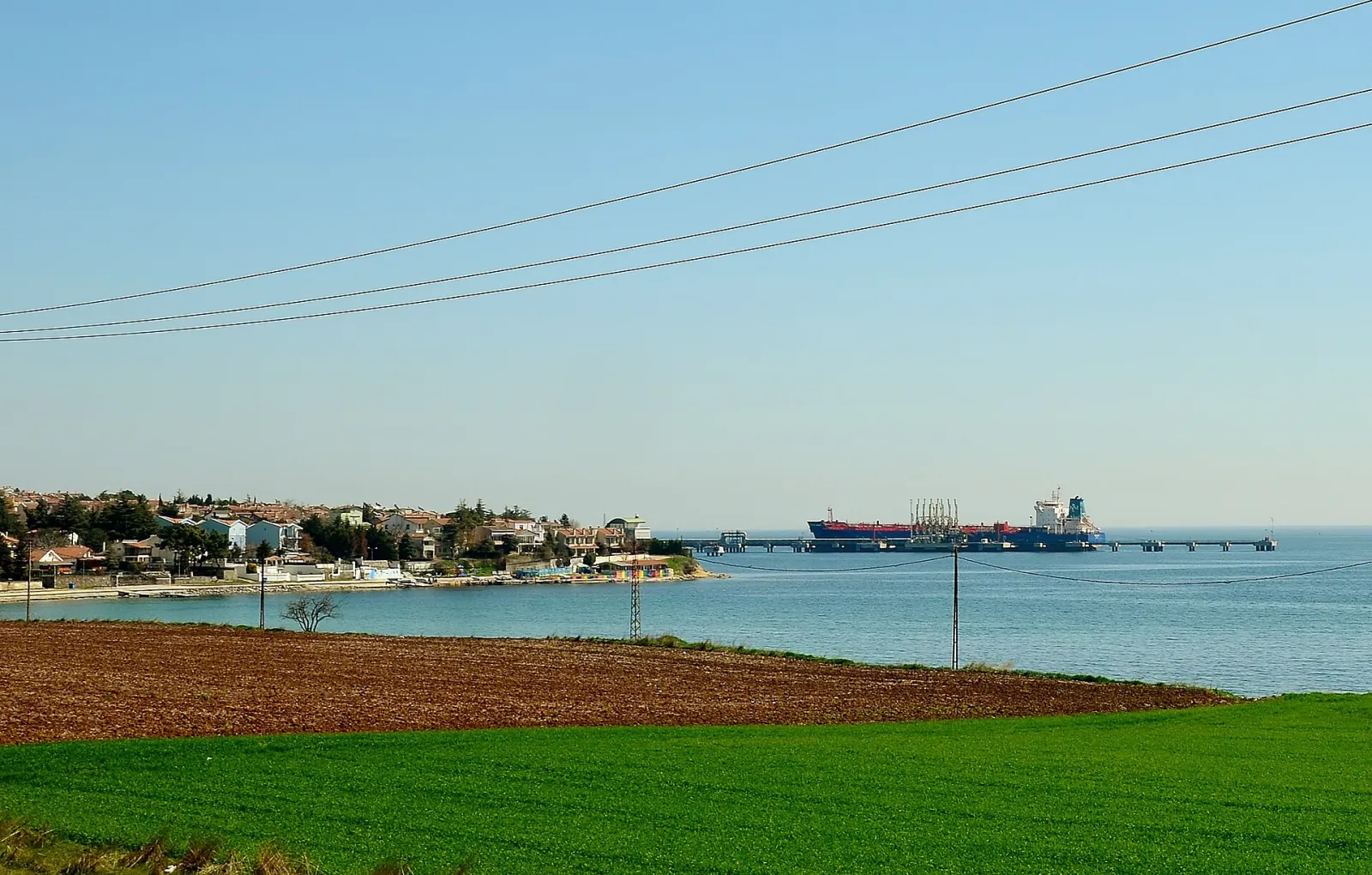
According to an AA report of 30 September, energy imports reached $6.46 billion in August, 33.8% above the $4.83 billion of a year earlier. Crude import volumes, by contrast, fell 1.1% to 2.84 million tonnes. Türkiye is buying less oil and paying more for it; the bill is swelling on price, not volume. Energy made up about 22.5% of total imports in August.
Prices climbed further in September
According to the October outlook of the US Energy Information Administration (EIA), reported by Trend, Brent averaged $114 in September, $23 above August, and touched $131 on 15 September. Shut-in Middle East crude output averaged about 4.8 million barrels a day in September. The EIA expects an average of $105 for the fourth quarter, an upward revision of $14 from the previous month.
This suggests August's energy bill marks the start, not the peak. Trade Ministry flash data show September imports up 5.9% to $31.2 billion and exports up 15.4% to $26 billion, implying a monthly deficit of about $5.2 billion. TurkStat's September energy breakdown arrives at the end of the month. An oil price $23 above the August average inflates the bill even if volumes stay flat.
Fading industry is what keeps the balance
According to Bloomberg HT, industrial production fell 1.9% year on year in August, a fourth straight monthly contraction. In TurkStat's breakdown reported by Dünya, capital goods output fell 5.1% and non-durable consumer goods 4.1%; only the energy group grew, by 4.4%. TurkStat data show that 70.7% of August imports were intermediate goods. As manufacturing contracts, intermediate imports slow and the non-energy deficit stays small.
Leading indicators point the same way for September. The ISO PMI, reported by Yatırımx, fell to 47.9; firms said fuel, oil and transport costs linked to the Middle East had pushed input inflation to a four-month high. Capacity utilisation, meanwhile, rose to 74.1% according to CNBC-e. The divergence suggests firms are running existing capacity without orders or building inventory; confirmation will have to wait for October data.
The real equation facing the MPC
The constraint is this: as long as energy prices stay high, the only buffer for the external balance is weak domestic demand and manufacturing. If a rate cut on 22 October revives industry, intermediate imports will rise and stack on top of the energy bill. Holding rates, on the other hand, prolongs the four-month contraction in manufacturing. The CBRT is choosing between two bad options with a balance sheet whose net reserves have fallen to $37.9 billion.
A data note. On 9 October Investing.com and Trading Economics showed a 277 basis-point jump in the 10-year yield in a single day. According to Borsatek's morning bulletin of 9 October, the domestic benchmark 10-year had already closed 8 October at 35.52% and the 2-year at 39.75%. Bloomberg HT's benchmark screen shows the 10-year at the same level and the 2-year at 39.59%. The jump looks less like a market move than these two sites' series catching up with the domestic benchmark. The domestic benchmark 2-year yield sits about 275 basis points above the 37% policy rate; the market is not pricing cuts as fast as the two sites' stale series implied.
Our thesis: the August current-account surplus is temporary, the energy bill is lasting. The thesis would be refuted if annual growth in energy imports fell below 15% in September and October trade data and Brent settled below $90.
Probabilities
Scenarios
| Scenario | Probability | Trigger | Market impact |
|---|---|---|---|
| H1The bill eats the surplus | 50% | Brent stays in a $100–115 range in the fourth quarter and September energy imports rise more than 30% year on year. | The current account returns to deficit from September, the year-end deficit approaches the upper end of the $48 billion consensus and pressure on reserves persists. |
| H2Oil retreats and the buffer breathes | 30% | Middle East output losses ease faster than the EIA expects and Brent falls below $90. | Annual growth in the energy bill drops below 15%, the current-account deficit ends the year around $40 billion and the MPC finds room to cut. |
| H3Double shock | 20% | Brent breaks above $120 while foreign outflows from lira derivatives and funds accelerate. | The current-account deficit and portfolio outflows strain reserves at the same time, forcing the CBRT into tightening or macroprudential steps instead of cuts. |
Module A
Constraints Matrix
STRUCTURAL AVG 4.5 · TACTICAL AVG 2.7Structural constraints dominate: the outcome is set more by these limits than by the actors' preferences.
Hard structural constraintspersistent · beyond the actors' will
Energy import bill · Türkiye
5/5Up 33.8% year on year to $6.46 billion in August, about 22.5% of imports. Crude volumes fell 1.1%; the bill is growing on price.
Net reserves excluding swaps · Türkiye
5/5$37.9 billion in the week of 2 October; a return to current-account deficit and portfolio outflows are drawing on the same buffer.
Oil price assumption
4/5The EIA puts Brent's September average at $114; its fourth-quarter forecast of $105 was revised up $14 from the previous month. A Middle East output loss of 4.5 million barrels a day is expected to persist.
Current-account path · Türkiye
4/5The 12-month current-account deficit is $40.7 billion; economists' year-end consensus is $48 billion, within a range of $35.8–54 billion.
Tactical frictiontemporary · eases over time
Input costs weeks
3/5Input-cost inflation in the September PMI is at a four-month high; firms cite fuel, oil and transport costs.
Manufacturing contraction months
3/5Industrial output has fallen year on year for four months; in August manufacturing fell 2.5% and capital goods 5.1%. The contraction curbs imports but also defers investment.
Inconsistent yield data days
2/5Investing.com's and Trading Economics' 10-year series jumped 277 basis points on 9 October; the domestic benchmark was already at 35.52% on 8 October. The gap between series can lead to a misreading of how much easing is priced.
Module B
Signal vs Noise
SIGNAL 57% · NOISE 43%
- NOISE
The August current-account surplus shows the external balance is mending
In the AA Finans survey, 14 economists expect a $3.5 billion surplus; but the same survey expects a $48 billion deficit for the year, and the 12-month deficit is $40.7 billion.
- SIGNAL
The energy bill is growing on price, not quantity
Energy imports rose 33.8% year on year to $6.46 billion in August; crude import volumes fell 1.1% to 2.84 million tonnes.
Data: Brent crude oil (futures) ›AA — Energy import bill rose 33.8% in August
- SIGNAL
Energy and gold account for four-fifths of the trade deficit
The August deficit was $5.24 billion; excluding energy and non-monetary gold it was $1.09 billion, with a coverage ratio of 95%.
Anka Haber — TÜİK: August trade deficit rose 22.3% to 5.2 billion dollars
- NOISE
Türkiye's 10-year yield jumped 277 basis points in one day on 9 October
Investing.com's series rose from 32.84 to 35.61; yet Borsatek shows the domestic benchmark 10-year closed 8 October at 35.52%, and Bloomberg HT shows no change on 9 October.
Data: Türkiye 10-year yield ›Borsatek — BIST and global markets, 9 October 2026
- SIGNAL
Oil prices rose after August, so the September bill will be heavier
According to the EIA, Brent averaged $114 in September, $23 above August; its fourth-quarter forecast is $105.
Data: Brent crude oil (futures) ›Trend — EIA raises its Brent price forecast by $14 for Q4 2026
- SIGNAL
Manufacturing has contracted for four months, with investment goods hit hardest
Industrial output fell 1.9% year on year in August, manufacturing 2.5% and capital goods 5.1%; the September PMI was 47.9.
Dünya — Industrial output falls as manufacturing contracts 2.5%
- NOISE
Rising capacity utilisation shows an industrial recovery has begun
Capacity utilisation rose 0.6 points to 74.1% in September, but the PMI fell to 47.9 the same month and output declined for a fourth straight month.
Module C
Asset-Class and Positioning Implications
| Asset class | Exposure | Transmission channel | H1 | H2 | H3 | Expected | Conviction | Horizon | What to watch |
|---|---|---|---|---|---|---|---|---|---|
| FX | USD/TRY path | The energy bill lifts demand for foreign currency; a return to current-account deficit is met from reserves | − | + | −− | −0.60 | ●●● | 0–3 months | Energy imports in September trade data and weekly net reserves excluding swaps |
| Commodities | Crude oil price curve | Persistent Middle East supply losses set the fourth-quarter price | + | −− | ++ | +0.30 | ●●● | 0–3 months | The Middle East outage estimate in the EIA's monthly outlook |
| Sovereign debt | Lira government bonds, near-dated | Current-account and reserve pressure narrows room for cuts; if oil retreats, cuts get priced | − | + | −− | −0.60 | ●●● | 0–3 months | Spread of the domestic benchmark 2-year yield over the policy rate |
| Credit | Türkiye 5-year CDS | The premium rises if external-balance concern spills into credit risk | − | + | −− | −0.60 | ●●● | 3–12 months | The 275 basis-point CDS threshold |
| Equities | Manufacturers and capital goods producers | Four months of contraction and high input costs are squeezing margins | − | + | −− | −0.60 | ●●● | 3–12 months | The October PMI and the capital goods group in September industrial output |
Second-order effects
And then what?
Starting point
Energy imports rose 33.8% year on year to $6.46 billion in August while crude volumes fell 1.1%; Brent averaged $114 in September, $23 above August.
- 1
Trade and current accountwithin weeks
The energy bill in September and October exceeds even August's; as tourism income fades seasonally, the trade deficit stays above $5 billion a month and the current account swings back into deficit from September.
Watch: The energy imports line in TurkStat's September trade data, due at the end of October
- 2
Reserves and the lirawithin weeks
The current-account deficit is financed from reserves rather than portfolio inflows; combined with foreigners unwinding lira derivative and fund positions, net reserves excluding swaps fall below $37.9 billion.
Watch: Net reserves excluding swaps in the CBRT's weekly international reserves table
- 3
Credit costs and outputwithin months
The CBRT delays or shrinks its rate cut; with financing costs high, the contraction in manufacturing lengthens and the fall in capital goods output spreads to investment and employment.
Watch: The 22 October MPC decision and the October ISO manufacturing PMI in early November
What breaks the chain
The chain breaks if Brent settles below $90 or flows through Hormuz return to normal; if annual growth in the energy bill falls below 15%, the current account can be financed without straining reserves.
Triggers
Thresholds to watch
| Indicator | Threshold | Today | What it means |
|---|---|---|---|
| Brent crude oil (futures) | > $110 | 104.43 | If Brent stays above $110 in the fourth quarter, the EIA's $105 assumption is breached, the monthly energy bill climbs towards $7 billion and H1 gains ground. |
| USD/TRY | > 50.50 | 49.17 | If USD/TRY rises from around 49.34 on 9 October to above 50.50, the currency demand created by the energy bill can no longer be met from reserves; H3 comes to the fore. |
| Türkiye 5-year CDS | > 275 bp | 248 | If CDS rises from 249 basis points on 8 October to above 275, concern over the external balance has spilled into credit risk. |
Sources
- Dünya — Economists' current account forecast
- AA — Energy import bill rose 33.8% in August
- Anka Haber — TÜİK: August trade deficit rose 22.3% to 5.2 billion dollars
- Ministry of Trade — Trade Minister Ömer Bolat announces September foreign trade data
- Trend — EIA raises its Brent price forecast by $14 for Q4 2026
- Bloomberg HT — Industrial production fell sharply in August
- Dünya — Industrial output falls as manufacturing contracts 2.5%
- Yatırımx — ISO manufacturing PMI falls in September as weakness stretches to two and a half years
- CNBC-e — Capacity utilisation rose in September
- Borsatek — BIST and global markets, 9 October 2026
- Bloomberg HT — Türkiye 2-year bond
- Investing.com — Turkey 10-Year Bond Yield Historical Data
- TradingEconomics — Turkey Government Bond Yield
- Dünya — CBRT data: reserves fall by about 4 billion dollars
Sourcing and verification rules: methodology · Report an error: contact
Related reports
IVMacro & Debt·Analysis·Americas
Real rates, not inflation, drive US yields higher and lift the dollar
The US 10-year yield rose 43 basis points between 1 September and 8 October; all of the increase came from the real yield, while breakeven inflation stayed put at 2.35%. The broad dollar index gained 2.7% over the same period.
Macro & Debt Markets Desk · 10 October 2026 · 8 min
IVMacro & Debt·In-depth analysis·Europe
Europe exempted defence from its debt rules, and the term premium pays
EU fiscal rules now exclude defence and energy spending of up to 1.5% of GDP a year. The ECB account shows the euro area deficit rising to 3.7% in 2027. Discipline is now imposed by the real term premium, not by Brussels.
Macro & Debt Markets Desk · 9 October 2026 · 11 min
IVMacro & Debt·Analysis·Türkiye and Its Neighbourhood
Foreigners are quitting the lira, not Türkiye, and carry limits the cut
In the week to 2 October, foreigners sold $484.7 million of lira government bonds while putting $928.5 million into Treasury dollar bonds. Net reserves excluding swaps fell by $2 billion the same week. The constraint facing the 22 October MPC is no longer credit risk but demand for lira carry.
Macro & Debt Markets Desk · 9 October 2026 · 7 min