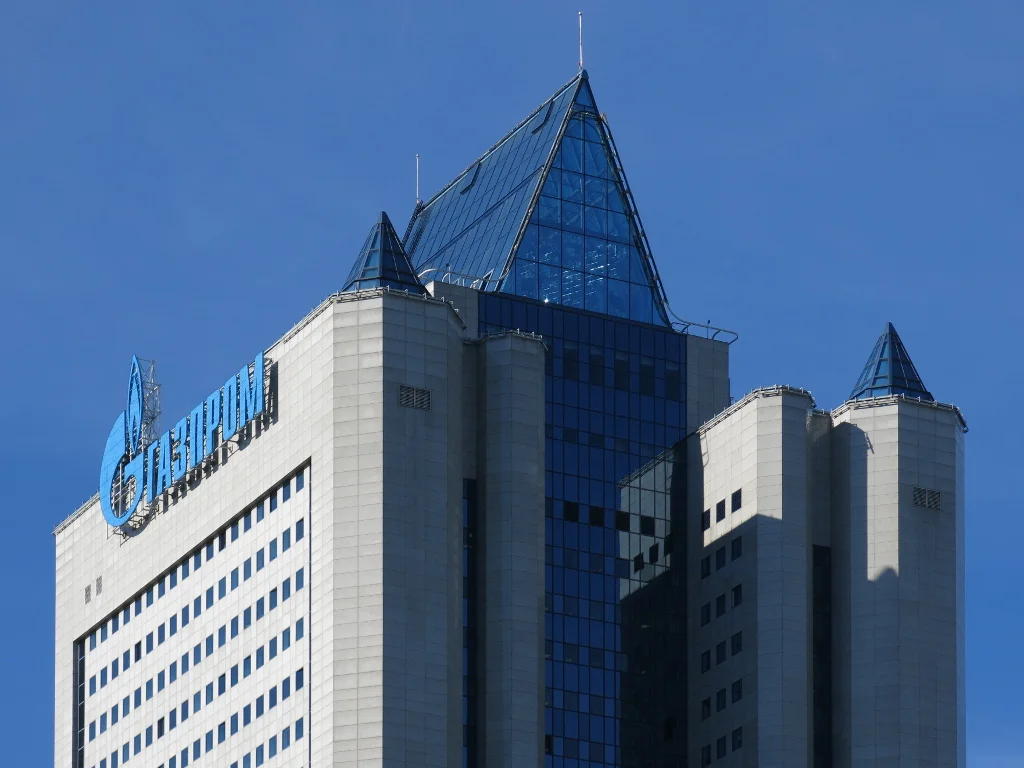
I Geo-Economics & Chokepoints·Analysis·Türkiye and Its Neighbourhood
A narrowing LNG window, not choice, forced Ankara's Gazprom extension
In December 2025 Ankara extended Russian gas for just one year, using LNG to build bargaining power. On 27 November it extended the same contract for three years. In between, Hormuz cut Qatari LNG to 80% below February levels.
Türkiye & Neighbourhood Desk · 28 November 2026 · 7 min read · 12 sources
Talay Insight Analysis DeskAI-assisted analysis, reviewed by an editorPublisher of record: Lu Apps LLCTrack recordRequest a correction
Why it matters
Noise: Russian gas keeps flowing. Novak says volumes are unchanged, so nothing is new on the supply side. Signal: the term has gone from one year to three. Türkiye's annual offtake of up to 21.75 billion cubic metres exceeds the 18 billion cubic metres Gazprom sold to all of Europe in 2025. Using that leverage required a cheap LNG alternative. Hormuz made that alternative expensive, and net reserves have fallen to 11.6 billion dollars.
Implications
- If volumes are unchanged, Russian pipeline gas will cover roughly 37% of the 58.5 billion cubic metres EPDK projects for 2026 consumption through 2029 (Talay calculation).
- Novatek LNG starts flowing to Türkiye on 1 January 2027, the day the EU ban on Russian LNG takes effect; Türkiye is becoming a substitute for the market Russia lost in Europe.
- A one-year contract allowed the price to be reopened every December; a three-year tie means giving up that leverage, and the price has not been disclosed.
Noise
Russian gas keeps flowing and there is something new on the supply side.
Signal
Ankara has abandoned its short-contract strategy.
The noise is in the flows, the signal in the term
The headline is familiar: Russian gas keeps flowing. Russian Deputy Prime Minister Alexander Novak said at the 20th Joint Economic Commission meeting in Istanbul on 27 November that the Gazprom–BOTAŞ contract had been extended for three years. In his account, volumes and delivery terms were unchanged. The price was not disclosed, and BOTAŞ had not confirmed the deal at the time of reporting.
The real news is the term. In December 2025 BOTAŞ extended two Gazprom contracts for only one year. The contracts provided for up to 21.75 billion cubic metres of gas a year. Energy Minister Bayraktar said at the time that one-year extensions had been a deliberate priority, with competitive pricing as the goal. Over the same period Türkiye had committed to 1,500 US LNG cargoes over 15 years. The plan was to use an LNG glut to bring Gazprom back to the table every year.
The leverage rested on the alternative
Türkiye does hold real leverage. Gazprom sold about 18 billion cubic metres of gas to Europe in 2025, down from 201.7 billion cubic metres in 2021. Türkiye's ceiling of 21.75 billion cubic metres exceeds Gazprom's entire European sales (Talay calculation). In normal conditions a buyer of that size would use short contracts to push the price down.
For that leverage to work, the alternative had to be cheap. Türkiye was Europe's largest LNG importer in the first quarter of 2026, and IEEFA data show about 60% of that LNG came from the US. EPDK data put the US share at 48.7% and Nigeria's at 18.5% in February. BOTAŞ had also contracted a combined 8.7 billion cubic metres of LNG from BP, ENI and Shell for 2026–2028.
Hormuz made the alternative expensive
The ground shifted after 28 February. According to the EIA, about 20% of global LNG trade passes through Hormuz. Qatari and Emirati shipments in September were roughly 80% below February levels. On 2 October the CEO of Japanese buyer Jera said spot LNG prices were about double their level a year earlier, adding that he did not expect Qatari supply to return in the near term.
The second blow comes from Europe. The EU will halt all Russian LNG imports on 1 January 2027. Jera said European storage was below seasonal norms in early October, which puts Europe and Türkiye in the same pool competing for Atlantic cargoes. The glut that gave Ankara bargaining power a year ago has turned into a pre-winter shortage.
The binding constraint is foreign currency
The second leg of the constraint sits on the balance sheet. Türkiye imported 62.5 billion dollars of energy in 2025. CBRT data show net reserves excluding swaps fell 16.9 billion dollars in the week to 20 November, to 11.6 billion dollars. Gross reserves, at 142 billion dollars, are at their lowest since May 2025. Relying on spot LNG at double the price would weigh directly on that buffer.
The third pipeline is uncertain too. Türkiye buys about 10 billion cubic metres of gas a year from Iran. Gazete Oksijen reported in December 2025 that the contract expired in November 2026, while other sources give July; whether it has been extended could not be verified. The US blockade of Iran, in place since April, further clouds the line's future. With two of three sources under strain, Moscow becomes the only flexible supplier left.
Moscow wins the Turkish gateway
From Russia's side the picture reads differently. Novatek starts shipping LNG to Türkiye on 1 January 2027, the first day of the EU ban. Novak said volumes would be small but gave no figure. Russia has sold Türkiye more than 20 million tonnes of petroleum products this year, mostly diesel. Akkuyu's first unit enters commissioning in December, and the two countries also renewed their 100 billion dollar trade target.
The dependence runs both ways. Gazprom has no other pipeline customer large enough to replace the European market it lost. Yet Ankara has given no sign that it turned this leverage into a better price. If it had, that would show up in the contract's price formula. Until the formula is disclosed, the reading is that Türkiye traded flexibility for security of supply.
What comes next
The first test is confirmation from BOTAŞ: if volume, term and price formula are disclosed, the cost of the trade becomes visible. The second is Novatek's 2027 volume. If it grows, Brussels may take up suspicions that Russian LNG is reaching Europe via Türkiye. The third is LNG flow through Hormuz.
The development that would refute this reading is clear. If BOTAŞ discloses a meaningful price discount or an annual price review clause, Ankara will have used its leverage. If Qatari LNG approaches February levels by midwinter, the three-year tie will read as a choice rather than a necessity.
Probabilities
Scenarios
| Scenario | Probability | Trigger | Market impact |
|---|---|---|---|
| H1A quiet trade-off | 55% | BOTAŞ confirms the volume and term, the price formula is not disclosed and Hormuz LNG flows stay low through the winter. | Türkiye gets through winter on pipeline gas, spot LNG purchases stay limited and the loss of flexibility lasts until 2029. Refuted if a price discount is disclosed. |
| H2Ankara turned leverage into price | 25% | BOTAŞ or the ministry discloses a price discount or an annual review clause. | The three-year tie shows bargaining power was used, and the energy bill comes in lower than expected. Refuted if the formula simply carries over the old terms. |
| H3Friction with the West | 20% | Novatek volumes grow and the EU or US responds formally to Russian energy flows via Türkiye. | Ankara comes under pressure to choose between Russian energy and Western trade access, and its hub plan slows. Refuted if the EU keeps Türkiye outside ban enforcement checks. |
Module A
Constraints Matrix
STRUCTURAL AVG 4.0 · TACTICAL AVG 2.7Structural constraints dominate: the outcome is set more by these limits than by the actors' preferences.
Hard structural constraintspersistent · beyond the actors' will
Gulf LNG supply · Iran
5/5Qatari and Emirati LNG shipments through Hormuz were about 80% below February levels in September; spot LNG costs roughly double its level a year ago.
FX buffer · Türkiye
4/5Net reserves excluding swaps stood at 11.6 billion dollars in the week to 20 November; the 2025 energy import bill was 62.5 billion dollars.
EU ban on Russian LNG · European Union
4/5The EU halts all Russian LNG imports on 1 January 2027; Europe and Türkiye compete in the same pool for Atlantic cargoes.
Near-total reliance on imported gas · Türkiye
3/5Türkiye imports almost all of its gas; EPDK projects 2026 consumption at 58.5 billion cubic metres.
Tactical frictiontemporary · eases over time
Undisclosed price weeks
3/5Novak said volumes and terms are unchanged; as of 27 November there was no price formula and no confirmation from BOTAŞ.
Uncertainty over the Iranian contract months
3/5Sources give July or November 2026 as the expiry of the roughly 10 billion cubic metre a year Iranian contract; an extension could not be verified.
Novatek volumes months
2/5Novatek begins shipments on 1 January 2027; Novak said volumes would be small but gave no figure.
Module B
Signal vs Noise
SIGNAL 67% · NOISE 33%
- NOISE
Russian gas keeps flowing and there is something new on the supply side.
Novak says volumes and delivery terms are unchanged; the December 2025 contracts provided for up to 21.75 billion cubic metres of gas a year.
- SIGNAL
Ankara has abandoned its short-contract strategy.
BOTAŞ, which deliberately chose a one-year extension in December 2025, extended the same contract for three years on 27 November 2026.
Hürriyet Daily News — Ankara renews Russia gas contracts for one year
- SIGNAL
For Gazprom, Türkiye is a bigger pipeline customer than all of Europe.
Gazprom sold about 18 billion cubic metres to Europe in 2025, against 201.7 billion in 2021; Türkiye's ceiling is 21.75 billion cubic metres.
- SIGNAL
Hormuz has made the LNG alternative expensive.
Qatari and Emirati shipments in September were about 80% below February; spot LNG is roughly double its level a year ago.
Data: Strait of Hormuz transits ›Bloomberg HT — Qatari LNG's return to the market does not look near
- NOISE
The 100 billion dollar trade understanding is a new economic commitment.
Trade Minister Bolat's statement says the target was set earlier by the leaders; no current trade volume or new figure was given.
Bloomberg HT — Türkiye and Russia agree on a 100 billion dollar trade target
- SIGNAL
The FX buffer leaves no room for spot energy purchases.
Net reserves excluding swaps fell 16.9 billion dollars in the week to 20 November, to 11.6 billion; gross reserves stand at 142 billion dollars.
Module C
Asset-Class and Positioning Implications
| Asset class | Exposure | Transmission channel | H1 | H2 | H3 | Expected | Conviction | Horizon | What to watch |
|---|---|---|---|---|---|---|---|---|---|
| Commodities | European natural gas futures curve (TTF) | Lower Turkish spot LNG demand and the EU ban on Russian LNG | 0 | 0 | + | +0.20 | ●●● | 0–3 months | European storage fill rates and LNG transits through Hormuz |
| FX | Pace of lira depreciation against the dollar | FX demand from the energy import bill | 0 | + | −− | −0.15 | ●●● | 3–12 months | TÜİK monthly energy imports and net reserves excluding swaps |
| Credit | Türkiye sovereign credit risk (5Y CDS) | External balance and the risk of sanctions friction with the West | 0 | + | −− | −0.15 | ●●● | 3–12 months | EU statements on Russian LNG flows via Türkiye |
| Freight & insurance | Atlantic LNG shipping rates | Competition between Europe and Türkiye for the same cargoes | + | 0 | + | +0.75 | ●●● | 0–3 months | Atlantic LNG carrier charter rates |
Second-order effects
And then what?
Starting point
On 27 November 2026 BOTAŞ extended for three years, on the same terms, the Gazprom contract it had renewed for one year in December 2025, which provides for up to 21.75 billion cubic metres of gas a year.
- 1
Energy importswithin weeks
With most winter supply secured, BOTAŞ needs fewer expensive spot LNG purchases; the number of spot cargoes in December–February may come in below last winter.
Watch: EPDK monthly LNG import data for December and January
- 2
External balancewithin months
Fewer spot purchases soften FX demand from the energy import bill, easing pressure on the CBRT's net reserves by roughly one winter line item.
Watch: TÜİK monthly energy imports and the CBRT's weekly net reserves excluding swaps
- 3
Trade policywithin months
If Novatek LNG grows and gas flows to Europe via Türkiye increase, the EU takes an audit or sanctions step questioning the origin of gas leaving Türkiye.
Watch: The European Commission's first report on enforcing the Russian LNG ban
What breaks the chain
If Qatari and Emirati LNG flows approach February levels and spot prices fall, BOTAŞ returns to spot LNG and the first step fails. If Novatek volumes stay small, the third step is not triggered.
Triggers
Thresholds to watch
| Indicator | Threshold | Today | What it means |
|---|---|---|---|
| Strait of Hormuz transits | Return to February levels | — | If Gulf LNG flows normalise, Türkiye's spot alternative becomes cheaper and the three-year tie looks like expensive insurance. |
| EU gas storage fill level | Below seasonal norms | — | If European storage stays low into January, competition between Türkiye and Europe for Atlantic LNG cargoes intensifies. |
| Türkiye 5-year CDS | > 300 bp | — | With the FX buffer under pressure, spot energy purchases raise external financing risk and dependence on Russian pipeline gas becomes entrenched. |
Sources
- Bloomberg HT — Gazprom and BOTAŞ extend gas contract by three years (27 November 2026)
- Daily Sabah — Türkiye, Russia extend gas supply contract, sign LNG supply deal (27 November 2026)
- TASS (Russian state news agency) — Russian deputy prime minister reports on oil output forecast, natural gas contracts
- Hürriyet Daily News — Ankara renews Russia gas contracts for one year (4 December 2025)
- AA — Gazprom expects European gas prices to keep rising (27 November 2026)
- Euronews Turkish — Türkiye became Europe's largest LNG importer in the first quarter of 2026
- Ministry of Energy and Natural Resources — 8.7 billion cubic metre gas agreement with three energy companies (9 September 2025)
- Bloomberg HT — Qatari LNG's return to the market does not look near (2 October 2026)
- Endeks24 — Türkiye diversifies gas supply after the Hormuz lesson (24 June 2026)
- Bloomberg HT — CBRT reserves at their lowest in 18 months (26 November 2026)
- Gazete Oksijen — TASS: Russia and Iran want to extend gas contracts with Türkiye (1 December 2025)
- Bloomberg HT — Türkiye and Russia agree on a 100 billion dollar trade target (27 November 2026)
Sourcing and verification rules: methodology · Report an error: contact
Related reports
IVMacro & Debt·Analysis·Türkiye and Its Neighbourhood
Carry stock four times the net buffer forced the CBRT's repo pause
Foreigners' lira-positive derivative positions with Turkish banks shrank by 6.7 billion dollars to 50 billion dollars in the week of 20 November. Net reserves excluding swaps stand at 11.6 billion dollars. The CBRT's repo pause raises the price of keeping that stock in place by 300 basis points.
Macro & Debt Markets Desk · 27 November 2026 · 8 min
IVMacro & Debt·Analysis·Türkiye and Its Neighbourhood
The CBRT's swap auction buys time, not reserves
On 25 November the CBRT opened 3 billion dollars of swaps across three maturities. The same week bankers estimated sales of 11.9 billion dollars. The net buffer excluding swaps fell to 11.2 billion dollars; swaps do not enlarge that figure, they merely finance the delay.
Macro & Debt Markets Desk · 26 November 2026 · 7 min
IVMacro & Debt·Analysis·Türkiye and Its Neighbourhood
Türkiye's fund wind-down has a date, but external balances drive risk
Ankara has set 27 November for the last interim payout and is sending the capital markets bill to parliament. The market has not priced it in: CDS stood at 254.89 basis points on 23 November and the 10-year yield at 33.69%. The premium now rides on the external balance, not the funds.
Macro & Debt Markets Desk · 25 November 2026 · 8 min