V Technology Geopolitics & AI·Analysis·Asia-Pacific
China's rare-earth lever reaches chip fab motors as capacity runs full
TSMC is looking for rare-earth-free motors for fab equipment to hedge Chinese licensing risk. Beijing's suspension of its expanded controls lapses on 10 November, and mature-node capacity for 2027 is already largely sold.
Technology Geopolitics Desk · 23 October 2026 · 7 min read · 7 sources
Why it matters
Noise: TSMC's survey of rare-earth-free motors is being read as a break with China, yet 2 sources say talks are at an early stage and no near-term order changes are expected. Signal: the expanded controls Beijing suspended for 1 year in November 2025 lapse on 10 November 2026 with no extension announced, while case-by-case licensing for 7 heavy elements runs on regardless. That uncertainty lands on a system in which Powerchip has pre-sold 80% of its 2027 MOSFET and IGBT capacity.
Implications
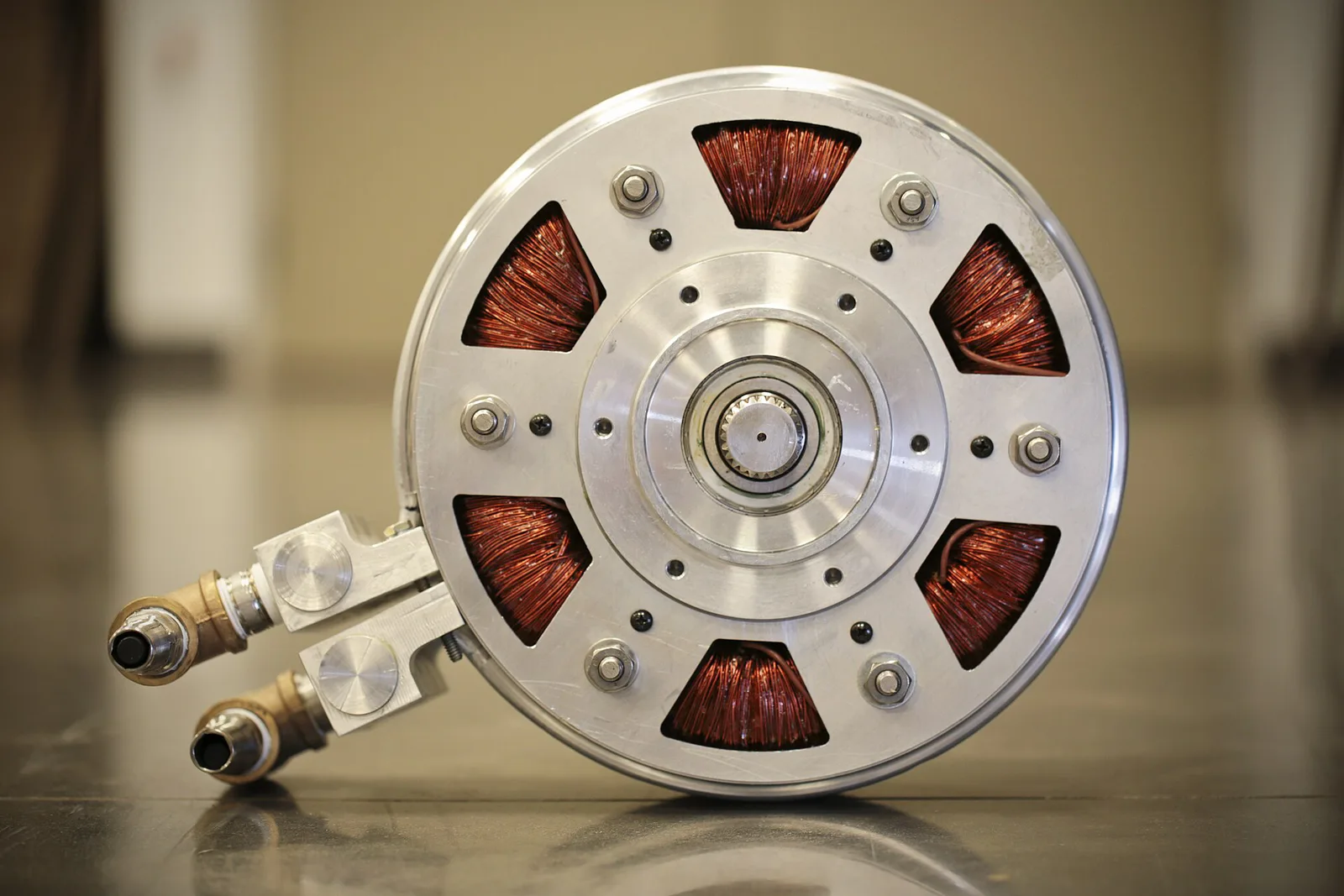
- According to a Reuters report on 22 October citing 3 industry executives, TSMC has asked suppliers about rare-earth-free options for the motors in its factory automation equipment.
- China accounted for 69.2% of global rare earth mining in 2025; its share of processing approaches 90%, and 99% for the heaviest elements.
- Powerchip is negotiating 10–20% increases in logic foundry prices for 2027 and has tied 80% of its 2027 MOSFET and IGBT capacity to multi-year agreements.
Noise
TSMC's search for rare-earth-free motors signals a near-term production risk or a break with China
Signal
With 18 days until the truce lapses on 10 November, Beijing has announced no extension
The noise is in substitution, the signal in the calendar
According to a Reuters report on 22 October citing 3 industry executives, TSMC has asked its suppliers whether factory automation equipment could switch to motors free of rare earths. At first glance the story reads as the world's most advanced chipmaker cutting loose from Chinese raw materials. Yet 2 sources say the talks are at an early stage and have not turned into a broad shift. BigGo Finance's 22 October summary says the market expects no near-term order changes.
The quiet variable is a date. The expanded control list and the extraterritorial licensing rule, which China's Ministry of Commerce suspended for 1 year in November 2025, expire on 10 November 2026. According to a 6 October summary by Startup Fortune, Beijing has said nothing about extending, narrowing or ending the suspension. The truce has 18 days left to run, and TSMC's survey surfaced in the press squarely inside that window.
Where the constraint does not ease
Whether or not the truce lapses, 1 door stays open. The case-by-case licensing regime introduced in April 2025 remains in force for 7 elements: samarium, gadolinium, terbium, dysprosium, lutetium, scandium and yttrium. Reuters notes that rare earth magnets are common in the motors that drive moving parts in industrial equipment, and TSMC's heavily automated fabs depend on them. The suspended extraterritorial rule, with its 0.1% value threshold, is drafted broadly enough to reach foreign products containing Chinese-origin rare earths.
China's leverage can be measured. Mining Technology data cited by Startup Fortune show that of roughly 390,000 tonnes of global mine output in 2025, 270,000 tonnes, or 69.2%, came from China. Its share of processing nears 90%, and 99% for the heaviest elements. The same source says Chinese negotiators have linked approval of specialised magnets used in fighter jets and missiles to US restrictions on advanced AI chips. As of 23 October that linkage could not be verified with a named official source.
Licences are not handed out at the same speed to everyone. A CSIS assessment dated 27 April 2026 found that magnet exports rose 13% after the November 2025 easing. Shipments to Europe climbed 60% year on year while US imports fell 11%. Between April and December 2025 the US bought only 17 tonnes of yttrium from China, against 333 tonnes in the 8 months before the restrictions. Since 2025 Beijing's lever has not been a ban but selective speed.
No buffer on the capacity side
The weight of the constraint comes from how full the system it hits already is. On 21 October Powerchip (PSMC) reported that its third-quarter gross margin rose from 28% to 48%. Prices for 8- and 12-inch logic wafers are up 8–10%, and the company is negotiating a further 10–20% for 2027. Some 80% of its 2027 MOSFET and IGBT capacity is committed under multi-year agreements. TrendForce attributes this to the large memory makers shifting capacity to HBM, the stacked memory used in AI accelerators, and exiting mature DRAM.
In a system with spare capacity, a motor supply problem would mean a delay of a few weeks. In one that is 80% pre-sold, it passes straight into prices and lead times. That is why TSMC's search for substitutes is not a cost line today but insurance for its 2027 capacity plan. Taiwan's government is moving the same way. In February Economy Minister Kung Ming-hsin said ITRI would build a pilot line expected to meet an estimated 50% of domestic demand within 3 years. In June AIT Director Raymond Greene said the US was developing alternative sources with Taiwan.
What would falsify this reading
Our thesis: even if Beijing extends the truce on 10 November, it will keep the 7-element licensing regime as a bargaining chip, and Taiwanese manufacturers will pursue substitution slowly but irreversibly. We put a quiet extension at 50% and selective tightening at 35%.
First falsifier: if the US–China truce text includes a clause granting the US a general licence for the 7 heavy elements, the urgency of substitution disappears. Second: if TSMC or its equipment suppliers announce by the end of 2026 that substitute motors fail to meet precision requirements, the lever will bite for longer than we expect. Third: if Powerchip's fourth-quarter revenue misses the expected double-digit rise, the capacity-squeeze thesis weakens and motor risk feeds into prices more slowly.
Probabilities
Scenarios
| Scenario | Probability | Trigger | Market impact |
|---|---|---|---|
| H1Quiet extension, slow substitution | 50% | Beijing extends the truce on 10 November or keeps it in effect in practice. | TSMC's survey stays on supplier roadmaps and the licensing lever waits at the negotiating table. |
| H2Selective tightening | 35% | The truce is not renewed, or licence approvals for the US and Taiwan slow down. | Equipment suppliers pull forward orders for substitute motors, and magnet shipments to the US lag those to Europe. |
| H3Comprehensive settlement | 15% | The US–China truce text includes a general licensing clause covering the 7 heavy elements. | Substitution slows on cost grounds, and Taiwan's programme remains a long-term insurance policy. |
Module A
Constraints Matrix
STRUCTURAL AVG 4.0 · TACTICAL AVG 3.0Structural constraints dominate: the outcome is set more by these limits than by the actors' preferences.
Hard structural constraintspersistent · beyond the actors' will
China's share of processing · China
5/5China supplied 69.2% of global mining in 2025; its processing share nears 90%, and 99% for the heaviest elements. No non-Chinese capacity can offset that share in the near term.
April 2025 licensing regime · China
4/5Case-by-case licensing for 7 medium and heavy elements stays in force regardless of the 10 November truce; even if the truce is extended, this door remains in Beijing's hands.
Precision demands on substitute motors · Taiwan
3/5In fab automation, motor precision and reliability determine yield; 2 sources say talks are at an early stage and no near-term order changes are expected.
Tactical frictiontemporary · eases over time
Uncertainty over the 10 November truce weeks
4/5As of 6 October there was no extension announced for the expanded list and extraterritorial rule suspended for 1 year in November 2025; the decision keeps supplier plans on hold.
Mature-node capacity is full months
3/580% of Powerchip's 2027 MOSFET and IGBT capacity is tied to multi-year agreements; negotiations on a further 10–20% increase for 2027 are under way.
Timetable of ITRI's pilot line months
2/5Taiwan's rare earth pilot line aims to meet an estimated 50% of domestic demand within 3 years; that horizon does not cover the 10 November risk.
Module B
Signal vs Noise
SIGNAL 60% · NOISE 40%
- NOISE
TSMC's search for rare-earth-free motors signals a near-term production risk or a break with China
Reuters' 2 sources say talks are at an early stage and have not become a broad shift; BigGo Finance's 22 October summary says no near-term order changes are expected.
- SIGNAL
With 18 days until the truce lapses on 10 November, Beijing has announced no extension
The expanded list and extraterritorial licensing rule suspended for 1 year in November 2025 lapse on 10 November 2026; as of 6 October there was no announcement on extending, narrowing or ending them.
Startup Fortune — China's Rare Earth Export Truce Expires November 10 With No Renewal in Sight
- SIGNAL
Beijing hands out licences at selective speed, and the US falls behind in the queue
CSIS says that in November 2025 magnet shipments to Europe rose 60% year on year while US imports fell 11%; the US bought 17 tonnes of yttrium in April–December 2025, against 333 tonnes in the previous 8 months.
- SIGNAL
Mature-node capacity has no buffer to absorb a supply shock
80% of Powerchip's 2027 MOSFET and IGBT capacity is contracted; logic wafer prices rose 8–10% in the third quarter, with a further 10–20% sought for 2027.
- NOISE
Record margins mean lasting scarcity across every legacy memory product
The Taipei Times reports that Powerchip saw slight weakness in DDR3 prices, which it put down to temporary supply from corporate PC refreshes; gross margin may be 48%, but prices still fluctuate by product.
Module C
Asset-Class and Positioning Implications
| Asset class | Exposure | Transmission channel | H1 | H2 | H3 | Expected | Conviction | Horizon | What to watch |
|---|---|---|---|---|---|---|---|---|---|
| Equities | Asian semiconductor equipment chain | Motor redesign, lead times and cost pass-through | 0 | − | + | −0.20 | ●●● | 3–12 months | Rare-earth-free motor announcements from equipment suppliers |
| Commodities | Non-Chinese rare earth magnet materials | Premium on non-Chinese supply if licensing tightens | 0 | ++ | − | +0.55 | ●●● | 3–12 months | China's Ministry of Commerce announcement on the 10 November truce |
| Equities | Mature-node foundries | Pricing power and multi-year agreements amid tight capacity | + | + | 0 | +0.85 | ●●● | 3–12 months | PSMC fourth-quarter revenue and share of multi-year contracts |
| FX | New Taiwan dollar | Semiconductor exports and foreign portfolio flows | 0 | − | + | −0.20 | ●●● | 0–3 months | Net foreign flows on the Taiex before 10 November |
Second-order effects
And then what?
Starting point
On 22 October TSMC sounded out suppliers on rare-earth-free motors; there is no extension announced for Beijing's truce, which lapses on 10 November 2026.
- 1
Supply chainwithin weeks
Equipment suppliers revisit motor and magnet designs, and precision and reliability testing of substitute products begins.
Watch: Rare-earth-free motor announcements from equipment makers and reports on the outcome of TSMC's survey
- 2
Capital expenditurewithin months
Substitution costs feed into equipment prices and lead times, stacking on top of mature-node capacity for 2027 that is already 80% committed under multi-year agreements.
Watch: Foundry announcements of 2027 price increases and changes in equipment lead times
- 3
Industrial policywithin months
Demand for non-Chinese magnets becomes entrenched; the ITRI pilot line and US–Taiwan cooperation are brought forward, and Beijing's licensing lever erodes over time.
Watch: Budget and timetable announcements for ITRI's rare earth project
What breaks the chain
If Beijing extends the truce and opens general licences for the 7 heavy elements to the US and Taiwan as well, the urgency of substitution disappears and the chain stops at the first step.
Triggers
Thresholds to watch
| Indicator | Threshold | Today | What it means |
|---|---|---|---|
| VIX volatility index | > 20 | 16.68 | A VIX above 20 signals shrinking global risk appetite; combined with a licensing surprise before 10 November, it would accelerate outflows from Asian semiconductor assets. |
Sources
- Global Banking & Finance Review (Reuters) — Exclusive: TSMC seeks factory-equipment alternatives to thwart China's rare earths grip
- Taipei Times (Reuters) — TSMC seeks factory-equipment alternatives
- BigGo Finance — TSMC Moves Early on Rare-Earth-Free Equipment, Asking Suppliers for De-China Options
- Startup Fortune — China's Rare Earth Export Truce Expires November 10 With No Renewal in Sight
- CSIS — Rare Earth Export Restrictions One Year Later
- TrendForce — PSMC Q3 Gross Margin Hits 48% on Memory Price Gains; Eyes 10–20% Mature-Node Price Hikes in 2027
- Taipei Times — Powerchip expects more price hikes
Sourcing and verification rules: methodology · Report an error: contact
Related reports
VTech & AI·Analysis·Asia-Pacific
AI's bottleneck shifts from export licences to concrete, steel and power
Chinese firms have ordered 35 billion dollars' worth of Nvidia cards, yet Nvidia can make at most 3 million cards in 2027. In the same 48 hours, steelwork halted at TSMC sites and a Melbourne data centre lost its grid connection.
Technology Geopolitics Desk · 22 October 2026 · 7 min
IICyber & Infrastructure·Analysis·Asia-Pacific
Cyber and maritime pressure on Taiwan converge on the election calendar
Taiwan's National Security Bureau counted 185.6 million attacks on the government network in July and linked them to the 28 November election. On the same day, 20 October, a Chinese coast guard vessel switched off its AIS and entered restricted waters off Pratas.
Cyber & Critical Infrastructure Desk · 21 October 2026 · 7 min
VTech & AI·Analysis·Asia-Pacific
AI memory's control layer is shifting from Korea to Taiwan
Seoul Economic Daily reports that as of 18 October Samsung is giving the base die of Nvidia's custom NVHBM memory to TSMC's 3-nanometre line. In the same week foreigners pulled $19.4 billion out of Taiwanese equities.
Technology Geopolitics Desk · 20 October 2026 · 7 min