II Cyber Warfare & Critical Infrastructure·Analysis·Asia-Pacific
Attacks now take hours, and Asia's utilities learn of breaches from attackers
KEPCO learned of a leak affecting 1.52 million people from the attacker's email. CERT-In says attacks have shrunk from days to hours. A month on, the European Commission has still not cleaned its network. The common thread is detection.
Cyber & Critical Infrastructure Desk · 25 November 2026 · 8 min read · 6 sources
Talay Insight Analysis DeskAI-assisted analysis, reviewed by an editorPublisher of record: Lu Apps LLCTrack recordRequest a correction
Why it matters
Noise: the number of leaked records; at KEPCO it is 1.52 million and the headlines are about the figure. Signal: time to detection. KEPCO learned of the breach from the attacker's email on 19 November and could not determine from its logs whose data had left the SRM system. CERT-In says AI-assisted attacks go from initial access to impact in a few hours. The ARTEX tool is being cited both in India and in Brussels. The constraint is not the defensive perimeter but detection and logging that cannot keep pace with the attacker.
Implications
- Data on 650,487 people leaked from KEPCO's billing platform, which has 9.2 million users, and on 869,761 from its supplier system; the company learned of the breach from the attacker's email on 19 November.
- In its 20 November advisory CERT-In said unauthorised payments had spread to technology firms serving state-linked payment processes, and that attack times had fallen from days to hours.
- The European Commission detected the intruder on 22 October; according to Euronews the breach is still not fully contained a month later, and suspicion is turning to ARTEX, a tool of Chinese origin.
Noise
The number of leaked records measures the risk
Signal
Critical infrastructure sees breaches when the attacker announces them
The noise is the record count, the signal is the clock
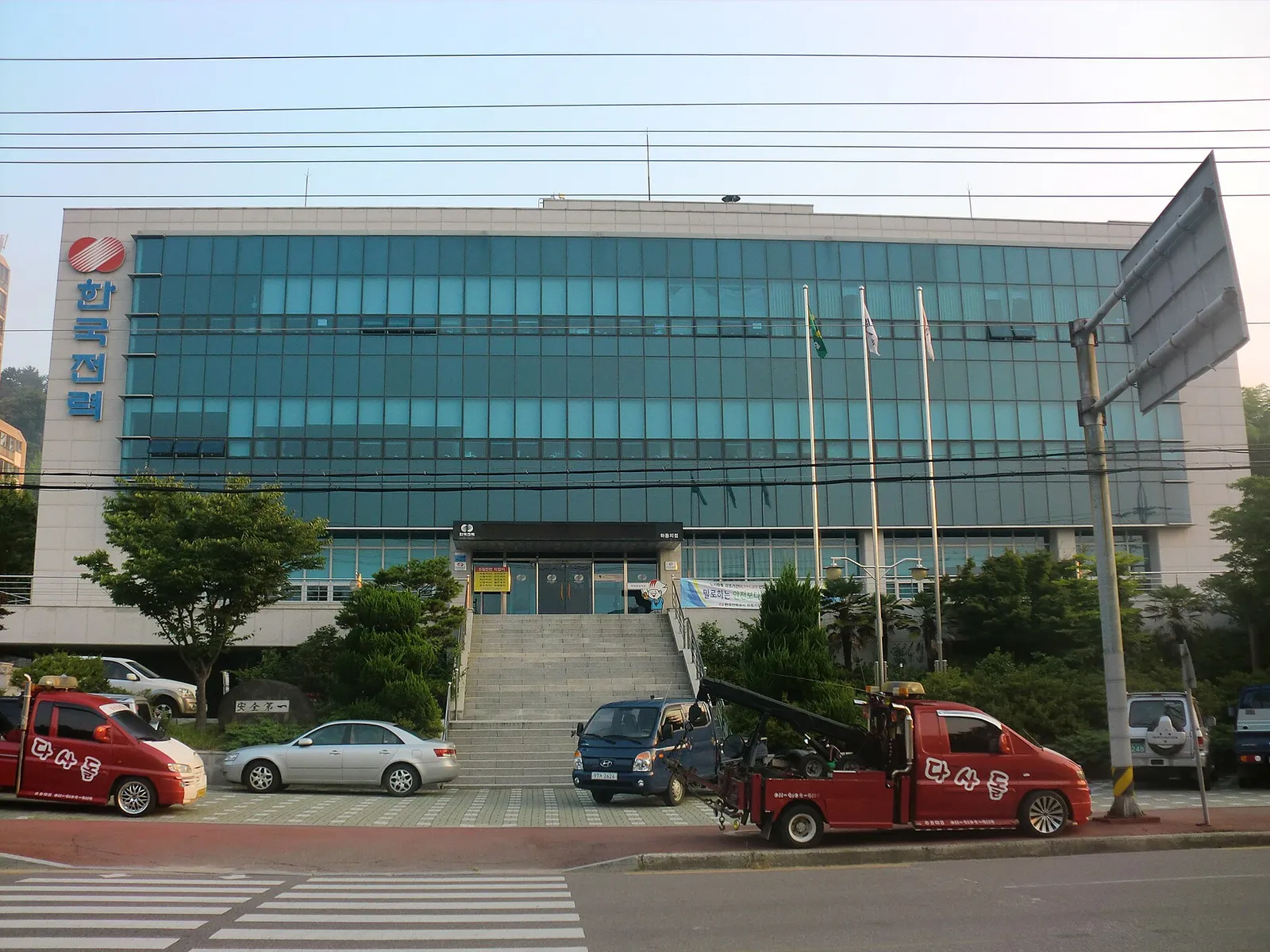
This week's headline is a big number. On 24 November KEPCO, South Korea's state power company, disclosed that data on 1.52 million people had leaked. The figure is striking, but the real information sits on another line. KEPCO did not learn of the breach from its own monitoring. On 19 November a listing appeared on the dark web, and the same day someone believed to be the attacker emailed the company in English.
Talay's reading is this: the binding constraint on Asia's critical infrastructure is not stopping attacks but seeing them in time. Attackers have sped up. Defenders' detection and logging capacity has not grown at the same pace. Data from three different countries this week point to the same gap.
1 · KEPCO: not knowing whose data left
On KEPCO ON, the company's billing platform, data on 650,487 of its 9.2 million users leaked. The records hold 12 types of data, including national ID numbers, bank accounts and card numbers. The picture is worse in SRM, the supplier system. The company could not establish the scope and notified all 869,761 users; 426,827 of them are company representatives and 442,934 are employees and corporate staff.
Being unable to establish scope means access logs were either not kept or could not be read. The company cut off external IP access on 20 November and notified the regulator on the evening of 22 November. The PIPC opened an on-site inspection on 23 November. It is KEPCO's second leak in two months; in October the Korea Times reported that details of about 24,000 employees had been published on an outside site. Sources report no impact on grid systems. The SRM data are still valuable: a list of the firms and staff that work on the grid is a ready-made directory for future targeted phishing.
2 · India: attacks take hours, the reporting window is six
CERT-In's 20 November advisory describes the method. Attackers do not break the payment interface; they alter business records and approval relationships and move money out through the company's own legitimate flows. Because the transaction passes through a trusted system, no alarm goes off. The target list has expanded beyond banks to technology providers serving state-linked payment processes.
According to CERT-In Director General Sanjay Bahl, the time from initial access to impact has fallen from days to a few hours. On 4 November the agency identified a group called CRAFTY FALCON automating attack steps with tools such as ARTEX, PentAGI and CyberStrikeAI. In India an incident must be reported within six hours of being noticed. If an attack is over in a few hours, the reporting window is longer than the attack itself.
On 23 November wind turbine maker Suzlon disclosed a cyber incident to the stock exchange. The company reported it to CERT-In and said it saw no impact on critical applications. It did not say which system was affected or whether data were stolen. India requires turbine data to be stored domestically and turbines to be managed from inside the country, which leaves open whether the operational network was affected.
3 · Same tool, different target
On 23 November Euronews reported that a China-backed group was suspected behind an attack on the European Commission's networks that has been under way since 22 October. One basis for the suspicion is ARTEX, an AI-driven vulnerability-hunting penetration testing tool of Chinese origin. Microsoft and CrowdStrike link ARTEX attacks to the China-linked groups Storm-0940 and Vapor Panda. According to SBS, CrowdStrike also observed targets linked to South Korea. The Commission has made no formal attribution.
This is where the link forms. The same tool name appears in financial fraud in India and in a government network in Brussels. One is after money, the other after secrets. The common factor is speed: the tool finds flaws faster than a human team. A month on, the Commission has still not fully cleaned its network. KEPCO saw its breach only when the attacker told it. In both cases detection ran on the attacker's timetable.
4 · What it means for Türkiye
Energy and utility companies in Türkiye face the same constraint. The question is not the quality of the firewall but how many hours it takes them to say which records left when a breach occurs. The KEPCO case also shows that supplier systems are as sensitive as customer platforms.
5 · Probabilities and falsifier
The most likely path is slow remediation: regulators impose penalties, logging and reporting rules tighten and attacks continue; we put this path at 55%. On the second path leaked supplier and employee data reach an operational network through targeted phishing; probability 30%. On the third path a utility in the region reports a physical service outage; probability 15%.
The data that would refute the thesis are concrete. The PIPC inspection could show that KEPCO's access logs were complete and that its own systems spotted the leak quickly. CERT-In's next advisories could show attack times lengthening back to days. If both happen, detection is not the constraint and the thesis fails.
Probabilities
Scenarios
| Scenario | Probability | Trigger | Market impact |
|---|---|---|---|
| H1Slow remediation | 55% | The PIPC and CERT-In issue penalties and guidelines, and attacks stay at the level of data leaks. | Logging and reporting rules tighten; compliance costs rise but physical services are not disrupted. |
| H2From phishing to operations | 30% | Leaked supplier or employee data are used to gain access to an operational network. | A company such as KEPCO or Suzlon reports a second breach, and regulators launch sector-wide inspections. |
| H3Physical outage | 15% | A grid or power plant operator in the region reports a cyber-caused service outage. | Cyber risk turns from a data problem into a security-of-supply problem; governments take emergency measures. |
Module A
Constraints Matrix
STRUCTURAL AVG 4.0 · TACTICAL AVG 2.7Structural constraints dominate: the outcome is set more by these limits than by the actors' preferences.
Hard structural constraintspersistent · beyond the actors' will
Detection lags the attacker
5/5KEPCO learned of its breach from the attacker's email on 19 November; a month after detection on 22 October, the European Commission had not fully cleaned its network.
Attack times down to hours · India
4/5CERT-In says AI-assisted tools have cut the time from initial access to impact from days to a few hours; India's six-hour reporting window is longer than the attack.
Missing access logs
4/5KEPCO could not determine whose data left SRM and notified all 869,761 users.
No formal attribution · China
3/5The European Commission says it will not attribute the attack before the investigation ends; China consistently denies such accusations. An unattributed attack cannot be met with a political response.
Tactical frictiontemporary · eases over time
Limited company disclosure days
3/5Suzlon did not say which system was affected or whether data were stolen; it treats the incident as outside the mandatory disclosure list.
Repeat breaches months
3/5KEPCO leaked employee data in October and customer and supplier data in November; any link between the two incidents has not yet been disclosed.
Losses unquantified weeks
2/5CERT-In did not disclose the value of unauthorised payments; I4C spoke only of transactions worth crores of rupees.
Module B
Signal vs Noise
SIGNAL 60% · NOISE 40%
- NOISE
The number of leaked records measures the risk
The 1.52 million people at KEPCO made the headlines, but sources report no impact on the grid and the attacker did not demand money.
Seoul Economic Daily — Hackers Steal Data From Korea Electric Power (24 November 2026)
- SIGNAL
Critical infrastructure sees breaches when the attacker announces them
KEPCO confirmed sample data on 20 November after the attacker's 19 November email and dark web listing; it could not determine the scope in SRM.
Seoul Economic Daily — Korea Probes Data Breach at KEPCO (23 November 2026)
- SIGNAL
AI-assisted attack times have fallen to hours
CERT-In Director General Sanjay Bahl said the time from initial access to impact had fallen from days to a few hours; CRAFTY FALCON was identified on 4 November.
MediaNama — CERT-In finds use of agentic AI for cyberattacks beyond BFSI (23 November 2026)
- SIGNAL
The same AI tool is being cited in different regions
ARTEX appears among CRAFTY FALCON's tools in India and as a basis for suspicion in the attack on the European Commission in Brussels.
- NOISE
A statement that critical applications were unaffected closes the matter
Suzlon said on 23 November it saw no impact, but did not disclose the affected system, any data loss or any ransom demand.
Cyberpress — Suzlon Energy Confirms Cyberattack (24 November 2026)
Module C
Asset-Class and Positioning Implications
| Asset class | Exposure | Transmission channel | H1 | H2 | H3 | Expected | Conviction | Horizon | What to watch |
|---|---|---|---|---|---|---|---|---|---|
| Equities | Asian utilities and energy companies | Breach disclosures, regulatory penalties and compliance spending weigh on profitability | 0 | − | −− | −0.60 | ●●● | 3–12 months | The PIPC's penalty on KEPCO and new breach disclosures |
| Equities | Cyber security service providers as a sector | Gaps in detection and logging raise spending demand in public and private budgets | + | ++ | ++ | +1.45 | ●●● | 3–12 months | Public cyber security budget announcements in Korea and India |
| Credit | Utility credit spreads | Repeat breaches and operational risk raise the company-specific risk premium | 0 | − | −− | −0.60 | ●●● | 3–12 months | An operational network breach disclosed by a grid operator in the region |
| Volatility | Broad market volatility | A physical service outage turns cyber risk into a market shock | 0 | 0 | ++ | +0.30 | ●●● | 0–3 months | The VIX rising above 25 alongside news of an outage |
Second-order effects
And then what?
Starting point
Identity and contact details of 426,827 company representatives and 442,934 employees leaked from KEPCO's supplier system; the company could not determine the scope from its logs.
- 1
Supply chainwithin weeks
The leaked list is used in targeted phishing emails aimed at firms and staff that do business with KEPCO; the attacker impersonates a trusted supplier.
Watch: A phishing warning to suppliers from KISA or KEPCO
- 2
Identity and accesswithin months
A compromised supplier account gives legitimate access to systems tied to KEPCO's procurement and service contracts. The approval-chain abuse CERT-In described in India becomes possible here too.
Watch: A new breach notification from KEPCO or one of its suppliers
- 3
Regulationwithin months
The Korean government imposes supplier access logging and reporting-time requirements on utilities; other grid operators in the region face the same scrutiny.
Watch: The PIPC inspection outcome and new Korean logging guidelines for public bodies
What breaks the chain
If KEPCO quickly resets credentials for all leaked accounts and introduces multi-factor authentication for supplier access, the list loses its value and the chain breaks at the first step.
Triggers
Thresholds to watch
| Indicator | Threshold | Today | What it means |
|---|---|---|---|
| VIX volatility index | > 25 | — | If the VIX breaks this threshold on news of a physical outage in critical infrastructure, cyber risk has moved from a data leak to a general market shock. |
Sources
- Seoul Economic Daily — Korea Probes Data Breach at KEPCO Affecting 1.52 Million People (23 November 2026)
- The Hacker News — AI-Assisted Cyber Attacks Trigger Unauthorized Payments at Indian Banks and Fintech Firms (23 November 2026)
- MediaNama — CERT-In finds use of agentic AI for cyberattacks beyond BFSI (23 November 2026)
- Euronews — Exclusive: China-backed hackers suspected behind ongoing EU Commission cyberattack (23 November 2026)
- PSU Connect — Suzlon Energy Discloses Cyber Incident (23 November 2026)
- The Korea Times — Personal data of some 24,000 KEPCO employees leaked (4 October 2026)
Sourcing and verification rules: methodology · Report an error: contact
Related reports
IICyber & Infrastructure·Analysis·Asia-Pacific
Chip-sector attackers are bypassing the fab to hit equipment suppliers
Two Korean chip equipment makers were targeted by ransomware gangs in the same week. Days earlier Cyfirma reported that attackers in Taiwan were exploiting a shared supplier's maintenance and update channel. The fabs have hardened; the supplier layer around them has not.
Cyber & Critical Infrastructure Desk · 28 November 2026 · 6 min
VTech & AI·Analysis·Asia-Pacific
Washington spares chips from its overcapacity tariffs and reaches for licences
On 25 November USTR proposed extra tariffs on 14 economies but left out Korean memory and Taiwanese hardware. The same week chip vendors began shutting out Chinese tenants. Control has moved from tariffs to licences and investment conditions.
Technology Geopolitics Desk · 27 November 2026 · 7 min
VIIReinsurance·Analysis·Asia-Pacific
Price leads the headlines; real concessions lie in hours clauses and aggregates
Property catastrophe pricing is falling for a third year at the 1 January 2027 renewal. The less visible change is in terms and conditions: hours clauses and reinstatement premiums are on the table. Australia's hailstorm shows the kind of loss in which that concession comes back to bite.
Talay Insight Editorial · 27 November 2026 · 7 min