HighVI Energy Politics & Supply Security8 October 2026, Thursday
Ukraine strikes Omsk, Russia's largest refinery, for a second time
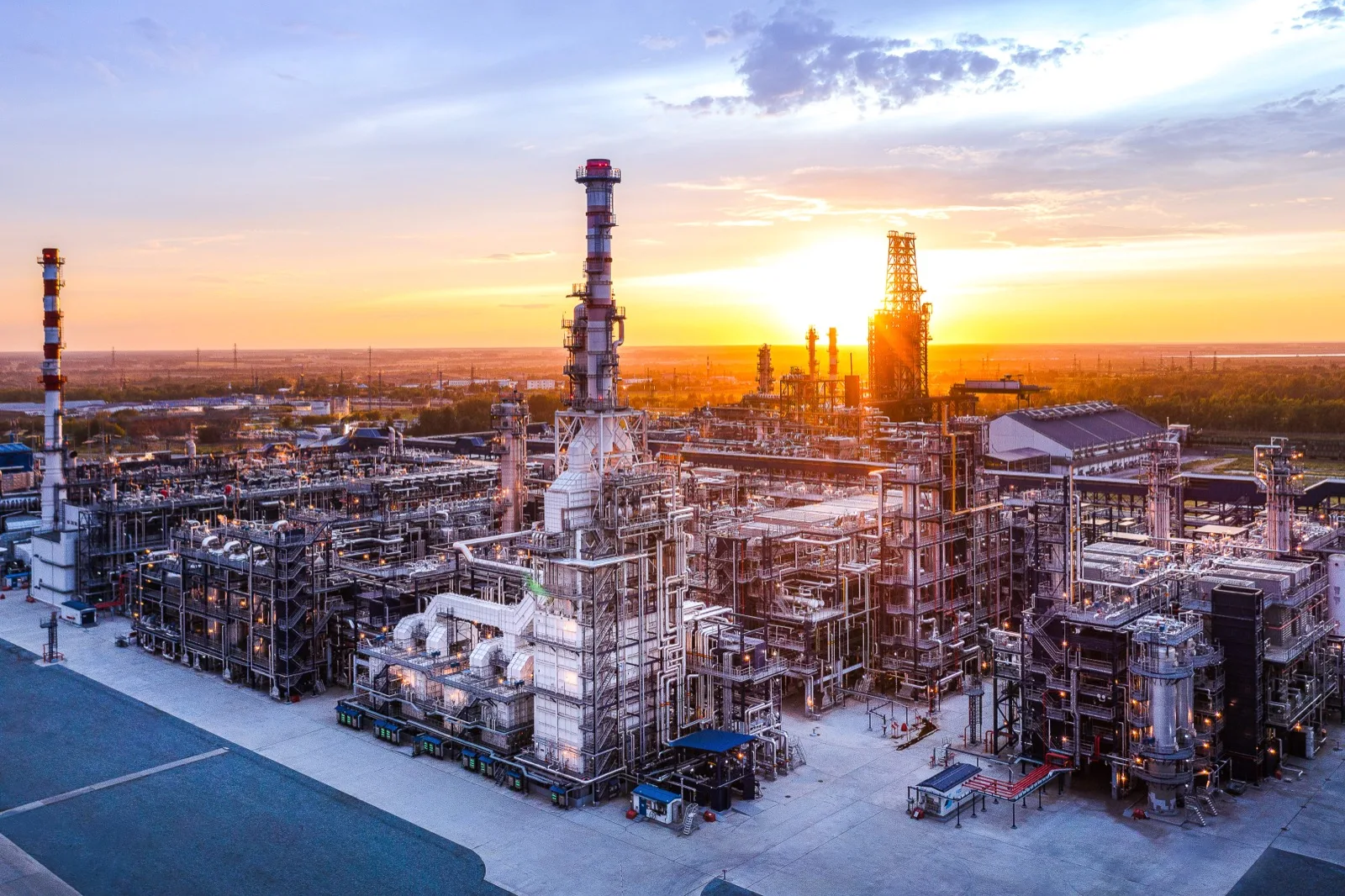
Ukraine said on 8 October that its drones had hit the Omsk refinery, more than 2,500 km from the border, and the Salavat plant in Bashkortostan. The Omsk governor confirmed an attack on the region but gave no damage details; in Salavat, local officials said the plant kept operating.
Ukraine's General Staff puts the annual throughput capacity of the Gazprom Neft-run Omsk refinery at more than 21 million tonnes; the drone maker Fire Point gives 22.23 million tonnes. An Astra estimate cited by United24 says the plant accounts for about 10% of Russia's total refining capacity. Fire Point said upgraded long-range FP-1 drones were used and that hits and fires were recorded. In the first strike on 6 July, Ukraine said it had hit the ELOU-AVT-11 crude distillation unit, which processes 8.4 million tonnes a year.
Russian accounts differ. Omsk governor Vitaly Khotsenko acknowledged, according to United24, that one drone reached an industrial zone in the north of the city, but did not say whether the refinery was damaged. The Moscow Times reports that flights were halted during the alert. In Salavat, local officials said falling drone debris started a fire at an industrial site, that nobody was killed and that the plant was operating. Russia's defence ministry said 399 Ukrainian drones were downed overnight over 18 regions and Crimea. Damage at the two plants could not be independently verified.
The timing coincides with a tight products market. According to The Moscow Times, Russia has extended its ban on diesel exports by producers to 31 October. Deputy Prime Minister Novak said on 2 October that a partial reopening would be considered if output exceeded domestic demand. A lasting loss of capacity at Omsk would weaken the option of lifting the ban on 31 October and prolong the global diesel shortfall.
Talay assessment
Bottom line
A second strike on Omsk shows Ukraine can repeatedly threaten the largest refining capacity in western Siberia. With damage unverified, it is too early to put a number on lost capacity. Still, each new refinery strike lowers the odds of the diesel export ban being lifted on 31 October; the most likely path is an extension.
Likely effects
- Diesel marketNegativeWeeks
The longer the ban that expires on 31 October is extended, the longer Russian diesel stays off world markets; the European and Mediterranean shortfall then meets winter demand.
- Russian crude exportsUncertain1–6 months
As refining falls, Russia has to ship more crude by sea, adding to the load on the shadow fleet and Black Sea ports.
- TürkiyeNegative1–6 months
Türkiye's diesel imports stay more dependent on non-Russian suppliers; as European diesel prices rise, the risk of pass-through to pump prices persists.
Possibilities, ranked
- 1Ban is extended60%
On 31 October Russia extends the producers' diesel export ban by at least another month.
Watch: The Russian government's end-October decree
- 2Partial reopening25%
Damage at Omsk proves limited and the partial export reopening Novak mentioned goes ahead.
Watch: A statement from Novak or the energy ministry on surplus diesel output
- 3Omsk offline for weeks15%
Satellite or company data show Omsk's main units shut for weeks.
Watch: A Gazprom Neft statement or independent satellite analysis
Probabilities are calibrated judgement based on the sources, not measurement, and are revised as new information arrives. Not investment advice.
Market reaction
Indicators affected
- Omsk capacity (Fire Point)▼ 22.23m t/yr
- Share of Russian refining (Astra)▼ ≈10%
- Drones downed (Russian MoD)▼ 399
Sources
- Ukrainska Pravda — Omsk Oil Refinery strike: Ukrainian FP-1 drones hit Russian plant 2,500 km away
- United24 Media — Ukrainian-made FP-1 drones hit Russia's largest oil refinery 2,500 km from border
- The Moscow Times — Ukrainian drones hit Yandex data center, industrial facilities across Russia
- The Moscow Times — Russia will consider partial lifting of diesel export ban in case of overproduction, Novak says