I Geo-Economics & Chokepoints·Analysis·Europe
Europe's preference for home-built cars runs into Berlin's China sales
Macron wants EU support for electric vehicles tied to European production, and the Commission's proposal sets a 70% EU-content rule for public procurement. Volkswagen made 2.69 million of its 8.98 million deliveries in China in 2025, which is why Berlin fears retaliation.
Europe Desk · 12 October 2026 · 7 min read · 7 sources
Why it matters
Noise: Macron used the Paris show to demand a European preference against China, so Europe is shutting the door on Chinese cars. Signal: there is no binding rule yet. The Industrial Accelerator Act, proposed by the Commission on 4 March 2026, requires 70% EU content in public procurement, but adoption is not expected before mid-2027. Berlin, not Paris, sets the pace. Roughly 30% of Volkswagen deliveries are in China, and German brands' China sales fell 30–41% in the second quarter of 2026.
Implications
- France registered 331,000 electric cars in 2025 and built 216,000; only 26% of new electric vehicles sold in the country were made there.
- The Commission's proposal requires EU assembly, EU origin for 70% of non-battery value and EU-made cells for electric vehicles bought publicly or subsidised.
- Volkswagen's China deliveries fell 36.6% to 424,300 in the second quarter of 2026; China's domestic passenger-car sales dropped 24% in the first half.
Noise
Macron's call means Europe is shutting the door on Chinese cars.
Signal
The binding content rule sits on the Brussels timetable and is not expected to take effect before mid-2027.
The stage is Paris, the timetable is Brussels
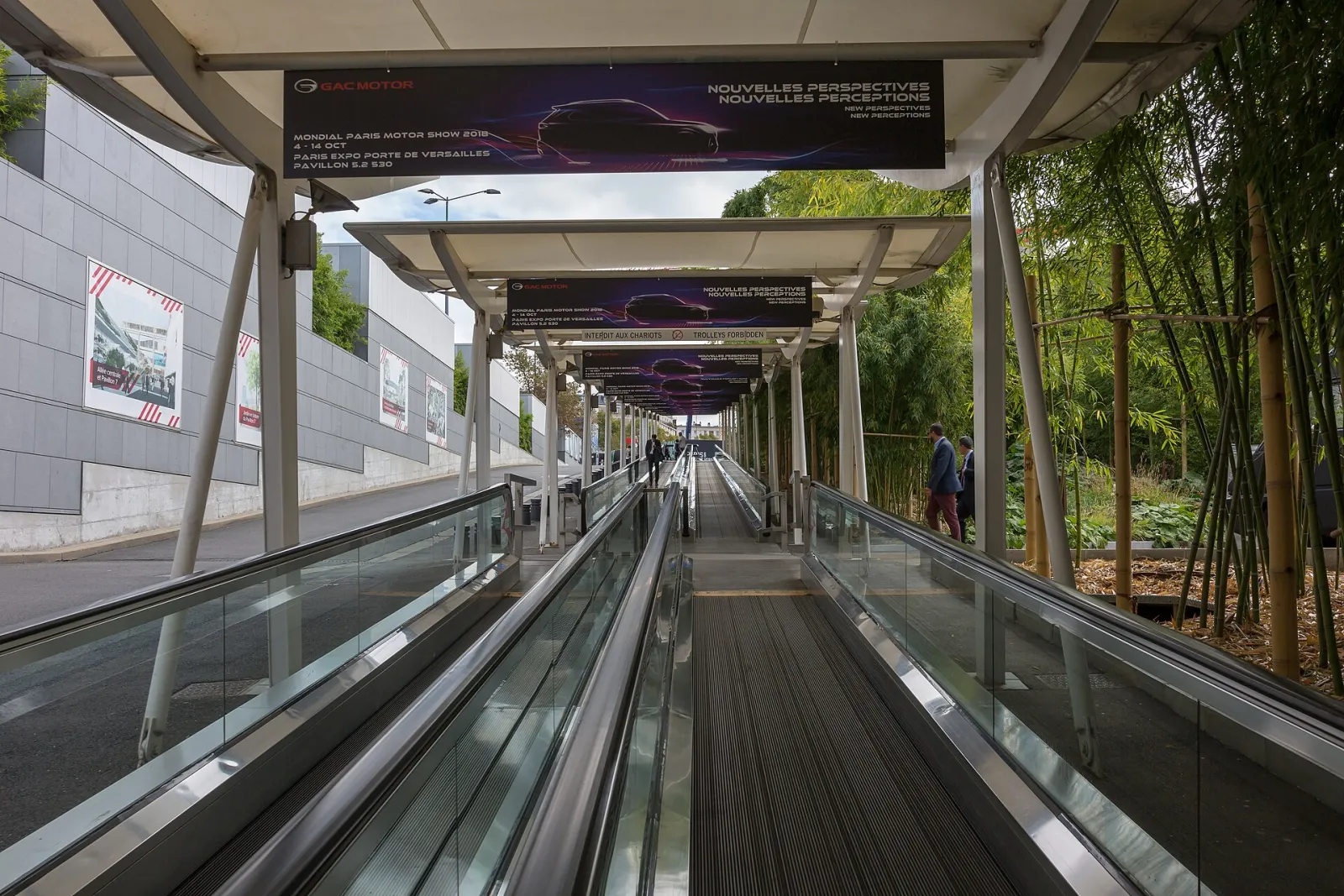
Macron opens the Paris Motor Show on 12 October for the last time as president, and he has framed the agenda under the banner "Made in Europe". According to a Euronews report on 11 October, the Élysée wants EU incentives reserved for vehicles produced across the whole value chain, from batteries to spare parts, within the 27 member states. Paris points to a capacity gap: China can export 55 million vehicles, Europe 12 million. It is not shutting out quality Chinese investment, but it does not want plants where only final assembly takes place in a member state.
The headlines say protectionism; the timetable says something else. According to a Skadden summary, the Commission presented its Industrial Accelerator Act proposal on 4 March 2026. It sets four conditions for electric vehicles backed by public procurement or subsidies. The vehicle must be assembled in the EU, and at least 70% of component value excluding the battery must be of EU origin. At least three main battery components must come from the EU, and the cells must be made there too. Parliament and the Council can still amend the text, and the same assessment does not expect adoption before mid-to-late 2027.
The proposal's second pillar is an investment screen. Investments above 100 million euros in batteries, electric vehicles, solar panels and critical raw materials require prior notification when the investor comes from a country holding more than 40% of global capacity. Approval requires at least four of six conditions, including a 49% cap on foreign ownership and a 50% EU workforce requirement. In practice, those two thresholds are aimed at Chinese investors.
France's gap is in production
Paris's insistence stems from its own numbers. Insee data show that France registered 331,000 new electric cars in 2025 while French plants built 216,000. Only 26% of new electric vehicles bought in France were made there, and six in ten French-built electric vehicles are exported. An import share of 74% means demand subsidies largely leak abroad, and the European preference is meant to plug that leak.
The distance between target and reality is wide. According to IndexBox, the government aims to build 2 million electric vehicles a year by 2030; output of 216,000 in 2025 is about 11% of that. The sector supports 400,000 direct jobs in France, and four battery plants have opened in the north of the country. With that many jobs at stake, Paris treats the European preference less as industrial policy than as a defence of employment.
Berlin's constraint lies in the Chinese market
Berlin, not Paris, makes the call, and Berlin's arithmetic runs through China. A Reuters report carried by MarketScreener shows Volkswagen delivered 8.98 million vehicles worldwide in 2025, 2.69 million of them in China; by our calculation that is about 30%. According to Euronews on 11 October, Germany exports far more cars than France and therefore fears Chinese retaliation. The Élysée concedes that the two countries' interests cannot be wholly aligned.
That constraint is shifting quickly. According to an AP report on 11 July, China sales at Volkswagen, Mercedes-Benz, BMW and Porsche fell 30–41% in the second quarter of 2026. Volkswagen's China deliveries dropped 36.6% to 424,300. China's domestic passenger-car sales fell 24% in the first half, and AlixPartners expects a contraction of about 10% for 2026. Talay reading: as the four German brands lose share in China, Beijing's threat of retaliation carries less weight in Berlin, and the cost of a European preference to Germany falls over time.
That leaves the bargain open in both directions. Handelsblatt, as cited by Euronews, reported that Paris and Berlin agreed on tougher European rules in exchange for softening the Commission's proposed 2035 CO2 cut from 90% to 80% against 2021 levels. The Élysée said on 11 October that there was no deal and talks were continuing; the existence of the trade-off could not be verified.
Beijing's counter-levers
China's response was drafted in advance. On 29 September China's Ministry of Commerce said it would respond firmly to a draft trade instrument, reportedly prepared by Germany and France, that resembles the US Section 301. According to the Chinese state outlet Global Times, Beijing has three tools: an anti-discrimination investigation, a supply-chain security review and a foreign-subsidy review.
The 16-point understanding reached in Beijing on 8–9 October has eased tensions for now. China agreed to fast-track rare-earth and permanent-magnet licences for the EU through a green channel, while the EU and its 27 members will prioritise China in dual-use export licences. According to EU Alive, China's hybrid exports to the EU had risen to about 50,000 a month by July 2026. The pledge to halve them is measured against projected growth, not current volumes. The EU's trade deficit with China was about 360 billion euros in 2025. That deficit is the EU's leverage, but rare-earth dependence hands Beijing leverage too.
The Türkiye angle and what comes next
None of the five sources we reviewed says whether the proposal's 70% EU-content calculation counts production in Türkiye, a customs union partner; this point could not be verified. For Turkish vehicle and parts exports to the EU, that definition will decide access to the subsidised public procurement market, depending on whether output counts towards the 70% threshold. Until it is settled, the risk is that Turkish suppliers are treated as non-EU once the rule takes effect.
The near-term calendar holds three dates. The show opens to the public on 13–18 October. On 15–16 October EU leaders will discuss the Beijing understanding and the tougher trade instrument sought by Merz and Macron. The Council and Parliament will then set their negotiating positions on the act. Talay reading: the most likely path (55%) is a summit that endorses the Beijing understanding and leaves the binding rule to 2027. An open Paris–Berlin trade-off (30%) would push the European preference towards binding form, while a Chinese counter-move before the summit (15%) would pull Berlin back. What would refute our reading: a 15–16 October communiqué backing the content rule with a concrete date and ratio.
Probabilities
Scenarios
| Scenario | Probability | Trigger | Market impact |
|---|---|---|---|
| H1Summit puts the Beijing understanding first | 55% | The 15–16 October summit endorses the 16-point understanding and mentions the European preference in general terms, adding no date or ratio to the content rule. | The binding rule slips to 2027; Chinese hybrid exports and EU assembly investment continue. |
| H2Paris–Berlin trade-off goes public | 30% | Berlin openly backs the Made in Europe rule in exchange for flexibility on the 2035 CO2 target, and the Council sets its negotiating position by year-end. | The European preference moves towards binding form; Beijing revives the investigations it warned of in September. |
| H3China moves first | 15% | Before the summit Beijing opens an anti-discrimination or subsidy investigation into EU goods, or slows rare-earth licences. | Berlin retreats, the European preference is shelved and the rare-earth bottleneck returns to the fore. |
Module A
Constraints Matrix
STRUCTURAL AVG 3.8 · TACTICAL AVG 2.3Structural constraints dominate: the outcome is set more by these limits than by the actors' preferences.
Hard structural constraintspersistent · beyond the actors' will
Legislative timetable · European Union
4/5The Industrial Accelerator Act was proposed on 4 March 2026; Parliament and the Council may amend it, and adoption is not expected before mid-to-late 2027.
German carmakers' China exposure
4/5Volkswagen made 2.69 million of its 8.98 million deliveries in China in 2025, about 30%; that is why Berlin fears retaliation.
Rare-earth dependence · China
4/5On 8–9 October Beijing agreed to fast-track rare-earth and magnet licences through a green channel; licence speed remains a bargaining chip in China's hands.
French production gap
3/5France registered 331,000 electric cars in 2025 and built 216,000; the domestic share is 26%, and the 2030 target of 2 million is distant.
Tactical frictiontemporary · eases over time
Investment screen conditions months
3/5Investments above 100 million euros must meet four of six conditions; the 49% ownership cap and 50% EU workforce rule could slow Chinese plant plans.
Summit agenda days
2/5The 15–16 October summit will weigh the Beijing understanding against the tougher trade instrument sought by Merz and Macron in one session; the communiqué's wording will be decisive.
Unconfirmed trade-off weeks
2/5The Élysée denied on 11 October the Made in Europe deal, reported by Handelsblatt, in exchange for easing the CO2 cut from 90% to 80%; the two capitals are still talking.
Module B
Signal vs Noise
SIGNAL 60% · NOISE 40%
- NOISE
Macron's call means Europe is shutting the door on Chinese cars.
The Élysée said on 11 October that there was no Paris–Berlin deal; Paris says it remains open to quality Chinese investment and technology transfer.
Euronews — Paris motor show: Macron calls for European preference against China
- SIGNAL
The binding content rule sits on the Brussels timetable and is not expected to take effect before mid-2027.
The proposal was tabled on 4 March 2026; it requires EU assembly, 70% EU origin and EU-made cells, and adoption is not expected before mid-to-late 2027.
Skadden — European Commission proposes Industrial Accelerator Act
- SIGNAL
The cost of retaliation to Berlin shrinks as China sales erode.
China sales at Volkswagen, Mercedes-Benz, BMW and Porsche fell 30–41% in the second quarter of 2026; Volkswagen's China deliveries dropped to 424,300.
Yahoo Finance (AP) — Major German carmakers hit by steep China sales plunge
- SIGNAL
China still accounts for roughly a third of Volkswagen's deliveries.
Of 8.98 million deliveries in 2025, 2.69 million were in China; China deliveries fell 8%.
MarketScreener (Dow Jones) — Volkswagen car deliveries edge lower on challenges in China
- NOISE
The Beijing understanding halves China's hybrid exports.
The halving is measured against a four-year growth projection, not current volumes; hybrid exports had risen to about 50,000 a month by July 2026.
EU Alive — Šefčovič returns from Beijing with limited hybrid cars and rare earths deal
Module C
Asset-Class and Positioning Implications
| Asset class | Exposure | Transmission channel | H1 | H2 | H3 | Expected | Conviction | Horizon | What to watch |
|---|---|---|---|---|---|---|---|---|---|
| Equities | European carmakers | Chinese retaliation and eroding China sales | 0 | − | −− | −0.60 | ●●● | 3–12 months | The 15–16 October summit communiqué and announcements from China's Ministry of Commerce |
| Equities | EU battery and parts suppliers | The EU-content rule steering subsidies and public procurement | 0 | ++ | − | +0.45 | ●●● | 12+ months | The Council's negotiating position on the act |
| Commodities | Rare earths and permanent magnets | Beijing using licence speed as a bargaining chip | 0 | + | ++ | +0.60 | ●●● | 0–3 months | Chinese green-channel licence approvals for the EU |
| FX | Euro | Trade tension and the export outlook | 0 | − | − | −0.45 | ●●● | 0–3 months | The 1.10 level for EUR/USD at the ECB reference rate |
| Equities | Turkish automotive parts makers | Whether customs union output counts under the EU-origin definition | 0 | − | 0 | −0.30 | ●●● | 12+ months | The act's EU-origin definition and Türkiye's automotive exports to the EU |
Second-order effects
And then what?
Starting point
On 11 October Paris asked the EU to tie electric-vehicle support to cars built in the 27 member states; the Commission's proposal sets a 70% EU-content rule for public procurement, while Berlin fears retaliation because of its China sales.
- 1
Trade diplomacywithin days
The 15–16 October summit endorses the 16-point Beijing understanding without putting the tougher trade instrument on a timetable; China fast-tracks rare-earth licences through the green channel and lets time work in its favour.
Watch: European Council conclusions of 15–16 October and Chinese licence approvals for the EU
- 2
Automotive investmentwithin months
While the rule remains unsettled, Chinese manufacturers keep up hybrid exports and EU assembly investment, and European carmakers defer investment decisions because of subsidy uncertainty.
Watch: Chinese brands' hybrid share in monthly ACEA registration data (14% in the first half of 2026)
- 3
Supply chainwithin months
The delayed rule leaves suppliers in customs union partners such as Türkiye uncertain about where they stand in the EU-content calculation; parts orders stay cautious until the origin definition is fixed.
Watch: The act's definition of EU origin and Türkiye's monthly automotive exports to the EU
What breaks the chain
Paris and Berlin could announce an open trade-off between the 2035 CO2 target and the European preference, or China could open investigations into EU goods before the summit. Either would break the chain at the first step and change its direction.
Triggers
Thresholds to watch
| Indicator | Threshold | Today | What it means |
|---|---|---|---|
| EUR/USD | < 1.10 | 1.1206 | A fall in the euro's ECB reference rate from 1.1206 on 9 October to below 1.10 would show trade tension and fiscal worry converging on the export-driven euro-area economy. |
Sources
- Euronews — Paris motor show: Macron calls for European preference against China
- IndexBox — Macron's final Paris Motor Show visit highlights French auto industry record
- Skadden — European Commission proposes Industrial Accelerator Act
- Yahoo Finance (AP) — Major German carmakers hit by steep China sales plunge as competition heats up
- MarketScreener (Dow Jones) — Volkswagen car deliveries edge lower on challenges in China and tariffs
- EU Alive — Šefčovič returns from Beijing with limited hybrid cars and rare earths deal
- AsiaOne (Reuters) — China vows response if EU introduces moves targeting Chinese trade
Sourcing and verification rules: methodology · Report an error: contact
Related reports
IVMacro & Debt·In-depth analysis·Europe
Europe exempted defence from its debt rules, and the term premium pays
EU fiscal rules now exclude defence and energy spending of up to 1.5% of GDP a year. The ECB account shows the euro area deficit rising to 3.7% in 2027. Discipline is now imposed by the real term premium, not by Brussels.
Macro & Debt Markets Desk · 9 October 2026 · 11 min
IGeo-Economics·Analysis·Türkiye and Its Neighbourhood
Black Sea risk reaches NATO economic zones; small Turkish owners pay
On 5 and 6 October three Turkish-owned ships were hit in the economic zones of Romania and Bulgaria, and two sank. The 12-mile territorial waters that the insurance market carved out on 16 September are now the only safe lane, and Ankara's moratorium proposal has sat in Moscow for two months.
Türkiye & Neighbourhood Desk · 6 October 2026 · 6 min
IGeo-Economics·Analysis·Eurasia
Russian diesel has left the market, and G7 stocks only buy time
Russia's diesel exports of about 1 million barrels a day have fallen close to zero, and Volgograd was hit again on 2 October. The G7's 100 million barrel release over 4 months builds a bridge rather than closing the gap. At the far end of that bridge sit tankers and US export curbs.
Energy & Shipping Desk · 3 October 2026 · 7 min