I Geo-Economics & Chokepoints·Analysis·Eurasia
Russian diesel has left the market, and G7 stocks only buy time
Russia's diesel exports of about 1 million barrels a day have fallen close to zero, and Volgograd was hit again on 2 October. The G7's 100 million barrel release over 4 months builds a bridge rather than closing the gap. At the far end of that bridge sit tankers and US export curbs.
Energy & Shipping Desk · 3 October 2026 · 7 min read · 9 sources
Why it matters
The root of the diesel crisis lies in Russia. Russian diesel exports have fallen from about 1 million barrels a day before the summer to close to zero, and on 30 September the ban was extended to 31 October. Spread over 4 months, the 100 million barrel release the G7 announced on 2 October works out at about 0.83 million barrels a day. That does not even replace the lost Russian diesel. The US carries the gap, supplying 20% of seaborne diesel. Washington's threat of an export ban, and the fact that 69% of LR2 tankers are carrying crude, shift the bottleneck from stocks to logistics.
Implications
- Russia's diesel exports have fallen from about 1 million barrels a day before the summer to close to zero. The export ban on producers was extended on 30 September to 31 October.
- On 2 October the G7 announced a 100 million barrel stock release spread over 4 months. That averages about 0.83 million barrels a day, and the diesel-heavy first tranche will be delivered within 20 days.
- The US supplies 20% of seaborne diesel and about 45% of Europe's diesel imports from outside Europe. With 69% of the LR2 fleet carrying crude, spare tanker capacity is tight.
The missing barrels are in Russia
The record diesel price stems from refining, not crude. According to the IRU, the weighted average diesel price in the EU reached €2.26 per litre on 17 September, up 38% since 27 February. Over the same period Brent stayed below its spring peak. That gap shows the problem lies in distillation capacity.
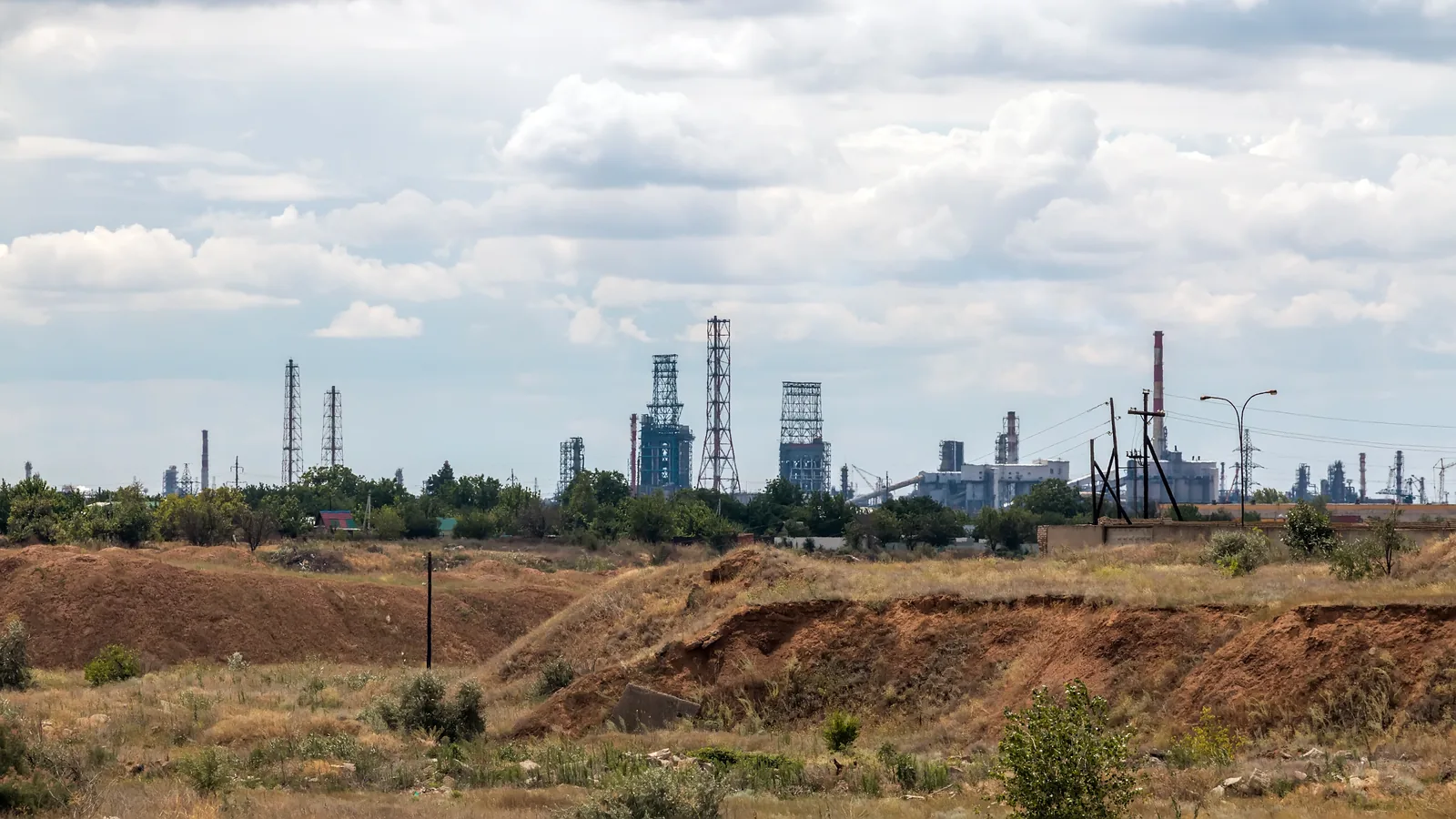
Russia is the country that has lost the most capacity. Bloomberg data cited by The Moscow Times show Russian diesel exports at about 1 million barrels a day before the summer attacks, and close to zero today. Last week Ukraine said it had knocked out more than 45% of Russian refining capacity. The Volgograd refinery, which processes about 15 million tonnes a year, was hit again on 2 October.
Moscow is making up for the loss with crude. Russian seaborne crude exports rose to 3.71 million barrels a day over the 4 weeks to 27 September, and to 3.99 million barrels a day in the latest week. Combined crude and product exports, however, fell to about 28 million tonnes a month. In other words, Russia is selling barrels but cannot sell its most valuable product, diesel.
The ban is extended and substitutes are weak
According to Anadolu Agency, the Russian government on 30 September extended the ban on producers' exports of diesel, marine fuel and kerosene to 31 October. A broader fuel export ban runs until 31 January 2027. The stated reason is domestic demand during the harvest season; according to The Moscow Times, petrol prices have risen 21% since January.
The other traditional source is also shut. According to the IRU, Middle Eastern diesel exports fell to 390,000 barrels a day in August, about a quarter of the pre-war level. According to Breakwave, diesel exports from Saudi Red Sea ports also dropped markedly after the refinery attacks. Together these two losses place most of the gap on the shoulders of the US.
What the G7 release buys
According to RTÉ, G7 leaders agreed on 2 October to release 100 million barrels of diesel and crude over 4 months, starting immediately. A substantial share of the diesel will be delivered in the first 20 days. Before that, according to Al Jazeera, the US had asked for 120 million barrels of diesel over 180 days. France made a counter-proposal of 50 million barrels of diesel and 50 million barrels of crude. According to RTÉ, Trump had threatened to ban US diesel exports if France and Germany did not release their stocks.
The arithmetic is simple. Spread over 4 months, or about 120 days, 100 million barrels averages about 0.83 million barrels a day. That is less than even the roughly 1 million barrels a day of lost Russian diesel exports. Because the release's composition and country shares were not disclosed, diesel's net share could not be verified. The market reacted all the same: according to The National, Brent fell 2.89% on 2 October to $99.35.
The release is a bridge, not lasting supply. Once the stocks run out, the gap will have to be closed either by repairs to Russian refineries or by the reopening of Gulf outlets. Neither is guaranteed within 4 months.
The systemic constraint sits at the tanker and the export gate
According to Breakwave's 30 September analysis, the US exports 1.57 million barrels a day of diesel, 20% of seaborne diesel. Last month Europe took about 45% of its diesel imports from outside Europe from the US. Brazil has taken two-thirds of its imports from the US since August, and the rest of Latin America 76%. A possible US export ban would shut, at a stroke, a source larger than the relief the G7 release provides.
The second constraint is shipping capacity. According to Breakwave, 69% of the LR2 fleet, the large product tankers, is currently carrying crude. While crude freight stays well above diesel freight, these vessels will not switch back to clean products. Yet these are exactly the ships needed, because replacement diesel from the Middle East and Asia must travel greater distances. According to Breakwave, poorer importers will lose the bidding war.
On the insurance side, end-September war risk premium data for Russian Black Sea ports could not be verified. The July–August data were covered in our Eurasia analysis of 2 October. The rule holds: a route does not close until the premium becomes unbearable. In diesel, though, what is closing the route is not the premium. It is export bans and a tanker fleet working in the wrong class.
Reading for Türkiye
Türkiye is an economy dependent on imports for diesel. When Russian supply, Middle Eastern supply and US exports all tighten at once, it pays through prices and freight. The diesel price that reached €2.26 per litre in the EU passes through to the pump via the cost of imported product. The G7 release may offer some respite in its 20-day first tranche. But the direction of the Russian ban after 31 October and the US export decision will be the real drivers of the fourth-quarter fuel bill.
Probabilities
Scenarios
| Scenario | Probability | Trigger | Market impact |
|---|---|---|---|
| H1The bridge holds, the gap persists | 50% | The G7 release proceeds on schedule, the US imposes no export ban and the Russian ban is extended into November. | Diesel prices ease from record levels but do not return to pre-war levels; the gap is carried by stocks. |
| H2The US narrows the export gate | 30% | US pump prices keep rising and Washington imposes curbs on diesel exports. | Europe and Latin America turn to distant-route sources, and supply disruptions begin at poorer importers. |
| H3Russian supply returns | 20% | Russia lifts the ban on 31 October, or an energy ceasefire halts refinery attacks. | Russian diesel returns to the Mediterranean and Turkish markets, and the G7 release proves larger than needed. |
Module A
Constraints Matrix
STRUCTURAL AVG 4.3 · TACTICAL AVG 3.0Structural constraints dominate: the outcome is set more by these limits than by the actors' preferences.
Hard structural constraintspersistent · beyond the actors' will
Russian diesel export ban · Russia
5/5The ban on producers runs to 31 October and the broader fuel export ban to 31 January 2027; about 1 million barrels a day of supply has left the market.
Refinery attacks · Ukraine
4/5Ukraine said it had knocked out more than 45% of Russian refining capacity; Volgograd was hit again on 2 October.
Size of the stock release · European Union
4/5Spread over 4 months, 100 million barrels averages about 0.83 million barrels a day, less than the lost Russian diesel.
The US export gate · United States
4/5The US supplies 20% of seaborne diesel; the threat of an export ban could shut this source with a single decision.
Tactical frictiontemporary · eases over time
Middle Eastern diesel exports months
4/5Middle Eastern diesel exports fell to 390,000 barrels a day in August, about a quarter of the pre-war level.
LR2 fleet shifting to crude weeks
3/569% of the LR2 fleet is carrying crude; clean capacity for distant-route diesel cargoes is tight.
Unclear release composition days
2/5The G7 statement gave neither country shares nor the diesel–crude split; diesel's net effect will become clear in the 20-day first tranche.
Module B
Signal vs Noise
SIGNAL 75% · NOISE 25%
- SIGNAL
Russian diesel exports are near zero while crude exports run high.
Crude exports rose to 3.71 million barrels a day over the 4 weeks to 27 September, while diesel exports fell from about 1 million barrels a day before the summer to close to zero.
The Moscow Times — Russia's Crude Exports Rise as Diesel Ban Limits Gains
- SIGNAL
US diesel is carrying the global balance on its own.
The US exports 1.57 million barrels a day of diesel, 20% of seaborne diesel trade; about 45% of Europe's imports from outside Europe come from the US.
Breakwave Advisors — US diesel ban would reshape clean tanker trade
- NOISE
Brent dipping below $100 shows the crisis is over.
Brent fell 2.89% on 2 October to $99.35. The drop was driven by news of the stock release; there has been no improvement in Russian or Middle Eastern diesel supply.
Data: Brent crude oil (futures) ›The National — Oil prices fall 3% on reports of talks over diesel and crude stock releases
- SIGNAL
European pump prices are at a record.
The EU weighted average diesel price reached €2.26 per litre on 17 September, up 38% since 27 February.
Module C
Asset-Class and Positioning Implications
| Asset class | Exposure | Transmission channel | H1 | H2 | H3 | Expected | Conviction | Horizon | What to watch |
|---|---|---|---|---|---|---|---|---|---|
| Commodities | Middle distillate margins | Lost Russian diesel and a limited stock release | + | ++ | −− | +0.70 | ●●● | 0–3 months | Russia's ban decision after 31 October |
| Freight & insurance | Clean product tanker freight | Distant-route diesel cargoes and tight LR2 capacity | + | ++ | − | +0.90 | ●●● | 0–3 months | The Baltic Exchange clean tanker index |
| Commodities | Brent crude | The stock release and Gulf outlets | 0 | + | − | +0.10 | ●●● | 0–3 months | Brent's position relative to the $100 threshold |
| Credit | Credit of energy-importing emerging markets | The fuel bill and external financing needs | − | −− | + | −0.90 | ●●● | 3–12 months | The direction of Türkiye and Egypt CDS spreads |
Second-order effects
And then what?
Starting point
Russian diesel exports have fallen from about 1 million barrels a day to close to zero, and the ban has been extended to 31 October. The G7 responded with a 100 million barrel stock release over 4 months.
- 1
Stocks and priceswithin weeks
The diesel-heavy release in the first 20 days temporarily lowers European prices. But an average flow of 0.83 million barrels a day does not fully replace lost Russian diesel, and stocks run down.
Watch: Whether the weekly EU average diesel pump price falls below the €2.26 per litre of 17 September
- 2
Trade routeswithin weeks
As stocks shrink, Europe and Latin America lean harder on US diesel. Price pressure in the US pushes Washington towards export curbs, and replacement cargoes shift to distant Asian and Middle Eastern sources.
Watch: Any formal US decision to curb diesel exports, and weekly US diesel export volumes
- 3
Freight and tankerswithin months
Distant-route cargoes seek capacity in an LR2 fleet that is 69% crude-laden. Clean product freight rises, poorer importers who lose the bidding face supply shortages, and diesel costs climb for importers such as Türkiye.
Watch: The Baltic Exchange clean product tanker index and the Türkiye diesel pump price
What breaks the chain
The chain stops at the second step if Russia lifts the diesel ban on 31 October and repaired refineries return to exporting, or if transits through the Strait of Hormuz move durably back towards normal.
Triggers
Thresholds to watch
| Indicator | Threshold | Today | What it means |
|---|---|---|---|
| Brent crude oil (futures) | $100 | 102.70 | A sustained return by Brent above the $99.35 it fell to on 2 October would show that the stock release's effect is exhausted before the 20-day first tranche ends. |
| US commercial crude inventories | Weekly decline | 427.3 | If US commercial stocks keep falling despite the release, pressure in Washington for an export ban will grow. |
Sources
- The Moscow Times — Russia's Crude Exports Rise as Diesel Ban Limits Gains From Higher Oil Prices
- The Moscow Times — Government Extends Diesel Export Ban Until End of October
- Anadolu Agency — Russia extends ban on diesel, marine fuel exports by producers until Oct. 31
- RTÉ — G7 to release 100m barrels of diesel and other reserves
- Al Jazeera — Trump vs Europe as US presses for release of emergency diesel stocks
- Breakwave Advisors — US diesel ban would reshape clean tanker trade
- IRU — Diesel prices surpass previous 2026 records
- The National — Oil prices fall 3% on reports of talks over diesel and crude stock releases
- Kyiv Independent — Ukrainian forces strike oil facilities in Russia's Volgograd, Samara regions
Sourcing and verification rules: methodology · Report an error: contact
Related reports
IGeo-Economics·Analysis·Türkiye and Its Neighbourhood
The Ukraine trade door opens, but Black Sea insurance narrows it
The Türkiye–Ukraine free trade agreement took effect on 1 October, removing duties on 10,337 tariff lines. In the same days almost the whole Black Sea was declared a war risk area, and the extra premium per Odesa voyage rose to 150,000 dollars.
Türkiye & Neighbourhood Desk · 3 October 2026 · 7 min
IGeo-Economics·Analysis·Eurasia
Russia's maritime front stretches from the Baltic to Arctic LNG
On the night of 1 October, Russia stopped an Estonia-bound cargo ship in the Gulf of Finland. The same day, Britain listed three Arc7 LNG tankers. Moscow has classified its export data and found no buyers at a bond auction.
Eurasia Desk · 2 October 2026 · 6 min
IGeo-Economics·Analysis·Middle East and North Africa
As Hormuz heats up, oil's real risk shifts to the Red Sea
Three ships were hit in the Strait of Hormuz on 29 September, yet transits rose to 17. Saudi crude has moved back from the Red Sea to the strait, and Bab el-Mandeb flows have more than halved. Somali pirates have also killed crew for the first time in over a decade.
Energy & Shipping Desk · 1 October 2026 · 7 min