VI Energy Politics & Supply Security·Analysis·Middle East and North Africa
Houthi missiles reach Aramco's Riyadh tower as onshore cover thins
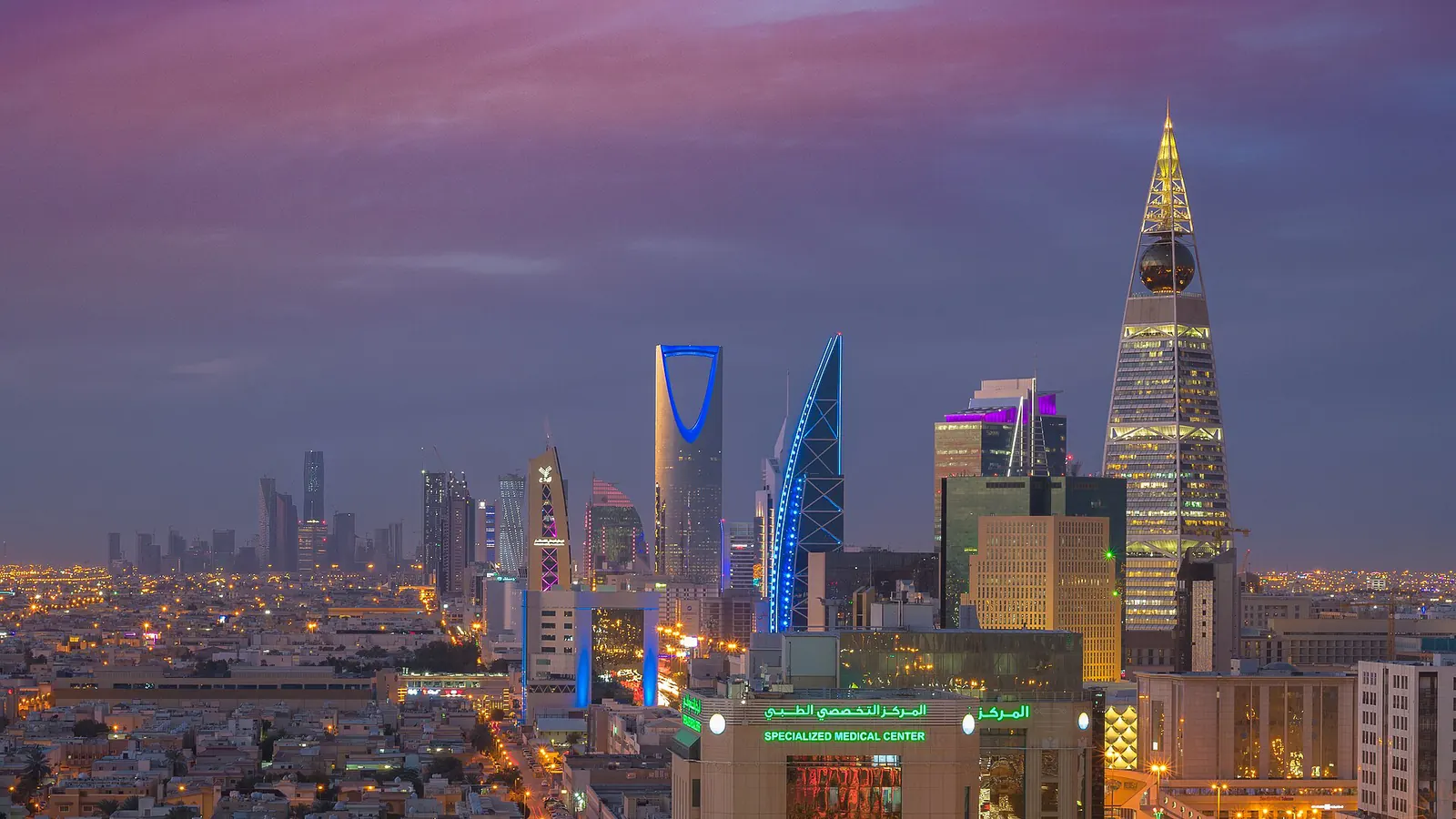
Saudi Arabia's energy ministry said on 8 November that falling shrapnel lightly damaged Aramco's building in Riyadh. Barrels keep flowing. The real constraint is that political violence cover in the Gulf has shrunk from about 1 billion dollars to 200 million.
Energy & Shipping Desk · 9 November 2026 · 7 min read · 10 sources
Talay Insight Analysis Desk·AI-assisted analysis, reviewed by an editor
Why it matters
The noise is the Houthi claim of four to six operations, Abqaiq included, and a fall of more than 16% in January Brent in a single week. The signal lies in insurance. Marsh says political violence capacity in the Gulf has dropped from about 1 billion dollars to 200 million, with premiums up at least twentyfold. As targeting shifts from export terminals to decision centres, the door for transferring onshore risk is narrower even than at sea.
Implications
- The coalition said on 8 November it shot down two ballistic missiles fired at Riyadh, one at the Eastern Province, two cruise missiles and one drone; no casualties were reported at the Aramco building.
- According to Marsh, political violence capacity in the Gulf has fallen from about 1 billion dollars to 200 million since the war began, and premiums have risen at least twentyfold.
- Aramco set December Arab Light for Asia at a 6.50-dollar discount to Oman/Dubai; HSBC raised its fourth-quarter Saudi output forecast to 8.3 million barrels a day.
Noise
The Houthis struck Saudi energy facilities including Abqaiq
Signal
Capacity to transfer Gulf onshore risk has fallen to a fifth
Noise and signal
The headline is a clash of two claims. According to CBS, Houthi spokesman Yahya Saree announced four operations on 8 November against Riyadh's financial district, the airport, Aramco storage facilities and Abqaiq. Middle East Eye says the same spokesman referred to six operations and did not name Aramco facilities. Only one source carries the Abqaiq claim, and no hit could be independently verified.
The verified facts are narrower. According to the Saudi energy ministry statement carried by Al Jazeera, an Aramco administrative building in Riyadh was lightly damaged by falling shrapnel and there were no casualties. A Reuters witness saw shattered windows on several floors of the Aramco Tower in the King Abdullah Financial District. Coalition spokesman Turki al-Maliki said air defences downed two ballistic missiles over Riyadh and one over the Eastern Province.
Targeting shifts from terminals to the decision centre
Since September the Houthi campaign has concentrated on export points such as Yanbu, Ras Tanura and Rabigh. The 8 November attack was the first to physically damage the company's headquarters tower in the capital. Al Jazeera reports that a Houthi strike on Riyadh airport on 10 October killed at least 13 people and wounded more than 300.
The Yemeni front of the war is also hardening. According to the UN, the truce collapsed in July when the Houthis declared a blockade of Saudi ports; since then more than 1,600 people have been killed and some 300,000 displaced. The Houthi-run health ministry said 33 people died in a coalition air strike on the village of al-Shariya near Sanaa on 7 November. The coalition did not comment, and Al Jazeera could not verify the figure.
The supply constraint is not in barrels
Physical supply is expanding despite the pressure. According to a Reuters report carried by BOE Report, Aramco cut December Arab Light for Asia by 2 dollars to a 6.50-dollar discount to the Oman/Dubai average. That is the deepest discount since May 2020. The same report says HSBC raised its fourth-quarter Saudi crude output forecast from 6.3 million to 8.3 million barrels a day.
The market, too, is pricing a glut rather than an outage. According to CNBC, front-month January ICE Brent settled at 98.32 dollars on 6 November, ending the week down more than 16%. The founder of Rapidan Energy Group nonetheless puts the odds of renewed conflict at 80%. For Pillar VI the threshold is clear: unless a processing node is actually hit, the damage in Riyadh does not translate into lost barrels.
The insurance constraint is tighter onshore than at sea
At sea, risk can still be priced. According to an Insurance Business report dated 14 October, Marsh was quoting additional war premiums for tankers at 6–10% of hull value, against roughly 0.25% before the war. After the June understanding the premium fell to 2%, then rose to 7.5–10% by the end of July. Cover is expensive, but quotes are available.
Onshore the door is narrower. According to a Skift report of 2 November, Marsh says political violence capacity in the Gulf has fallen from about 1 billion dollars to 200 million, with premiums up at least twentyfold. Morningstar DBRS says some rates rose fiftyfold immediately after the first attacks. The agency linked the October attacks on Riyadh, Abha and Dammam to the war becoming a hazard that is now priced in.
Talay's reading is this: 200 million dollars of capacity covers only a small slice of the value of a large processing plant or headquarters campus. War risk on onshore assets is therefore effectively staying on the balance sheets of operators and the state. Howden Re calculates that war, terrorism and political violence losses of 2–3 billion dollars have exceeded the segment's annual premium of 1.5–2 billion; that gap must close before capacity can return quickly.
The Hormuz and Iraq angle
At the eastern exit the picture is mixed. According to Arab Times, UKMTO reported that around 22:20 TRT on 7 November a tanker caught fire about 8 nautical miles north-west of Khasab in Oman and its crew was evacuated. CBS says the Revolutionary Guards claimed the same night that two tankers had struck mines; the cause could not be verified.
Diplomacy, meanwhile, is protecting Iraqi volumes. According to a Reuters report published by Arab News, Iraqi Foreign Minister Fuad Hussein said on 8 November that an understanding had been reached with the US on Hormuz exports via a lane close to Oman. Iraqi exports rose from 2.65 million barrels a day in September to about 3.5 million in October. Oil is flowing at both ends of the Gulf; what is shrinking is the capital willing to absorb the risk.
Probabilities and falsifier
The desk's base case, at 55%, is that attacks continue without hitting processing nodes; on that path Saudi supply expands while onshore cover stays thin. At 25%, Qatari mediation and a pause on the Yemeni front lower tensions. At 20%, Abqaiq or an export terminal is actually hit and the risk shifts entirely onto the state's balance sheet.
The thesis would be falsified if Aramco narrows its January Asia discount markedly from 6.50 dollars and Saudi output data fall below 8 million barrels a day. Through the insurance lens, the falsifier would be Marsh or the major brokers reporting that Gulf political violence capacity has returned above 500 million dollars at the 1 January renewals. For Türkiye the channel is Brent: a move from the 98.32-dollar settlement on 6 November to above 110 dollars would directly enlarge the energy bill.
Probabilities
Scenarios
| Scenario | Probability | Trigger | Market impact |
|---|---|---|---|
| H1Attacks continue, barrels flow | 55% | Weekly Houthi missile and drone attacks continue, air defences prevent hits on processing nodes, and Iran–US talks go nowhere. | Saudi output keeps expanding; onshore cover stays thin and risk accumulates on operator and state balance sheets. |
| H2Tensions ease | 25% | The Qatari formula advances on the Iran–US track, Hormuz opens under a temporary arrangement and a pause is declared in Yemen. | Attack frequency falls and political violence and marine war premiums begin to ease. |
| H3A processing node is hit | 20% | A verified hit at Abqaiq, Ras Tanura or Yanbu cuts processing or loading capacity for days. | Saudi exports fall temporarily, the risk passes entirely to the state's balance sheet and the insurance door effectively closes. |
Module A
Constraints Matrix
STRUCTURAL AVG 3.7 · TACTICAL AVG 3.0Structural constraints and tactical friction are balanced: short-term noise may mask the persistent trend.
Hard structural constraintspersistent · beyond the actors' will
Onshore political violence capacity
4/5According to Marsh, Gulf political violence capacity has fallen from about 1 billion dollars to 200 million, and premiums have risen at least twentyfold.
Houthi missile reach · Saudi Arabia
4/5On 8 November the coalition downed two ballistic missiles over Riyadh and one over the Eastern Province; shrapnel damaged Aramco's Riyadh building.
Marine war premium · Iran
3/5According to Marsh, the additional war premium for tankers is 6–10% of hull value, against about 0.25% before the war.
Tactical frictiontemporary · eases over time
Hormuz incidents days
3/5UKMTO reported a tanker fire 8 nautical miles north-west of Khasab on 7 November; Iran's claim of two mine strikes could not be verified.
Asian demand weeks
3/5Aramco set December Arab Light for Asia at a 6.50-dollar discount to Oman/Dubai, the deepest since May 2020.
The Yemeni front months
3/5The UN says more than 1,600 people have been killed since July; Houthi sources reported 33 dead in al-Shariya on 7 November, a figure that could not be verified.
Module B
Signal vs Noise
SIGNAL 67% · NOISE 33%
- NOISE
The Houthis struck Saudi energy facilities including Abqaiq
According to CBS, Saree announced four operations including Abqaiq on 8 November; Middle East Eye says six. The ministry confirmed only shrapnel damage to the Riyadh building.
Middle East Eye — Saudi Aramco tower damaged after Houthi missile attacks on Riyadh
- SIGNAL
Capacity to transfer Gulf onshore risk has fallen to a fifth
According to Marsh, political violence capacity has fallen from about 1 billion dollars to 200 million, and premiums have risen at least twentyfold.
Skift — War Insurance Dries Up for Gulf Events as U.S.-Iran Conflict Continues
- NOISE
Brent's weekly slide is pricing the end of the war
January ICE Brent settled at 98.32 dollars on 6 November, down more than 16% on the week; Rapidan puts the odds of renewed conflict at 80%.
Data: Brent crude oil (futures) ›CNBC — Oil prices set for sharp weekly fall after midterm elections
- SIGNAL
Saudi supply is expanding despite the attacks
Aramco widened its December Asia discount to 6.50 dollars; HSBC raised its fourth-quarter output forecast from 6.3 million to 8.3 million barrels a day.
BOE Report (Reuters) — Saudi Arabia cuts December Asia oil prices to fresh 6-year low
- SIGNAL
Marine war risk is expensive but still insurable
According to Marsh, the tanker war premium is 6–10% of hull value; it fell to 2% in June and rose to 7.5–10% by the end of July.
Data: Strait of Hormuz transits ›Insurance Business — Hormuz sinking hands marine war underwriters another total loss as attacks surge
- SIGNAL
Iraq is protecting its Hormuz volumes through diplomacy
Fuad Hussein announced an understanding with the US on an Omani lane on 8 November; Iraqi exports rose to about 3.5 million barrels a day in October.
Data: Strait of Hormuz transits ›Arab News (Reuters) — Iraq has reached understandings with US to allow oil exports through Hormuz
Module C
Asset-Class and Positioning Implications
| Asset class | Exposure | Transmission channel | H1 | H2 | H3 | Expected | Conviction | Horizon | What to watch |
|---|---|---|---|---|---|---|---|---|---|
| Freight & insurance | Gulf political violence and war risk premiums | Frequency of attacks on onshore assets and available cover capacity | + | −− | ++ | +0.45 | ●●● | 0–3 months | Marsh Gulf political violence capacity and tanker war premium quotes |
| Commodities | Front end of the crude oil curve | Physical risk to Saudi processing and export nodes | 0 | −− | ++ | −0.10 | ●●● | 0–3 months | January ICE Brent settlement and Aramco's January official selling price |
| Credit | Gulf sovereign credit spreads | Non-transferable war risk written onto the state balance sheet | − | + | −− | −0.70 | ●●● | 3–12 months | Saudi Arabia five-year CDS |
| Volatility | Oil options volatility | Unverified attack claims feeding abruptly into prices | + | − | ++ | +0.70 | ●●● | 0–3 months | Gap between Saudi energy ministry statements and Houthi claims |
Second-order effects
And then what?
Starting point
On 8 November Houthi missiles damaged Aramco's Riyadh headquarters tower for the first time; according to Marsh, Gulf political violence capacity had already fallen to about 200 million dollars.
- 1
Political violence insurancewithin weeks
Insurers widen war exclusions for Saudi onshore assets and events; the one or two firms still writing cover tighten terms, and capacity stays in the 200-million-dollar range.
Watch: Gulf political violence capacity notes from Marsh and the major brokers, and 1 January renewal reports
- 2
Official selling pricewithin weeks
Risk that cannot be transferred stays with the operator and the state; Aramco keeps discounting to Asian buyers to protect volumes and books the cost of war risk against its own margin rather than the barrel price.
Watch: Aramco's January Arab Light price for Asia (December: −6.50 dollars to Oman/Dubai)
- 3
Sovereign creditwithin months
War risk carried on the balance sheet feeds into the sovereign credit premium; Saudi CDS rises from around 70 basis points and financing costs climb for Gulf-sourced energy projects.
Watch: Saudi Arabia five-year CDS (5 November: 69.58 basis points)
What breaks the chain
If Qatari mediation yields an Iran–US deal and a new truce takes hold in Yemen, attack frequency falls, political violence capacity returns and the chain breaks at the first step.
Triggers
Thresholds to watch
| Indicator | Threshold | Today | What it means |
|---|---|---|---|
| Brent crude oil (futures) | > $110 | — | A move above this level from the 98.32-dollar settlement on 6 November would show the market pricing a physical outage at a Saudi processing or export node. |
| Saudi Arabia 5-year CDS | > 100 bp | — | A break above this level by Saudi five-year CDS, at 69.58 basis points on 5 November, would show onshore war risk being written onto the sovereign balance sheet. |
| Brent crude oil (futures) | < $90 | — | A fall below this level would show the market pricing de-escalation on the Iranian and Yemeni fronts. |
Sources
- Al Jazeera — Saudi Aramco building in Riyadh damaged in 'attempted' attack
- Middle East Eye — Saudi Aramco tower damaged after Houthi missile attacks on Riyadh
- CBS News — Live updates: Iran war, Strait of Hormuz
- Skift — War Insurance Dries Up for Gulf Events as U.S.-Iran Conflict Continues
- Insurance Business — Hormuz sinking hands marine war underwriters another total loss as attacks surge
- BOE Report (Reuters) — Saudi Arabia cuts December Asia oil prices to fresh 6-year low
- CNBC — Oil prices set for sharp weekly fall after midterm elections
- Arab Times — Tanker catches fire off Oman's Khasab; crew evacuated
- Arab News (Reuters) — Iraq has reached understandings with US to allow oil exports through Hormuz
- Investing.com — Saudi Arabia CDS 5 Years USD Historical Data
Sourcing and verification rules: methodology · Report an error: contact
Related reports
VIEnergy & Supply·Analysis·Middle East and North Africa
The blockade moves ashore, but Iraqi oil still hangs on Hormuz insurance
On 7 November the US set up a task force extending the Iran blockade to land borders and the Caspian, and asked Iraq to cut its crossings to 2. Yet roughly 93% of Iraq's exports, now above 3.4 million barrels a day, still transit the strait.
Energy & Shipping Desk · 8 November 2026 · 7 min
VIEnergy & Supply·Analysis·Middle East and North Africa
Riyadh has its volumes back; Asian refining margins now set the price
Aramco deepened its Asian discount by 2 dollars for December, and HSBC raised its Saudi output forecast by 2 million barrels a day. Empty tankers returning to the Gulf now outnumber cargoes. The constraint is shifting from the wellhead and the strait to the buyer's margin.
Energy & Shipping Desk · 7 November 2026 · 7 min
VIEnergy & Supply·Analysis·Türkiye and Its Neighbourhood
Russian gas contracts expire at year-end, and Europe's ban is Ankara's leverage
On 5 November Bayraktar called Russian gas expensive. BOTAŞ's Gazprom contracts, worth about 22 billion cubic metres a year, expire in 54 days; the 9.6 billion cubic metre Iranian contract lapsed on 29 July.
Türkiye & Neighbourhood Desk · 7 November 2026 · 7 min