VI Energy Politics & Supply Security·In-depth analysis·Middle East and North Africa
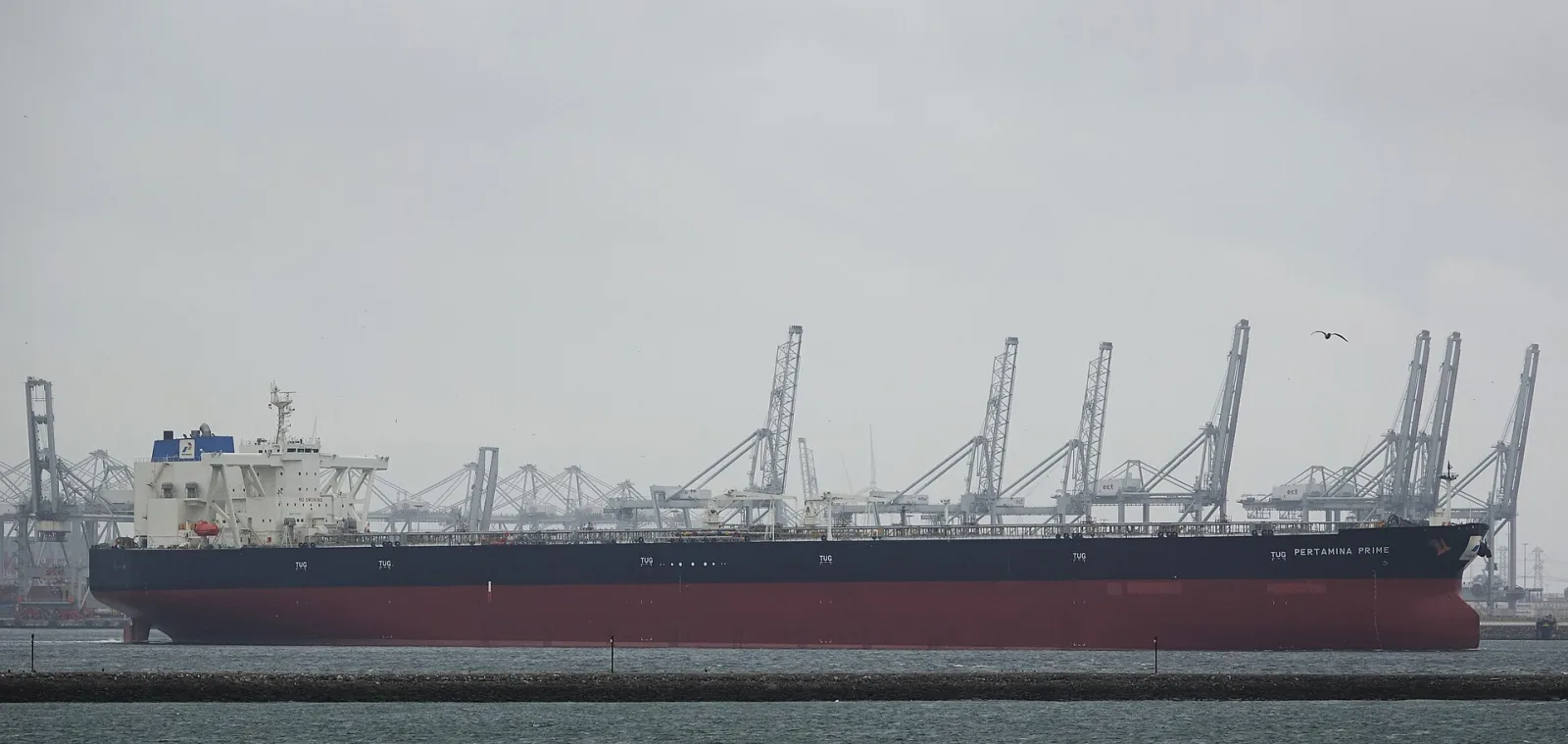
State fleets now carry the Gulf oil that insurers will not
December Brent expires on 30 October and the headline price will drop by about $5. The real constraint sits in cover, not the curve: Hormuz war premiums run at 6–10% of hull value, independent owners have pulled back, and a state-linked fleet of about 230 tankers carries Gulf supply.
Energy & Shipping Desk · 30 October 2026 · 11 min read · 11 sources
Why it matters
Noise: Brent will fall by about $5 on Friday evening and many will read it as easing tension, yet the drop is the mechanical result of rolling from the December to the January contract. Signal: the Hormuz war premium has risen from 0.25% before the war to 6–10%, and independent owners have retreated from Gulf loadings. October's 11 million barrels a day of exports now ride on a fleet of about 230 tankers, 36% owned by Gulf national oil companies. The 4 tankers reported to have hit mines on 29 October were in this fleet's corridor.
Implications
- Reuters says December Brent settled at $114.88 on 29 October; Admiral Markets put the December–January spread at $4.99 on 26 October, and the contract expires at 19:30 London time on 30 October.
- Marsh puts the Hormuz war premium at 6–10% of hull value: $8.28–13.8 million per voyage for a $138 million VLCC, or $4.1–6.9 a barrel on Talay's calculation.
- Windward says a Gulf dark fleet of about 230 tankers ties up 15–20% of the world VLCC fleet; on 29 October the Revolutionary Guards claimed 4 tankers in this corridor had hit mines.
Noise
Brent will fall $5 on Friday evening as Gulf tension eases
Signal
A state-linked fleet, not commercial insurance, carries Gulf supply
The noise is in the roll; the signal is in the cover
The December 2026 ICE Brent contract expires at 19:30 London time on 30 October, and the continuous series rolls into January. According to Reuters' 29 October settlement, the December contract fell 44 cents to $114.88, while WTI stayed at $102. Bloomberg data cited by AP showed Brent down 2.1% at $109.26 the same day; the text does not say which contract that series tracks. Admiral Markets put the December–January spread at $4.99 on 26 October. The roughly $5 drop on Friday evening's screens is therefore a change of contract, not a relaxation.
On 29 October this desk read the same roll through the shape of the curve and concluded that scarcity sat at the front end. The question for 30 October goes one step further: what keeps scarcity at the front? Talay's answer is not the barrel itself but who underwrites the ship that carries a 2 million barrel cargo. Preliminary Vortexa data cited by Windward show about 11 million barrels a day of crude loaded at terminals west of Hormuz in October. The figure was 1.56 million in May and 14.5 million before the war. Three quarters of supply has returned, but the fleet carrying it has changed. The 4 tankers reported to have hit mines on 29 October expose this new fleet's weakest link.
1 · Constraint: cover is priced but not passed on
The war premium is the cost of the war-risk extension that insures a hull separately against hostilities. In Hormuz it runs at 6–10% of hull value. Marsh supplies that band, cited by Insurance Business on 14 October from the Financial Times; the pre-war rate was about 0.25%. Lloyd's List data from March value a five-year-old VLCC, or very large crude carrier, at $138 million, so the band means $8.28–13.8 million for a single voyage. On Talay's calculation, for a VLCC carrying about 2 million barrels that is an extra $4.1–6.9 a barrel. The figure is the same order of magnitude as the $4.99 December–January Brent spread.
The premium has risen 24 to 40 times, yet the market has not closed. The Lloyd's Market Association told Insurance Business that, as of 14 October, cover could be found for those willing to pay. The problem is duration. Reuters reported on 25 September that war policies cover seven-day voyages and are repriced every 24 hours. Hull war policies carry a seven-day cancellation clause. On 1 March Gard told members that its reinsurers had cancelled Gulf war cover and that, on 72 hours' notice, the risk would be excluded from 5 March. In mid-October the list of the Joint War Committee, the Lloyd's market body that designates high-risk areas, still covered the whole Gulf.
The constraint also shows up one layer down, in reinsurance. Howden Re's August estimate puts market-wide war, terror and political violence losses at $2–3 billion, against annual segment premium of $1.5–2 billion. In a line where losses exceed premium by 30–100%, capacity shrinks through selectivity rather than price. Policies stay limited to seven days, expensive and conditional. The $40 billion reinsurance facility set up by the US International Development Finance Corporation (DFC) and Chubb had written no policies as of May. On 14 October Insurance Business found no update on whether it had written any; the state's $40 billion of cover appears to remain on paper.
2 · Threshold: when the premium cannot be carried, who supplies the ship
The insurance threshold is not a single rate but a four-step ladder. Reuters' 25 September survey put the premium for Saudi-linked tankers at Yanbu at around 3%, up from below 1% in early July. At Saudi ports further south such as Jizan the rate climbed to 7%, and in Hormuz to 6–9%. Red Sea transits without a Saudi link paid 0.2–0.3%. Within the same sea the gap reaches 30 times depending on the cargo owner. Risk is assigned not to geography but to the identity of the flag and the cargo.
Once the premium passes 6%, the independent owner's economics break down. Windward's 28 October report says fewer owners are willing to load at Gulf terminals despite very high freight rates. A fleet of about 230 tankers fills the gap; 80% are VLCCs and their average age is 12 years. Gulf national oil companies are the beneficial owners of 36% of the fleet, and a South Korean owner holds 28%. One Gulf national shipping company has spent about $2 billion on vessels in the past three months. Windward estimates that the fleet ties up 15–20% of the world VLCC fleet at any time.
Seventy per cent of the fleet has gone dark over the past three months for an average of 12 days, switching off its AIS position signal. That helps evade attack, but on a seven-day policy it makes it harder to give the insurer evidence when a loss occurs. Talay's threshold is this: unless the Hormuz premium falls to Yanbu levels, below 3%, independent owners will not return to the Gulf for good. Until then the carrier of Gulf supply will not be the commercial insurance market. It will be state and state-linked fleets that carry the risk on their own balance sheets.
The day the threshold was tested: 29 October
29 October was the first serious test of this structure. The Revolutionary Guards announced that within 24 hours 3 oil tankers on an unauthorised southern route had hit mines and caught fire. The army said a fourth tanker had been disabled east of the strait. According to Gulf News, Iran claimed the ships had switched off their radar and navigation systems. Tanker names and flags were not released, and the four-tanker claim could not be verified independently. CBS reported that UKMTO separately said a tanker in Hormuz was hit by a projectile at 19:30 local time, with no injuries.
The economic weight of the four claims lies in the identity of the route. A tanker that switches off its radar and uses the southern corridor fits the profile of the dark fleet Windward describes. The US military said on 28 October that it had cleared the main routes; a Revolutionary Guards spokesman demanded independent proof on 29 October. The JWC is waiting for incident-free transits and verified mine clearance before narrowing its list. Even unproven, the mine claim enters the price. Insurance Business reports that more than 20 ships were attacked between 1 and 14 October, and one in every 50 transiting ships was hit in the third quarter.
3 · Second round: buyers and states absorb the risk
The transfer of risk is not confined to the 11 million barrels a day of oil flows. On 29 October QatarEnergy signed a deal to take 3 million tonnes a year of LNG from Woodside's US facilities for 20 years. Together with last week's 4 million tonne deal with Cheniere, the company has locked in 7 million tonnes a year of supply from outside the Gulf in two weeks. The move is an attempt to insulate an uninsurable geography with a contract portfolio. Damage to 2 of the 14 trains at Ras Laffan in the March attack removed 17% of export capacity, and force majeure has been extended to the end of 2026.
The third and final link of the chain breaks at the importer. When the selling state supplies both ship and cover, delivery risk shifts in practice to the buyer, who accepts a premium for prompt cargoes. Braemar data cited by Windward put Oman–Asia freight at about $15 a barrel on 23 October. Freight, war premium and the calendar spread together build a cost layer of more than $20 a barrel that the headline price does not show. For Türkiye, which buys crude and LPG from the Gulf, this layer reaches the energy import bill with a lag of one to three months. Friday evening's $5 roll-driven drop will not shrink that bill.
The cost of capital is part of this three-link chain as well. A Gulf shipping company committing $2 billion to vessels in three months shows that part of oil revenue now goes to covering risk the insurance market no longer takes. If a VLCC in the fleet sinks without a commercial policy, a loss of about $138 million goes straight onto the national company's balance sheet. The mine claims of 29 October should therefore be read not as price news but as a test of state balance sheets.
4 · What would prove us wrong
Three developments would refute this reading. If the Hormuz war premium falls below 3% in two consecutive fortnightly readings, the way opens for independent owners to return and the state fleet thesis weakens. If the JWC narrows its list to part of the Gulf, the cover constraint eases geographically. If the January–February Brent spread drops below $1 after the roll, front-end scarcity was the product of an expiry squeeze, not of insurance. In the other direction, independent confirmation of the four-tanker mine claim and a fresh sinking in the dark fleet would bring H2 forward. Iran's reply to the Qatari draft this weekend, and the Vance letter delivered via Qatar on 25 October, are the only realistic door to H3.
Probabilities
Scenarios
| Scenario | Probability | Trigger | Market impact |
|---|---|---|---|
| H1State fleets keep carrying supply | 55% | The mine claims go unverified or losses stay limited, any strike decision is deferred beyond 3 November and the premium stays in the 6–10% band. | Gulf exports hold near 11 million barrels a day, but freight and delivery risk pile up with buyers. |
| H2The mine line hits the dark fleet | 30% | The four-tanker mine claim is independently confirmed, a fresh sinking hits the fleet, or operations begin after 3 November. | National companies cut voyages, the southern corridor narrows and Gulf exports fall below 11 million barrels a day. |
| H3The cover door reopens | 15% | Iran answers the Qatari draft positively, the Vance channel returns to talks and the JWC begins narrowing its list. | The premium falls to Yanbu levels, independent owners return and the burden on state fleets eases. |
Module A
Constraints Matrix
STRUCTURAL AVG 4.4 · TACTICAL AVG 2.8Structural constraints dominate: the outcome is set more by these limits than by the actors' preferences.
Hard structural constraintspersistent · beyond the actors' will
The JWC list covers the whole Gulf
5/5Insurance Business says the JWC list covered the entire Gulf as of 14 October; narrowing it requires incident-free transits and verified mine clearance.
Iran closing the southern corridor with mines · Iran
5/5On 29 October the Revolutionary Guards said 3 tankers on an unauthorised southern route hit mines, and the army said 1 more did east of the strait; the claim could not be verified.
Seven-day policies, repriced every 24 hours
4/5Reuters says war policies cover seven-day voyages and are repriced every 24 hours; hull war policies carry a seven-day cancellation clause.
Losses exceed premium
4/5Howden Re's August estimate puts war, terror and political violence losses at $2–3 billion, against annual segment premium of $1.5–2 billion.
Lost capacity at Ras Laffan
4/5The March attack damaged 2 of 14 trains and removed 17% of export capacity; repairs will take about three years and force majeure runs to the end of 2026.
Tactical frictiontemporary · eases over time
December Brent roll days
3/5The December contract expires at 19:30 London time on 30 October; its spread to January was $4.99 on 26 October and the headline series will drop mechanically.
Dark sailing and the evidence gap weeks
3/5Windward says 70% of the fleet went dark on AIS for an average of 12 days over the past three months, which makes incident detection and proof of loss harder.
The DFC facility has not deployed months
3/5The $40 billion DFC–Chubb reinsurance facility had written no policies as of May; no update could be found on 14 October either.
Waiting on a reply to Vance's letter days
2/5CBS says Iran had not yet answered Vance's letter to Rezai on 29 October; a reply to the Qatari draft is expected at the weekend.
Module B
Signal vs Noise
SIGNAL 50% · NOISE 50%
- NOISE
Brent will fall $5 on Friday evening as Gulf tension eases
Admiral Markets put the December–January spread at $4.99 on 26 October, and the December contract expires on 30 October; the drop comes from the contract roll with no change in the market.
Data: Brent crude oil (futures) ›Admiral Markets — Brent Crude Oil Price Near Six-Month High on Iran War
- SIGNAL
A state-linked fleet, not commercial insurance, carries Gulf supply
Windward says that as independent owners withdrew, a fleet of about 230 tankers carried 11 million barrels a day in October; 36% of the fleet belongs to Gulf national oil companies.
Data: Strait of Hormuz transits ›Windward — How a New Arab Dark Fleet Keeps Hormuz Oil Flowing
- SIGNAL
Cover exists in Hormuz, but at 24 to 40 times its pre-war price
Marsh puts the additional war premium at 6–10% of hull value, against about 0.25% before the war; that is $8.28–13.8 million per voyage for a $138 million VLCC.
- NOISE
Iran mined four tankers and closed the southern corridor
On 29 October the Revolutionary Guards claimed 3 tankers and the army 1 had hit mines; no names, flags or positions were given, and UKMTO reported only 1 tanker hit by a projectile.
Data: Strait of Hormuz transits ›Gulf News — Middle East War: Saudi intercepts Houthi missile as four tankers on fire after hitting mines in Hormuz
- SIGNAL
Qatar is insulating an uninsurable geography with non-Gulf contracts
On 29 October QatarEnergy signed a 20-year deal with Woodside for 3 million tonnes a year, locking in 7 million tonnes a year from outside the Gulf in two weeks.
gCaptain (Reuters) — QatarEnergy Continues LNG Buying Spree to Hedge Future Hormuz Disruptions
- NOISE
Diplomatic hopes knocked more than $2 off oil
Reuters says Brent fell more than $2 intraday on 29 October but settled only 44 cents lower at $114.88.
Data: Brent crude oil (futures) ›The Globe and Mail (Reuters) — Oil prices settle lower as diplomacy hopes offset some Mideast supply concerns
Module C
Asset-Class and Positioning Implications
| Asset class | Exposure | Transmission channel | H1 | H2 | H3 | Expected | Conviction | Horizon | What to watch |
|---|---|---|---|---|---|---|---|---|---|
| Freight & insurance | Gulf-loading VLCC freight and war premiums | As independent owners withdraw, capacity is tied to state fleets and voyage costs stay high | + | ++ | −− | +0.85 | ●●● | 0–3 months | Marsh and broker war premium readings, and Braemar Oman–Asia freight |
| Commodities | The front end of the Brent curve | As delivery risk shifts to buyers, prompt cargoes stay expensive relative to later months | + | ++ | −− | +0.85 | ●●● | 0–3 months | The ICE Brent January–February spread and the $1 threshold |
| Commodities | Asian and European LNG curves | Ras Laffan's 17% capacity loss and Hormuz risk push LNG sourcing outside the Gulf | + | ++ | − | +1.00 | ●●● | 3–12 months | New non-Gulf contracts at QatarEnergy and the duration of force majeure |
| Volatility | Oil option volatility | The roll, mine claims and any post-3 November strike decision amplify price jumps | 0 | ++ | − | +0.45 | ●●● | 0–3 months | Brent option implied volatility and UKMTO incident reports |
Second-order effects
And then what?
Starting point
The Hormuz war premium has risen to 6–10% of hull value, independent owners have withdrawn from Gulf loadings, and October's 11 million barrels a day of exports ride on a state-linked dark fleet of about 230 tankers.
- 1
Freight and insurancewithin days
Mine and projectile attacks hit a dark fleet with thin or no commercial cover; losses go straight onto the balance sheets of Gulf national companies and the voyage tempo slows.
Watch: UKMTO and JMIC incident reports, and Vortexa's November Gulf export data falling below 11 million barrels a day
- 2
Futures curve and freightwithin weeks
As long as 15–20% of the world VLCC fleet stays tied to the Gulf, Asian and Atlantic Basin buyers pay up for prompt delivery; the front of the Brent curve stays expensive despite the roll.
Watch: The ICE Brent January–February spread, and Braemar Oman–Asia freight holding above $15 a barrel
- 3
Current accountwithin months
Importers who carry delivery risk see freight, premium and calendar spread reach their bills; in Türkiye crude and LPG import costs do not fall even if headline Brent does.
Watch: TÜİK monthly energy imports and EPDK fuel price updates
What breaks the chain
If the Hormuz premium falls below 3% in a fortnightly reading, or the JWC narrows its list to part of the Gulf, independent owners return, the state fleet stops being the sole carrier and the chain breaks at the first link.
Triggers
Thresholds to watch
| Indicator | Threshold | Today | What it means |
|---|---|---|---|
| Strait of Hormuz transits | > 60 transits/day | 2 | If daily transits approach half the pre-war 138, independent owners have started to return and the cover constraint has eased |
| Brent crude oil (futures) | Jan–Feb < $1 | 114.88 | If the prompt spread falls below $1 after the roll, the front-end scarcity premium has been erased and the insurance thesis weakens |
| Brent crude oil (futures) | January > $115 | 114.88 | If the January contract tops December's 29 October settlement, losses in the dark fleet have begun to tighten supply |
Sources
- The Globe and Mail (Reuters) — Oil prices settle lower as diplomacy hopes offset some Mideast supply concerns
- Transport Topics (AP) — Oil prices sink on fresh diplomatic efforts in Middle East
- Admiral Markets — Brent Crude Oil Price Near Six-Month High on Iran War
- Insurance Business — Hormuz sinking hands marine war underwriters another total loss as attacks surge
- Insurance Journal (Reuters) — War risk premiums for Saudi-linked tankers at Yanbu and Hormuz (25 Sep 2026)
- The Boston Report — Hormuz War-Risk Insurance Rates: 2026 Costs Explained
- Windward — How a New Arab Dark Fleet Keeps Hormuz Oil Flowing
- MarineLink — Gulf Oil Producers Build Tanker Fleet as Security Risks Mount Around Hormuz
- Gulf News — Middle East War: Saudi intercepts Houthi missile as four tankers on fire after hitting mines in Hormuz
- CBS News — Live Updates: Tankers strike mines in Strait of Hormuz, Iran says
- gCaptain (Reuters) — QatarEnergy Continues LNG Buying Spree to Hedge Future Hormuz Disruptions
Sourcing and verification rules: methodology · Report an error: contact
Related reports
VIEnergy & Supply·Analysis·Middle East and North Africa
As December Brent expires, scarcity stays at the front of the curve
Axios reported on 28 October that the US and Israel had put Iran's energy facilities on their target list. The market answered on the curve: December Brent traded $4.60 above January. The December contract expires on 30 October, and scarcity remains at the front.
Energy & Shipping Desk · 29 October 2026 · 7 min
VIEnergy & Supply·Analysis·Middle East and North Africa
The Saudi recovery is wearing thin at Ras Tanura's berths
The Houthis claimed a hit on Ras Tanura on 27 October and Iran's army made a new Hormuz mine claim; neither was verified by 28 October. The real data came earlier: supertankers loading at Saudi Arabia's largest Gulf terminal fell from 5 to 1 between 12 and 20 October.
Energy & Shipping Desk · 28 October 2026 · 7 min
VIEnergy & Supply·In-depth analysis·Middle East and North Africa
Riyadh shifts supply assurance from the pipeline to the customer's storage
On 26 October the Houthis said they had hit pumping stations on the East-West line that bypasses the Strait of Hormuz. Aramco signed a crude storage memorandum in Singapore the same day. Riyadh is no longer leaning on one bypass but on the customer's own shore.
Energy & Shipping Desk · 27 October 2026 · 12 min