VI Energy Politics & Supply Security·Analysis·Middle East and North Africa
The Saudi recovery is wearing thin at Ras Tanura's berths
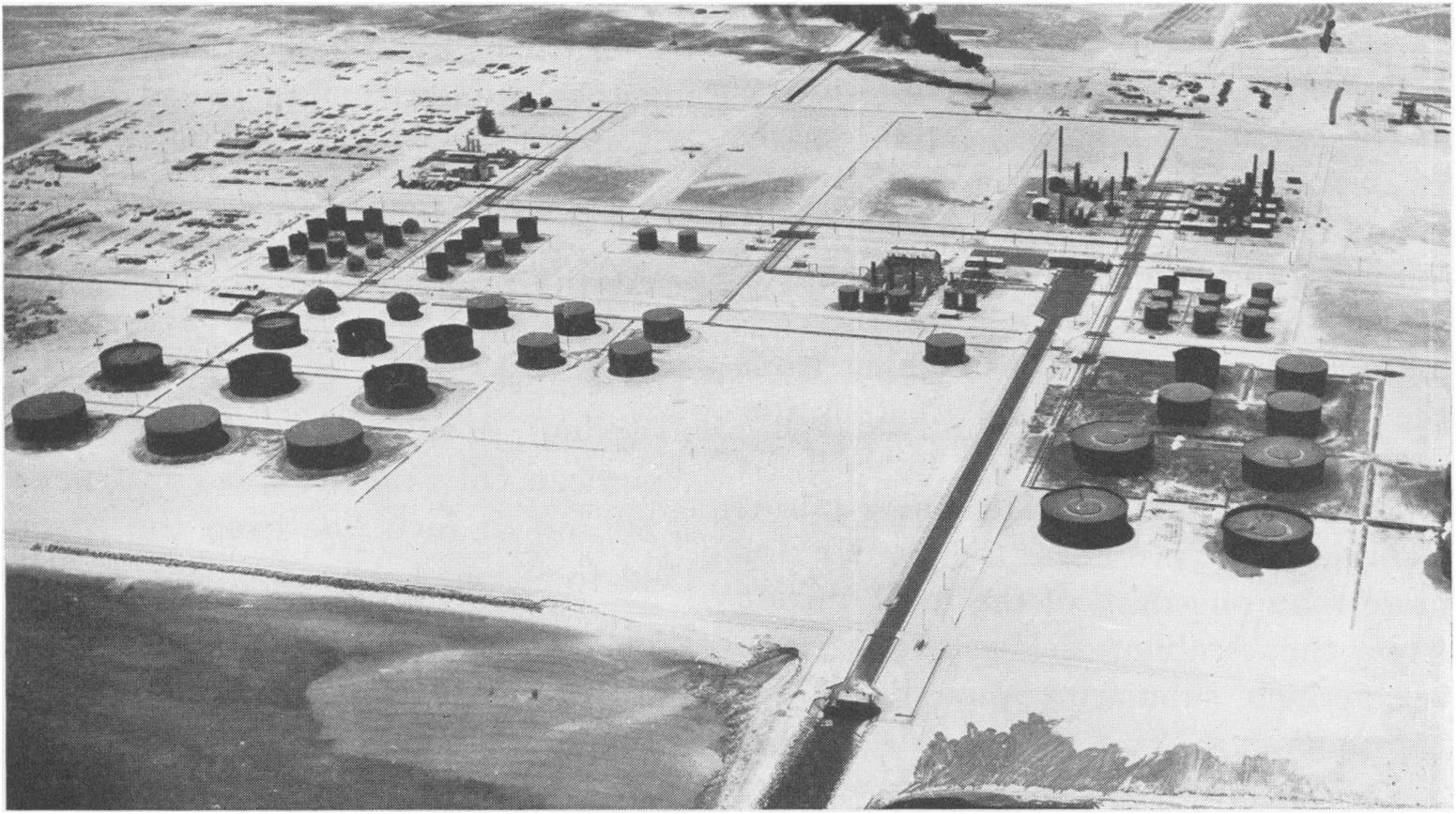
The Houthis claimed a hit on Ras Tanura on 27 October and Iran's army made a new Hormuz mine claim; neither was verified by 28 October. The real data came earlier: supertankers loading at Saudi Arabia's largest Gulf terminal fell from 5 to 1 between 12 and 20 October.
Energy & Shipping Desk · 28 October 2026 · 7 min read · 10 sources
Why it matters
Noise: the Houthi claim of a major fire at Ras Tanura. Vanguard says the fire was contained, and Brent stayed in a 113–116 dollar range on 27 October. Signal: Bloomberg's satellite images show loadings at Saudi Arabia's largest Gulf terminal falling from 5 very large tankers on 12–13 October to 1 on 20 October. The Saudi recovery, above 8 million barrels a day in September, rests on the Gulf leg that exits Hormuz under US escort, and that leg is thinning.
Implications
- Kpler counted loadings of about 3.6 million barrels a day at Ras Tanura in September; Saudi output rose by a third that month to above 8 million barrels a day.
- For the week to 18 October, Kpler put Gulf crude and condensate flows at 24.6 million barrels a day and Vortexa at 18 million; the pre-war level was at least 18.5 million.
- OPEC+ kept Saudi Arabia's November production target at 10.5 million barrels a day; actual output is about 2.5 million barrels below that target.
Noise
A Houthi missile started a major fire at Ras Tanura and hit Saudi exports
Signal
Loadings at the largest Saudi Gulf terminal thinned before the attack claim
The noise is the fire; the signal is at the berths
The headline on 27 October came from Ras Tanura. Houthi spokesman Yahya Saree said they had struck the refinery, which processes 550 thousand barrels a day, with a ballistic missile and started large fires. The maritime security firm Vanguard reported a fire in the area on the morning of 27 October and said it had been contained. Riyadh and Aramco had not confirmed a hit as of 27 October. Cornerstone Futures put December Brent at 116.12 dollars that morning; CBS had it around 113 dollars in the evening. The market did not price the claim on 27 October.
The quiet data arrived 7 days earlier. A Bloomberg report carried by gCaptain on 21 October said satellite images showed 5 very large crude carriers loading at 7 berths at Saudi Arabia's largest Gulf terminal on 12–13 October. By 20 October the number had dropped to 1. The 21 October report does not name the terminal; Cornerstone says the kingdom's main crude loading facilities are at Ras Tanura. Talay's reading is this: the risk at Ras Tanura is not the 27 October fire. It is a thinning of loadings that appears to have begun before that fire.
1 · The logistical constraint and the threshold
The Gulf leg carried September's Saudi recovery. According to Kpler data cited by Cornerstone, Ras Tanura loaded about 3.6 million barrels a day in September. That volume has to exit through the Strait of Hormuz, and the transit regime was called into question again on 27 October. CENTCOM commander Brad Cooper said on 25 October that the main routes were clear of Iranian mines and that more than 3,000 transits had been supported over the past 6 months. Two days later the Iranian army said a tanker on an unauthorised route had hit mines and caught fire; that claim is also unverified.
Even the size of the flow is disputed between 2 data providers. For the week to 18 October, Kpler put Gulf crude and condensate flows at 24.6 million barrels a day, while Vortexa put them at 18 million. Cornerstone says ANZ puts Hormuz flows at about 60% of normal, while Kpler puts the October average at about 82% of pre-war levels. The threshold Talay is tracking is Ras Tanura's October loadings falling from 3.6 million barrels a day in September to below 2 million. If that happens, Riyadh's Hormuz-dependent outlet will in effect have shrunk by nearly half.
2 · Supply security and critical thresholds
On the production side the buffer is thin in autumn 2026. Bloomberg says Saudi output in August was at its lowest in more than 30 years, before rising by a third in September to above 8 million barrels a day. According to Enerdata, OPEC+ held Saudi Arabia's November target at 10.5 million barrels a day on 4 October. The gap of about 2.5 million barrels between target and actual output is not spare capacity. It is oil that cannot be pumped until an export channel opens.
The frequency of attacks doubled in October. Bloomberg reports that UKMTO counted 32 attacks on ships around the Arabian Peninsula in the first 3 weeks of October, against 16 in the whole of September. On 26 October the Houthis named the East–West pipeline, which runs to the Red Sea, as a target; on 27 October they named Ras Tanura in the Gulf. Within 2 days both Saudi export outlets had come under claimed attack. According to a Wall Street Journal report cited by the Times of Israel, Washington told some Gulf states to be ready for a short, intense operation after the 3 November midterm.
3 · Second-order effects
The first transmission runs through insurance. Every mine and missile claim, like the 2 unverified claims of 27 October, delays insurers from cutting the Gulf war risk premium. Cornerstone says ANZ estimates global middle distillate stocks at about 5% below their 5-year average. Ras Tanura is both an export terminal and the largest Saudi refinery, at 550 thousand barrels a day. Thinner loadings there therefore squeeze the diesel market as much as crude. For diesel importers such as Türkiye, this shows up in the energy bill and the current account within 1–3 months.
4 · The falsifier
This reading fails if Kpler or Vortexa October data show Ras Tanura loadings above 3 million barrels a day. In that case the single tanker seen on 20 October should be read as a temporary scheduling gap. If Iran accepts the new draft that Qatari mediators presented on 28 October this week, the dispute over the Hormuz transit regime also eases and the chain breaks at its first link.
Probabilities
Scenarios
| Scenario | Probability | Trigger | Market impact |
|---|---|---|---|
| H1Loadings hold, the premium stays | 50% | The Ras Tanura fire stays outside the facility and US-escorted Hormuz transits continue. | Saudi exports carry output of around 8 million barrels a day, but the war risk premium and freight do not ease. |
| H2The Gulf leg contracts | 30% | October data show Ras Tanura loadings below 2 million barrels a day, or a US operation begins after 3 November. | Saudi exports contract at both outlets at once, the East–West pipeline cannot close the gap and the diesel market tightens. |
| H3Diplomatic easing | 20% | Iran accepts the Qatari draft this week and agreement emerges on the Hormuz transit regime. | Mine and missile claims subside and Gulf loadings return to September levels. |
Module A
Constraints Matrix
STRUCTURAL AVG 4.5 · TACTICAL AVG 3.3Structural constraints dominate: the outcome is set more by these limits than by the actors' preferences.
Hard structural constraintspersistent · beyond the actors' will
Ras Tanura's weight in loadings · Saudi Arabia
5/5Kpler says Ras Tanura loaded about 3.6 million barrels a day in September; the site is also the kingdom's largest refinery, processing 550 thousand barrels a day.
Hormuz transit regime · Iran
5/5Iran repeated on 27 October that the strait is closed to ships that do not coordinate with it; CENTCOM said on 25 October that the main routes are clear of mines. Who sets the rules of transit is contested.
Target–output gap · Saudi Arabia
4/5OPEC+ held Saudi Arabia's November target at 10.5 million barrels a day; actual output was just above 8 million in September, and the gap depends on export channels.
The 3 November calendar · United States
4/5According to the Wall Street Journal, Washington told some Gulf states to be ready for a short, intense operation after the 3 November midterm.
Tactical frictiontemporary · eases over time
Attack frequency weeks
4/5UKMTO counted 32 attacks on ships around the Arabian Peninsula in the first 3 weeks of October, against 16 in the whole of September.
Verification gap days
3/5Riyadh has banned the sharing of strike footage and Aramco had made no statement as of 27 October; damage can only be gauged through tanker tracking and satellite data.
Data provider divergence weeks
3/5For the week of 18 October Kpler put Gulf flows at 24.6 million barrels a day and Vortexa at 18 million; ANZ puts Hormuz flows at 60% of normal, Kpler at 82%.
Module B
Signal vs Noise
SIGNAL 60% · NOISE 40%
- NOISE
A Houthi missile started a major fire at Ras Tanura and hit Saudi exports
Saree claimed a major fire on 27 October; Vanguard said the fire was contained, Riyadh did not confirm a hit and Brent stayed in a 113–116 dollar range during the day.
Data: Brent crude oil (futures) ›The New Arab — Houthis claim attack on Saudi oil refinery, blasts shake Riyadh
- SIGNAL
Loadings at the largest Saudi Gulf terminal thinned before the attack claim
Bloomberg's satellite images showed 5 very large tankers loading at 7 berths on 12–13 October; by 20 October the number had fallen to 1.
gCaptain (Bloomberg) — Middle East oil flows near prewar levels defy Hormuz attacks
- NOISE
The Iranian army said a new tanker hit mines in Hormuz and caught fire
The 27 October statement gives no name, flag or crew for the tanker; CENTCOM said on 25 October that the main routes are free of mines.
Data: Strait of Hormuz transits ›Macau Business (AFP) — Iran army says oil tanker on fire after hitting mines in Hormuz
- SIGNAL
The Saudi November target sits 2.5 million barrels above actual output
OPEC+ held the Saudi target at 10.5 million barrels a day on 4 October; Bloomberg says September output was just above 8 million barrels.
Enerdata — OPEC+ keeps November 2026 oil output targets unchanged
- SIGNAL
Middle distillate stocks are below average, and Ras Tanura also carries diesel
ANZ says global middle distillate stocks are about 5% below their 5-year average; Ras Tanura has 550 thousand barrels a day of refining capacity.
Cornerstone Futures — Fire contained near Ras Tanura as Brent reverses early losses
Module C
Asset-Class and Positioning Implications
| Asset class | Exposure | Transmission channel | H1 | H2 | H3 | Expected | Conviction | Horizon | What to watch |
|---|---|---|---|---|---|---|---|---|---|
| Commodities | Crude oil futures curve | A contraction in Gulf loadings lifts the front months; a diplomatic exit erases the premium | 0 | ++ | −− | +0.20 | ●●● | 0–3 months | Brent at the 105 and 120 dollar thresholds |
| Commodities | Middle distillate margins | The Ras Tanura refinery and Gulf diesel exports set product supply | + | ++ | − | +0.90 | ●●● | 0–3 months | ANZ and IEA middle distillate stock updates |
| Freight & insurance | Gulf tanker freight and war risk premium | Mine and missile claims delay any easing of the premium | + | ++ | −− | +0.70 | ●●● | 0–3 months | UKMTO weekly attack count |
| Credit | Saudi sovereign CDS | Simultaneous contraction at both export outlets strains fiscal buffers | 0 | + | − | +0.10 | ●●● | 3–12 months | Saudi 5-year CDS and Aramco export statements |
Second-order effects
And then what?
Starting point
On 27 October the Houthis named Ras Tanura as a target and the Iranian army named the unauthorised route through Hormuz; Ras Tanura was loading about 3.6 million barrels a day in September, and loadings had dropped to 1 tanker on 20 October.
- 1
Freight and insurancewithin days
Insurers do not cut the war risk premium on very large tankers leaving Ras Tanura, some owners postpone loading slots and weekly loadings on the Gulf leg fall.
Watch: Kpler and Vortexa weekly loading data for Ras Tanura
- 2
Refining and product supplywithin weeks
As crude and diesel from the Gulf decline, Asian refiners turn to smaller tankers and delivered cargoes; middle distillate stocks fall further below their 5-year average.
Watch: ANZ and IEA updates on middle distillate stocks
- 3
Current accountwithin months
As long as diesel margins and freight stay high, importers' energy bills grow; in Türkiye the cost of diesel imports feeds into the current account deficit and pump prices.
Watch: Türkiye's monthly energy imports and EPDK diesel prices
What breaks the chain
The chain breaks at its first link if October loading data show Ras Tanura above 3 million barrels a day, or if the Qatari draft produces agreement on the Hormuz transit regime.
Triggers
Thresholds to watch
| Indicator | Threshold | Today | What it means |
|---|---|---|---|
| Brent crude oil (futures) | > $120 | 114.88 | If Brent rises from its 113–116 dollar range of 27 October to above 120 dollars, the market will have priced in loading risk on the Gulf leg |
| Brent crude oil (futures) | < $105 | 114.88 | If Brent falls below 105 dollars, the market will have fully discounted the Ras Tanura and Hormuz claims and priced a diplomatic exit |
| Strait of Hormuz transits | < 10 ships/day | 2 | If transits stay below 10 ships a day, Ras Tanura's September loadings of 3.6 million barrels a day become unsustainable |
Sources
- gCaptain (Bloomberg) — Middle East oil flows near prewar levels defy Hormuz attacks
- Cornerstone Futures — Fire contained near Ras Tanura as Brent reverses early losses
- Anadolu Agency — Yemen's Houthis claim missile attack on Saudi Arabia's Ras Tanura oil refinery
- The New Arab — Houthis claim attack on Saudi oil refinery, blasts shake Riyadh
- Defence Industry Europe — U.S. Central Command says Strait of Hormuz shipping routes remain clear of Iranian mines
- Macau Business (AFP) — Iran army says oil tanker on fire after hitting mines in Hormuz
- Enerdata — OPEC+ keeps November 2026 oil output targets unchanged
- Times of Israel — Liveblog, 28 October 2026
- CBS News — Live Updates, 27 October 2026
- WION — Houthis claim missile strikes on Saudi defence ministry, Ras Tanura refinery
Sourcing and verification rules: methodology · Report an error: contact
Related reports
VIEnergy & Supply·In-depth analysis·Middle East and North Africa
State fleets now carry the Gulf oil that insurers will not
December Brent expires on 30 October and the headline price will drop by about $5. The real constraint sits in cover, not the curve: Hormuz war premiums run at 6–10% of hull value, independent owners have pulled back, and a state-linked fleet of about 230 tankers carries Gulf supply.
Energy & Shipping Desk · 30 October 2026 · 11 min
VIEnergy & Supply·Analysis·Middle East and North Africa
As December Brent expires, scarcity stays at the front of the curve
Axios reported on 28 October that the US and Israel had put Iran's energy facilities on their target list. The market answered on the curve: December Brent traded $4.60 above January. The December contract expires on 30 October, and scarcity remains at the front.
Energy & Shipping Desk · 29 October 2026 · 7 min
VIEnergy & Supply·In-depth analysis·Middle East and North Africa
Riyadh shifts supply assurance from the pipeline to the customer's storage
On 26 October the Houthis said they had hit pumping stations on the East-West line that bypasses the Strait of Hormuz. Aramco signed a crude storage memorandum in Singapore the same day. Riyadh is no longer leaning on one bypass but on the customer's own shore.
Energy & Shipping Desk · 27 October 2026 · 12 min