V Technology Geopolitics & AI·Analysis·Türkiye and Its Neighbourhood
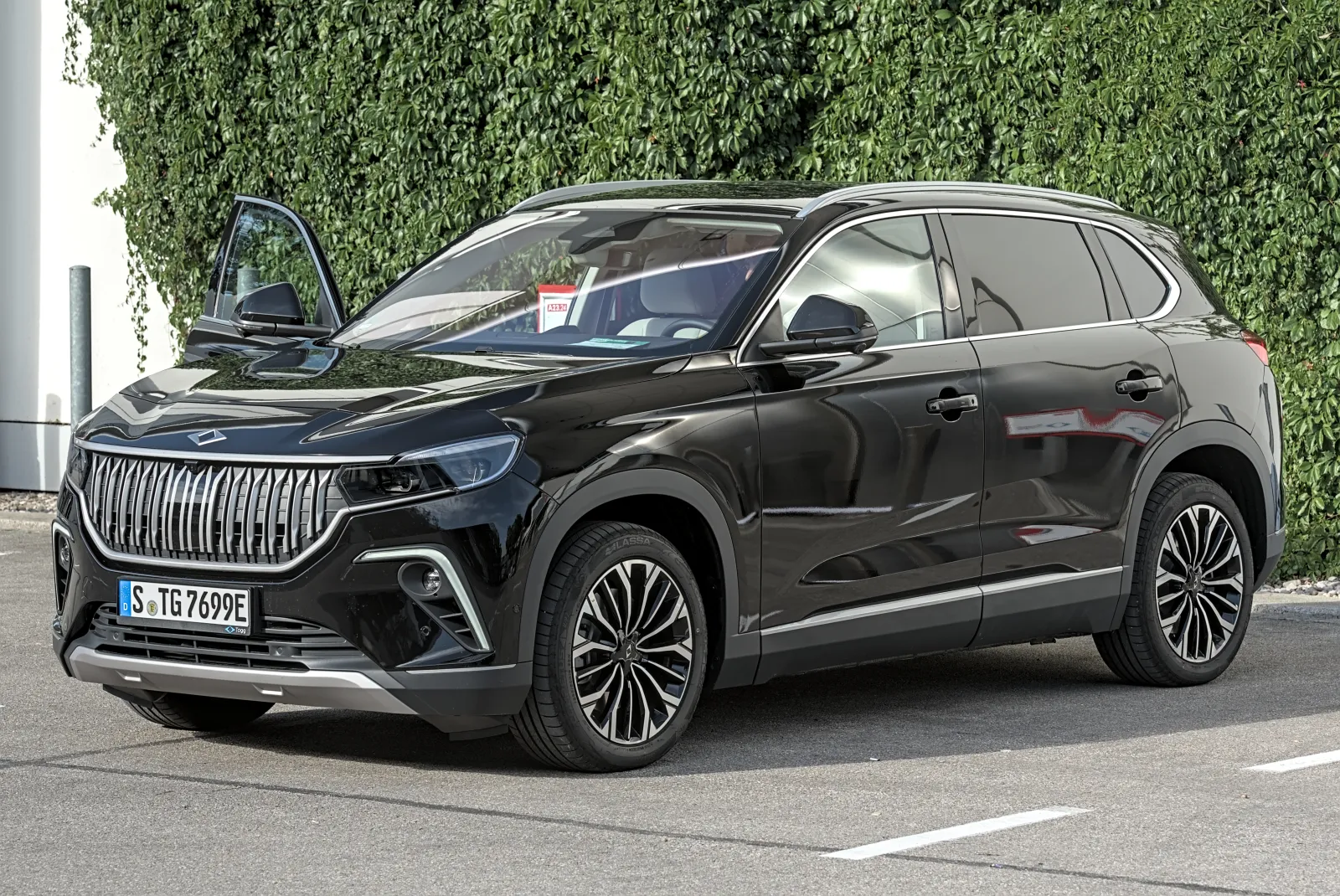
Türkiye wanted China's cars but stops their software at defence gates
Four defence firms are keeping foreign electric cars off their campuses, yet no written rule exists. The trade channel had already narrowed. Chinese brands held more than 10% of the market in January and 4.31% in August. The constraint lies not in the factory but in whose software the car talks to.
Türkiye & Neighbourhood Desk · 12 October 2026 · 7 min read · 9 sources
Why it matters
The noise: Türkiye has banned Chinese cars through its defence industry. The ban is unwritten, names no brand or country, and the speaker framed his remarks as a personal assessment. The signal: the security decision follows a trade decision that has been at work for two years. BYD sold 3,866 cars in January and 46 in August. Its $1 billion Manisa plant is effectively suspended, and domestic Togg took 44.4% of fully electric sales in September. Türkiye now treats the connected car as a sensor network, but unlike the US and Poland it has not put this in writing.
Implications
- ASELSAN, ROKETSAN, HAVELSAN and TEI have shut their gates to foreign electric cars. Domestic cars are admitted because their software and control sit in Türkiye. On 10 October TEI general manager Akşit linked this to the risk of cameras and sensors mapping the site.
- Chinese brands' market share fell from above 10% in January to 4.31% in August, averaging 5.99% over the first 8 months. Chery and OMODA & JAECOO sold 2,321 of August's 2,649 Chinese cars; BYD managed 46.
- Allies have written the rule down. The US connected-vehicle rule took effect on 17 March 2025 and bars China- and Russia-linked software from model year 2027. Poland removed Chinese cars from secure military sites on 17 February 2026.
Noise
Türkiye has banned Chinese cars through its defence industry
Signal
The trade channel closed before the security decision
The noise is in the ban, the signal in the software
Mahmut Faruk Akşit, general manager of TUSAŞ Engine Industries (TEI), said in Denizli on 10 October that four defence companies no longer admit foreign electric cars onto their campuses. According to an AA report carried on 11 October, the reasoning has two parts. The cameras and sensors in the car map the area, and control of the car sits outside Türkiye. Domestic cars are allowed, because their software and control rest with Turkish companies.
The headlines read this as a ban aimed at China. The record is narrower. Akşit described his remarks as a personal assessment, and Yeni Şafak reported on 11 October that there is no written policy from the four firms or from the Defence Industry Agency. No brand or country was named, and no start date was given. The real signal is the criterion. For the first time, Türkiye is sorting cars not by origin but by who controls their software.
Constraint 1 · The trade gate had already narrowed
The security decision follows a filter that has been working on the market for two years. OtoPusula reported on 17 July that Türkiye levies an extra 40% customs duty on Chinese-made vehicles, and that BYD was exempted in return for a pledge to produce locally. Construction has not started in two years at the Manisa plant, a $1 billion, 150,000-car-a-year project signed in 2024. In a written answer to parliament, Industry Minister Kacır said incentives will be withdrawn and the land reclaimed. The extra 40% duty on cars imported under the exemption will be collected with late-payment interest.
The result shows in the sales figures. A 3 September Yeni Birlik report based on ODMD data shows BYD selling 3,866 cars in January and 46 in August. The combined share of Chinese brands was above 10% in January and fell to 4.31% in August. According to the report, the Trade Ministry's requirement for authorised service networks for Chinese-made electric cars also tightened market entry. Sources diverge on the duty's start date: OtoPusula says it has applied since 2023, Yeni Birlik that it was introduced in July 2024.
Constraint 2 · A domestic car filled the gap
ODMD data reported by Yeşil Haber show 63,736 cars sold in September, of which 15,074 were fully electric, lifting their share from 14.4% to 23.7%. Togg sold 6,692 units, taking 44.4% of fully electric sales and about 10.5% of all car sales. Tesla's figure of 1,725 units is an ODMD estimate. In January–September fully electric sales fell 9.1%, yet their share rose from 17.8% to 19.2%.
That picture makes the criterion at the defence gate cheap to apply. A corporate buyer that excludes foreign electric cars has a domestic model to put in their place, and that model already leads the market. Because the criterion rests on software control rather than on China, in principle it excludes Tesla too. Whether that is applied in practice could not be verified.
Constraint 3 · Allies have a written timetable, Türkiye does not
The US Commerce Department's Bureau of Industry and Security issued its rule on 14 January 2025, and it took effect on 17 March 2025. Connected vehicles and software from manufacturers tied to China and Russia are barred from model year 2027, and connectivity hardware from model year 2030. The rationale is that companies from those countries can be compelled to share data or grant remote access.
The Polish General Staff removed Chinese-made vehicles from secure military sites on 17 February 2026. Non-Chinese vehicles that can record location, images or sound may still enter if those functions are switched off. According to Türkiye Today, Britain's Special Boat Service banned Chinese-made electric cars from its base in Poole, and the Israeli army withdrew about 700 Chinese vehicles from officers. Türkiye has joined this line through practice, not regulation. The difference matters. A written rule gives investors predictability, while a gate-level practice stays flexible as bargaining leverage.
What comes next
Türkiye's digital identity infrastructure is being written into rules in other areas. A regulation from the Cyber Security Directorate, published on 10 October, introduced a social media ban for under-15s using an e-Devlet age token. On 11 October the health minister said electronic age verification for tobacco sales is under consideration in a draft law. No comparable standard yet exists for connected cars.
Three indicators are worth watching. The first is a similar entry restriction from another public body or critical infrastructure operator. The second is Chinese brands' share in ODMD's monthly data, and Togg's share of fully electric sales. The third is the outcome of the incentive clawback from BYD, and any new production pledge in Türkiye by a Chinese manufacturer. If China's share returns to 10%, the security criterion at the gate will have decoupled from trade policy.
Probabilities
Scenarios
| Scenario | Probability | Trigger | Market impact |
|---|---|---|---|
| H1The gate rule spreads unwritten | 55% | No written connected-vehicle standard appears by 31 March 2027, but at least one public body or critical infrastructure operator announces a similar entry restriction. | The constraint stays flexible as bargaining leverage. Chinese brands' share stays below 6% and domestic cars gain ground in corporate fleets. |
| H2A written connected-vehicle standard | 30% | The Cyber Security Directorate or the Defence Industry Agency publishes a written standard for critical sites covering cameras, location and over-the-air updates. | The criterion moves from origin to software control. Non-Chinese foreign brands also face a requirement to disable recording functions. |
| H3Easing in exchange for investment | 15% | A Chinese manufacturer secures an exemption from the extra duty with a pledge to produce in Türkiye, and Chinese brands' monthly share climbs back above 10%. | The security criterion at the gate decouples from trade policy. The constraint stays confined to defence campuses. |
Module A
Constraints Matrix
STRUCTURAL AVG 3.3 · TACTICAL AVG 2.3Structural constraints dominate: the outcome is set more by these limits than by the actors' preferences.
Hard structural constraintspersistent · beyond the actors' will
Extra customs duty and service requirement · Türkiye
4/5An extra 40% duty applies to Chinese-made cars, plus an authorised-service requirement for Chinese-made electric cars. China's share fell from above 10% in January to 4.31% in August.
No written rule · Türkiye
3/5The four firms' practice rests on a speech that a general manager called a personal assessment. Neither the Defence Industry Agency nor the Cyber Security Directorate has published a connected-vehicle standard.
Investment gap · China
3/5BYD's $1 billion, 150,000-car-a-year Manisa plant, signed in 2024, is effectively on hold. Minister Kacır said incentives and duties avoided under the exemption will be clawed back.
US software timetable · United States
3/5The US rule bars China- and Russia-linked connected-vehicle software from model year 2027 and connectivity hardware from 2030. The allied line is written and dated.
Tactical frictiontemporary · eases over time
No data on software provenance months
3/5No public data show where each model's software is controlled. Whether the criterion applies to non-Chinese brands such as Tesla could not be verified.
On record as a personal view days
2/5Akşit presented his remarks as a personal opinion. If one of the firms corrects them, the scope of the practice becomes unclear.
Incentive clawback process months
2/5The total incentives and extra duty to be recovered from BYD have not been disclosed. The process will set a precedent for Chinese investors.
Module B
Signal vs Noise
SIGNAL 67% · NOISE 33%
- NOISE
Türkiye has banned Chinese cars through its defence industry
Akşit said on 10 October that four firms do not admit foreign electric cars onto their campuses, but presented this as a personal assessment. There is no written policy, brand or country named.
- SIGNAL
The trade channel closed before the security decision
BYD sold 3,866 cars in January and 46 in August. Chinese brands' share fell from above 10% in January to 4.31% in August, and averaged 5.99% over the first 8 months.
- SIGNAL
The criterion is software control, not origin
According to Akşit, domestic cars are admitted because their software and control rest with Turkish companies. TEI keeps critical data on systems physically separated from the internet.
Foreks (AA) — TUSAŞ Engine Industries general manager Akşit speaks in Denizli
- SIGNAL
A domestic car filled the gap
15,074 fully electric cars were sold in September, a 23.7% share. Togg accounted for 44.4% of them with 6,692 units.
- NOISE
AI uses cars like missiles in warfare
Akşit said AI in war simulations used vehicles like missiles almost every time. The source and data behind the simulations were not disclosed, and the claim could not be verified.
Türkiye Today — Turkish defense firms keep foreign EVs off campuses over security fears
- SIGNAL
The allies' rule is written and dated
The US rule took effect on 17 March 2025, with the software ban from model year 2027 and the hardware ban from 2030. Poland removed Chinese cars from secure sites on 17 February 2026.
Module C
Asset-Class and Positioning Implications
| Asset class | Exposure | Transmission channel | H1 | H2 | H3 | Expected | Conviction | Horizon | What to watch |
|---|---|---|---|---|---|---|---|---|---|
| Equities | Turkish carmakers and parts suppliers | Corporate fleet demand moving to cars whose software is controlled domestically | + | + | − | +0.70 | ●●● | 3–12 months | ODMD monthly brand shares and Togg's share of fully electric sales |
| Equities | Turkish defence electronics and software firms | Verification and monitoring demand created by a written connected-vehicle standard | 0 | + | 0 | +0.30 | ●●● | 12+ months | A connected-vehicle or critical-site access standard in the Official Gazette |
| FX | Lira — FX demand from imported cars | A rising Chinese brand share would enlarge the imported electric car bill | 0 | 0 | − | −0.15 | ●●● | 0–3 months | Chinese brands' monthly share relative to the 10% threshold |
Second-order effects
And then what?
Starting point
On 10 October it emerged that four defence firms do not admit foreign electric cars onto their campuses. Over the same period Chinese brands' share fell from above 10% in January to 4.31% in August.
- 1
Corporate fleet demandwithin weeks
Public bodies and critical infrastructure operators adopt the same criterion through unwritten internal security instructions. Corporate fleet purchases favour cars whose software is controlled in Türkiye.
Watch: An entry restriction announced by another public body, and Togg's share of fully electric sales in ODMD data
- 2
Direct investmentwithin months
For Chinese manufacturers, the price of entry to Türkiye widens from a factory to software and data control. Investment talks add local data hosting to the production pledge.
Watch: The outcome of BYD's incentive clawback and new automotive investment incentive certificates from the Industry Ministry
- 3
Regulationwithin months
Practice becomes a written standard, and a Polish-style requirement to disable recording functions extends to non-Chinese connected cars. Fleet and access costs rise at critical sites.
Watch: A connected-vehicle or critical-site access standard in the Official Gazette
What breaks the chain
The chain breaks at the first step if a Chinese manufacturer wins incentives with a pledge to produce and host data in Türkiye, or if one of the four firms formally corrects the statement.
Triggers
Thresholds to watch
| Indicator | Threshold | Today | What it means |
|---|---|---|---|
| USD/TRY | > 50 | 49.17 | A move above 50 from about 49.2 on 9 October would raise the lira cost of imported electric cars and speed the shift to domestic models, independently of the security criterion. |
Sources
- Foreks (AA) — TUSAŞ Engine Industries general manager Akşit speaks in Denizli
- Yeni Şafak — TUSAŞ bars entry to foreign electric cars
- Türkiye Today — Turkish defense firms keep foreign EVs off campuses over security fears
- OtoPusula — BYD drops its factory plan in Türkiye
- Yeni Birlik — Chinese carmakers' market share collapses
- Yeşil Haber — ODMD September 2026: electric car sales up 18.6%
- BIS — Connected Vehicles
- Notes from Poland — Poland bans Chinese cars from military bases
- Trading Economics — Turkish lira
Sourcing and verification rules: methodology · Report an error: contact
Related reports
IVMacro & Debt·Analysis·Türkiye and Its Neighbourhood
Ankara keeps currency losses off balance sheets as the FX gap widens
Two communiqués on 10 October: companies may keep FX losses out of capital tests until 2028, and four power distributors' advances slip to end-2027. The loss is deferred, not written off. The constraint is a corporate FX gap of $205.8 billion in June.
Türkiye & Neighbourhood Desk · 11 October 2026 · 8 min
VTech & AI·Analysis·Asia-Pacific
Beijing rations rare earths through licence speed, not bans
On 9 October the EU secured a promise of green-channel licensing. Over the same period, terbium shipments to Japan were zero from January to August. The control is not a single ban but an approval speed tuned to each buyer.
Technology Geopolitics Desk · 11 October 2026 · 7 min
IVMacro & Debt·Analysis·Türkiye and Its Neighbourhood
Türkiye's current-account surplus reflects shrinking industry, and energy sends the bill
August balance-of-payments data due on 13 October are expected to show a surplus of about $3.5 billion. In the same month energy imports rose 33.8% and industrial output contracted for a fourth straight month. What is holding the external balance together is fading demand, not strength.
Türkiye & Neighbourhood Desk · 10 October 2026 · 7 min