VII Reinsurance & Specialty Risk·Analysis·Middle East and North Africa
Cheap reinsurance stops at the quay as war premiums enter the barrel
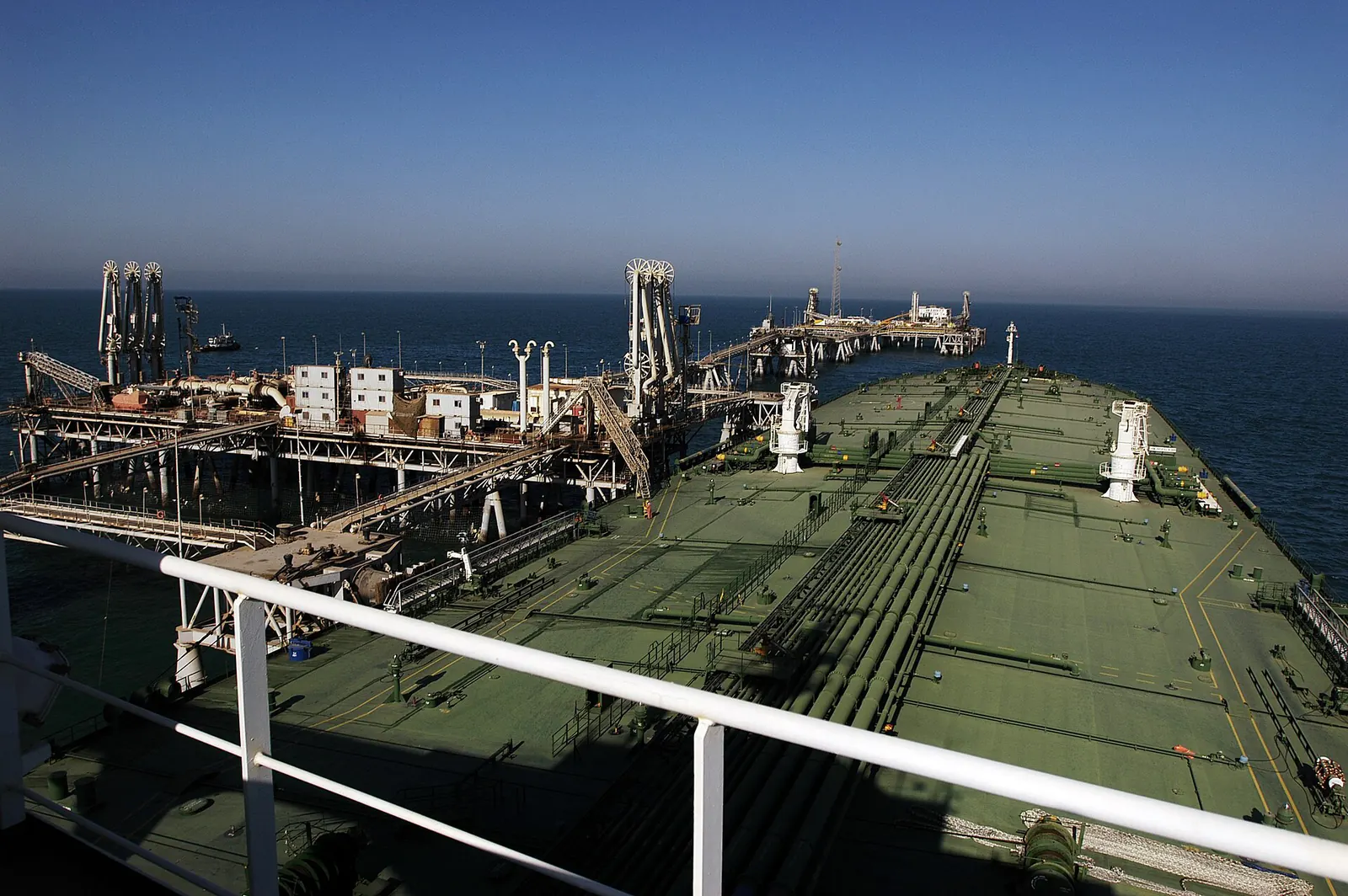
Property catastrophe reinsurance gets cheaper again in January, but in marine war, losses have overtaken premiums. A single VLCC voyage through Hormuz can pay up to 20 million dollars in war premium. That works out at about 10 dollars a barrel, which passes through freight into the cost of goods.
Energy & Shipping Desk · 3 November 2026 · 9 min read · 10 sources
Why it matters
Noise: reinsurance gets cheaper on 1 January, so shipping costs will ease too. Signal: the decline runs through one channel only. SCOR sees reductions in the high single to low double digits for European catastrophe, and Hiscox Re rates fell 14% in nine months. In marine war, by contrast, Howden Re estimates losses at 2–3 billion dollars against annual premiums of 1.5–2 billion dollars. Tanker war premiums in Hormuz are 6–10% of hull value. By our calculation, that means 3–10 dollars a barrel on a 2 million barrel tanker.
Implications
- Hormuz war premiums rose from about 0.25% of hull value before the war to 6–10% on 14 October; a single VLCC voyage pays up to 20 million dollars. On a 2 million barrel cargo that is, by our calculation, an extra cost of about 10 dollars a barrel.
- The war line is funding its own losses: Howden Re estimates 2–3 billion dollars of losses against 1.5–2 billion dollars of annual premium. SCOR confirmed on 30 October significant rate increases in marine, energy and war lines; January's general reduction does not reach them.
- The second channel is P&I reinsurance: the reinsurance charge for fully cellular container ships rose 15% for 2026/27, and brokers expect a general increase of about 5% for 2027. The Drewry index stood at 4,429 dollars per 40-foot container on 29 October; only 2 ships crossed Hormuz last week.
Noise
Reinsurance gets cheaper on 1 January, so shipping costs will ease
Signal
War premiums reach 20 million dollars a voyage, about 10 dollars a barrel
Two-speed renewals, one-way reading
In our last two reports we wrote that the January renewal is running at two speeds and that unmodellable risk is heading towards the state's door. This piece goes a step further. It asks why cheaper reinsurance is not reaching the freight bill, and how the channel that stays expensive feeds into the cost of goods. First, the decline itself. SCOR said on 30 October that it was seeing reductions in the high single to low double digits on European catastrophe programmes. Hiscox Re said on 3 November that its rates had fallen 14% over nine months.
Bermuda points the same way. Arch's gross reinsurance premiums fell 8% in the third quarter to 2.31 billion dollars. On 3 November Hamilton closed a 300 million dollar catastrophe bond at a 4.25% spread against a 2.66% expected loss, a multiple of about 1.6. This decline is happening in the property catastrophe tower. The same SCOR statement also says rates have risen significantly in the loss-hit marine, energy and war lines, without giving a percentage.
The numbers show why the war line is decoupling. Howden Re's estimate, reported by Insurance Business, puts war, terrorism and political violence losses at 2–3 billion dollars, against annual global premium for the segment of 1.5–2 billion dollars. On 22 September Marsh Re put losses above 2 billion dollars and the premium base at about 2.5 billion dollars. The two brokers use different bases, but both show the line has exhausted its premium this year. In Hiscox's third quarter, too, a quiet catastrophe year was offset by Middle East losses.
How a premium becomes a cost per barrel
The constraint lies not in the rate but in the cost per voyage. According to Marsh data, the Hormuz war premium was about 0.25% of hull value before the war. It rose to 2% in early July and 7.5–10% at the end of July, before easing to 3–8% at the end of August. On 14 October brokers quoted a range of 6–10% for tankers and a cost of up to 20 million dollars for a single VLCC voyage. More than 20 ships were attacked in the region in the first two weeks of October.
Spread across the cargo, the picture becomes clear. On a VLCC carrying about 2 million barrels, a 20 million dollar premium works out, by our calculation, at about 10 dollars a barrel. The Red Sea coast is cheaper but not free. According to Insurance Journal, on 25 September a voyage from Yanbu paid about 3 million dollars, and one from Saudi ports further south or through Hormuz about 7 million dollars. Before the war, the same voyage paid at least 100 thousand dollars.
The structure of cover locks the cost in. War premiums typically cover a 7-day voyage period and are repriced every 24 hours. Owners add that uncertainty to charter rates; according to the same report, Saudi producers are paying at least 500 thousand dollars a day to charter tankers. Neil Roberts of the Lloyd's Market Association says cover is available at a price. In other words, the gate has not shut, but the toll has been written into the cargo.
The second channel: P&I and containers
The war premium is not the only channel. The pooled reinsurance programme of the P&I clubs, which carry shipowners' third-party liabilities, is also getting more expensive. Insurance Business reported on 30 October that for 2026/27 the reinsurance charge rose 15% for fully cellular container ships and fell 5% for dry bulk carriers. Lockton expects a general increase averaging about 5% for 2027, and Gallagher 2.5–5%. The reserve of more than 2.8 billion dollars for the Dali collision in Baltimore will feed into the 2027 excess-of-loss negotiation.
Container freight does not yet fully reflect this cost. The Drewry World Container Index fell 3% on the week to 4,429 dollars per 40-foot container on 29 October; Shanghai–Rotterdam stood at 3,686 dollars. The same report says only 2 ships crossed Hormuz last week, while weekly Suez transits rose to a year high of 62. Drewry lists possible surcharges as a risk for the coming weeks but gives no amount.
Second-round effects on the cost of goods
The last link in the chain is importing economies. Kpler data show crude exports through Hormuz in the week to 12 October at about 8.5 million barrels a day, roughly 40% below pre-war levels. Windward counted 13 transits on 4 October, against a pre-war daily average of about 135. As volumes shrink, a war premium of 3–10 dollars rides on every barrel. It is a cost that passes into goods prices with a lag of 1–3 months, through refinery output and petrochemical feedstock.
Türkiye sits at the buying end of this chain. Every importer of Gulf crude and products pays the per-barrel war premium inside the CIF price, the delivered price that includes insurance and freight. How much of this cost reaches Türkiye's import unit values cannot be separated out today, because the sources do not give war premiums for Türkiye-bound voyages. The Türkiye effect is therefore our inference, not a measured figure.
The rate channel is at work here too. In our previous report we wrote that a risk-free yield of about 5% raises the extra premium demanded for unmodellable risk. In the war line that effect is compounded: with losses of 2–3 billion dollars exceeding premium, reinsurers will bring capacity back only at high prices. Howden Re said on 2 November that the January 2027 rate floor will remain above 2017 levels. A high general floor further weakens hopes of reductions in the war line.
What would refute the thesis
The thesis is that on 1 January 2027, property catastrophe rates fall while marine war and P&I reinsurance renew at higher prices, and that this cost stays inside freight per barrel and per container. The falsifier is concrete. If early-January broker reports show flat or falling rates for marine war or political violence reinsurance, the first link breaks. If the Hormuz tanker war premium falls below 2% of hull value before 31 January 2027 while attacks continue, the second link breaks.
The third falsifier lies in freight. If the P&I clubs' 2027 general increases stay below 2.5% and the Drewry index keeps falling below 4,429 dollars without surcharges, the second channel weakens. The near-term calendar is set. Swiss Re's nine-month results are expected on 5 November, though the date could not be verified on the company's site. Munich Re will publish its final quarterly report on 12 November. Hannover Re's date appears as 9 or 12 November and could not be verified. The Global War Risks Insurance Summit in Dubai takes place on 26–27 November.
Probabilities
Scenarios
| Scenario | Probability | Trigger | Market impact |
|---|---|---|---|
| H1War premium holds at its floor | 55% | Attacks continue at a lower rate, marine war reinsurance renews with increases in January and the Hormuz premium settles in the 3–6% band | While property catastrophe gets cheaper, the war premium stays in freight at a few dollars a barrel; imported input costs rise slowly but persistently |
| H2A new wave of losses narrows the gate | 25% | A new mass sinking or port attack occurs, reinsurers cut limits in the war line and the premium exceeds 10% | Cover reaches the threshold of effective closure, transits fall to single digits a day and state facilities are forced to step in |
| H3Safe passage erodes the premium | 20% | A durable ceasefire or an escorted convoy system is established and daily transits exceed 60 | The war premium falls below 2%, cheap reinsurance reaches the marine line too and the chain breaks |
Module A
Constraints Matrix
STRUCTURAL AVG 4.3 · TACTICAL AVG 2.3Structural constraints dominate: the outcome is set more by these limits than by the actors' preferences.
Hard structural constraintspersistent · beyond the actors' will
Losses exceed premium in the war line
5/5Howden Re estimates losses at 2–3 billion dollars against annual premium of 1.5–2 billion; Marsh Re puts losses above 2 billion and premium at about 2.5 billion. The line cannot close its losses without repricing.
Physical transit squeeze · Iran
5/5Windward counted 13 transits on 4 October against a pre-war daily average of about 135; Drewry recorded only 2 in the week to 29 October. As voyages fall, the premium base is loaded onto a shrinking pool.
Brief cover periods
4/5War premiums typically cover a 7-day period and are repriced every 24 hours; owners cannot fix costs in advance and add the uncertainty to charter rates.
State facility is not operating · United States
3/5The US DFC's 40 billion dollar marine reinsurance facility is tied to US Navy escort; it had insured no voyages as of May, and no later public statement could be found.
Tactical frictiontemporary · eases over time
P&I renewal calendar months
3/5The clubs' policy year starts on 20 February; the reinsurance charge for fully cellular container ships rose 15% for 2026/27, and a general increase of 2.5–5% is expected for 2027.
Container freight lags weeks
2/5The Drewry index fell 3% to 4,429 dollars on 29 October; Middle East surcharges have not yet been written into the index as amounts.
Brokers use different bases weeks
2/5The line's premium base is 1.5–2 billion dollars for Howden Re and about 2.5 billion for Marsh Re; the size of the loss depends on who reads it, and January price talks could drag on.
The Türkiye effect cannot be measured months
2/5Sources do not give war premiums for Türkiye-bound voyages separately; pass-through to import unit values can be tracked only indirectly, with a lag of 1–3 months.
Module B
Signal vs Noise
SIGNAL 67% · NOISE 33%
- NOISE
Reinsurance gets cheaper on 1 January, so shipping costs will ease
SCOR sees reductions in the high single to low double digits for European catastrophe and Hiscox Re rates fell 14% in nine months; but the same SCOR statement confirms significant increases in marine, energy and war lines.
- SIGNAL
War premiums reach 20 million dollars a voyage, about 10 dollars a barrel
On 14 October brokers quoted Hormuz tanker premiums at 6–10% of hull value and up to 20 million dollars for a single VLCC voyage, against about 0.25% before the war. The per-barrel conversion is our calculation.
Data: Strait of Hormuz transits ›Insurance Business — Hormuz sinking hands marine war underwriters another total loss as attacks surge (14 October 2026)
- SIGNAL
The war line has used up its premium this year
On 22 September Marsh Re put Middle East war, terrorism and political violence losses above 2 billion dollars and the annual premium base at about 2.5 billion; Howden Re says losses could exceed 3 billion dollars.
Insurance Business — War risk reinsurance posts first loss since 9/11 (22 September 2026)
- SIGNAL
P&I reinsurance adds a second cost layer for container lines
The reinsurance charge for fully cellular container ships rose 15% for 2026/27; Lockton expects a general increase of about 5% in 2027 and Gallagher 2.5–5%. The Dali reserve exceeds 2.8 billion dollars.
- NOISE
Since container freight is falling, war costs are not reaching prices
The Drewry index fell 3% to 4,429 dollars on 29 October, driven by the transpacific lane; the same report notes only 2 Hormuz transits a week and the risk of surcharges.
Data: Suez Canal transits ›Drewry — World Container Index (29 October 2026)
- SIGNAL
Voyage costs on the Red Sea coast have also risen thirtyfold
According to Insurance Journal, on 25 September a voyage from Yanbu paid about 3 million dollars in war premium, and one from further south or through Hormuz about 7 million dollars, against at least 100 thousand dollars before the war.
Data: Bab el-Mandeb transits ›Insurance Journal — Saudi Oil Export Strategy Hits New Hurdle as Red Sea Insurance Costs Soar (25 September 2026)
Module C
Asset-Class and Positioning Implications
| Asset class | Exposure | Transmission channel | H1 | H2 | H3 | Expected | Conviction | Horizon | What to watch |
|---|---|---|---|---|---|---|---|---|---|
| Freight & insurance | War premiums and freight for Gulf-loading tankers | Losses above premium make marine war reinsurance renew dearer, adding cost to freight per voyage | + | ++ | −− | +0.65 | ●●● | 0–3 months | Hormuz tanker war premium and the marine war line in early-January broker reports |
| Commodities | Delivered prices for Gulf crude and products | A war premium of 1.5–10 dollars a barrel enters the CIF price | + | ++ | − | +0.85 | ●●● | 0–3 months | The Brent–Dubai spread and daily Hormuz transit counts |
| Equities | European and Bermuda reinsurance sector | Falling property catastrophe rates against a repricing opportunity in the war line | 0 | −− | + | −0.30 | ●●● | 3–12 months | War loss lines in Swiss Re's 5 November and Munich Re's 12 November results |
| FX | Currencies of energy-importing emerging economies | Higher delivered costs widen current account deficits and imported input inflation | − | −− | + | −0.85 | ●●● | 3–12 months | TurkStat's import unit value index and the energy import bill |
Second-order effects
And then what?
Starting point
In marine war, terrorism and political violence, 2026 losses of 2–3 billion dollars exceeded annual premium of 1.5–2 billion dollars; SCOR confirms significant rate increases in these lines while property catastrophe rates fall in January.
- 1
Reinsurance capacitywithin weeks
On 1 January marine war reinsurance decouples from the general reduction and renews at higher prices. Because capacity costs for direct war underwriters stay high, the Hormuz tanker premium does not return to the pre-war 0.25% even if attacks slow, and finds a floor above 3%.
Watch: The marine war and political violence lines in early-January renewal reports from Howden Re and Gallagher Re
- 2
Freight and insurancewithin weeks
Premiums of 3–20 million dollars per voyage are added to owners' charter and freight quotes because of 7-day cover and 24-hour repricing. A burden of 1.5–10 dollars a barrel enters delivered prices, and the P&I general increase on 20 February adds a second layer for container lines.
Watch: P&I clubs' 2027 general increase announcements and Middle East surcharge lines in the Drewry index
- 3
Imported input costswithin months
Higher delivered costs pass into imported goods prices with a lag of 1–3 months through refinery output and petrochemical feedstock. Import unit values in Gulf-dependent importers, Türkiye included, face upward pressure independent of the crude price.
Watch: TurkStat's monthly import unit value index (intermediate goods and fuel) and the Brent–Dubai spread
What breaks the chain
If safe passage through Hormuz becomes durable and daily transits exceed 60, or if the state facility starts insuring voyages without an escort requirement, the war premium falls below 2%; the chain breaks at the second step and cheap reinsurance reaches freight too.
Triggers
Thresholds to watch
| Indicator | Threshold | Today | What it means |
|---|---|---|---|
| Strait of Hormuz transits | > 60 | 2 | Daily transits approaching half the pre-war 135 could pull the war premium below 2%, weakening the second link of the chain |
| Strait of Hormuz transits | < 10 | 2 | Transits staying below this threshold preserve the 3–10 dollar per barrel premium burden and signal that cover is nearing effective closure |
Sources
- Insurance Business — Hormuz sinking hands marine war underwriters another total loss as attacks surge (14 October 2026)
- Insurance Business — P&I clubs could seek 5% increases despite record $6.8 billion reserves (30 October 2026)
- Insurance Business — War risk reinsurance posts first loss since 9/11 (22 September 2026)
- Insurance Journal — Saudi Oil Export Strategy Hits New Hurdle as Red Sea Insurance Costs Soar (25 September 2026)
- Reinsurance News — European cat pricing down high single to low double-digits for very late Jan 1 renewal: SCOR's Conoscente (30 October 2026)
- Reinsurance News — Hiscox Re net ICWP reduces in 9M'26 amid deliberate cycle management (3 November 2026)
- Artemis — Hamilton secures upsized $300m Easton Re 2027-1 cat bond at reduced pricing (3 November 2026)
- Artemis — Global ILS expansion presents strategic capital opportunity for APAC: Howden Re (2 November 2026)
- Business Insurance — Arch profits fall as Iran war adds to catastrophe losses (28 October 2026)
- Drewry — World Container Index (29 October 2026)
Sourcing and verification rules: methodology · Report an error: contact
Related reports
VIEnergy & Supply·In-depth analysis·Middle East and North Africa
The Gulf's spare capacity sits in the well, and insurers hold the gate
January Brent fell 7.63% on 2 November on Iran's two-day Hormuz plan. Saudi Arabia, meanwhile, produced 3.8 million barrels below capacity in September, and OPEC+ effective spare capacity stands at 0.27 million barrels. Exports, not quotas, set supply, and war cover sets exports.
Energy & Shipping Desk · 3 November 2026 · 12 min
VIIReinsurance·Analysis·Europe
再保险资本充裕,无法建模的风险却等在政府门口
巨灾债券倍数从2023年的5.15降至2.4,私人资本正在可建模的灾害风险上竞争。第三季度承载非巨灾风险的发行为零。战争、网络和未投保灾害的负担走向公共部门,但公共资金池并非处处奏效。
Talay Insight Editorial · 31 October 2026 · 10 min
VIEnergy & Supply·Analysis·Middle East and North Africa
换月没有缓解短缺,紧张转到了1月布伦特
12月布伦特10月30日以117.64美元到期,主力报价降至113.43美元。这4.21美元的下跌是合约切换,并非缓解。1–2月价差3.87美元,仍高于我们3美元的门槛;短缺已转到新的近月合约。
Energy & Shipping Desk · 31 October 2026 · 8 min