HighIII Kinetic Conflicts & Defence22 October 2026, Thursday · 03:00 TRT (UTC+3)
Russia hits Kyiv with cluster missiles hours after Witkoff meeting
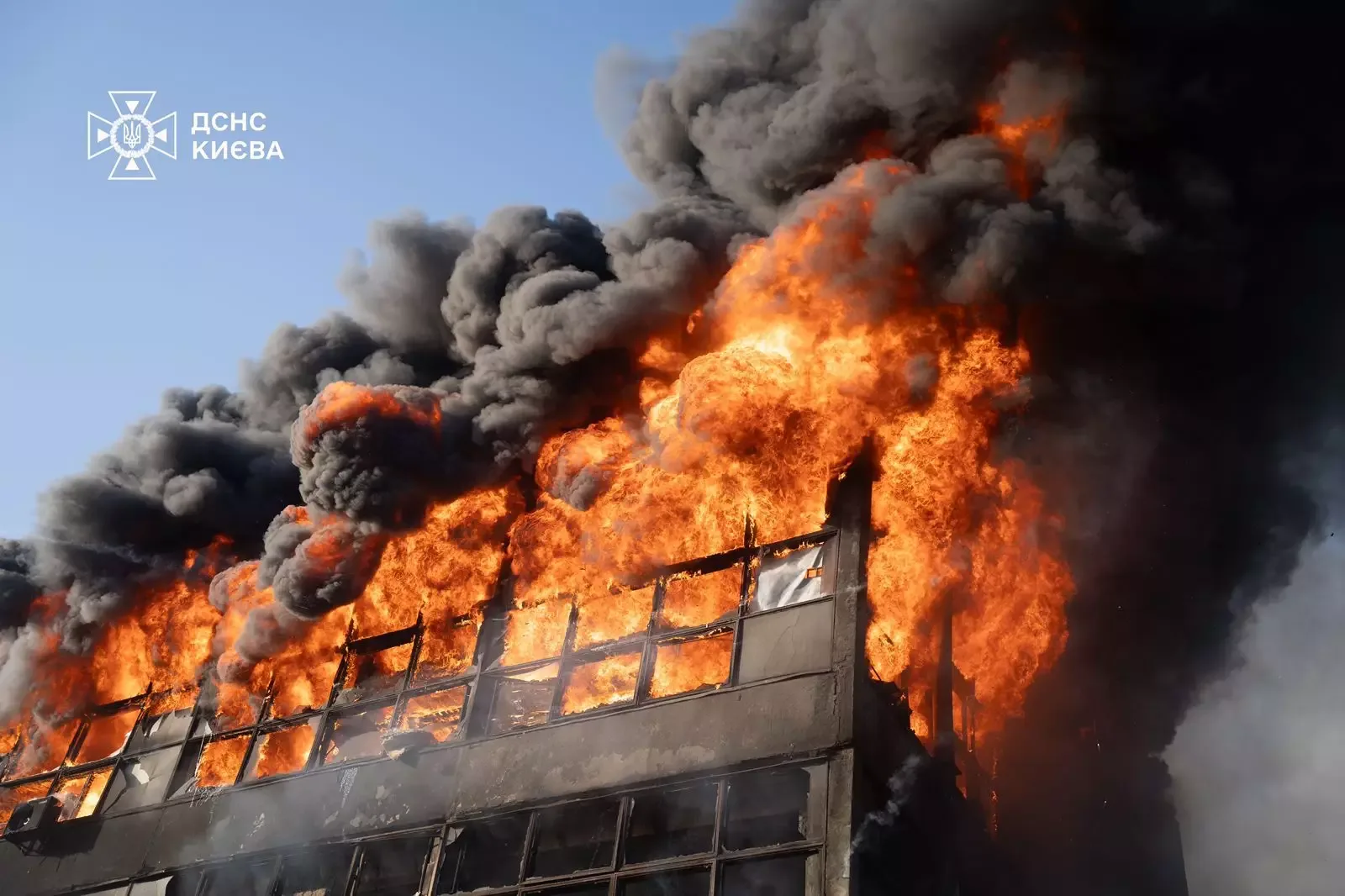
On the night of 22 October, hours after Putin hosted US envoy Witkoff in St Petersburg, Russia launched 21 missiles and 210 drones at Kyiv in three waves. Zelenskiy said 3 ballistic missiles carried cluster warheads that burst in mid-air; casualty figures differ between sources.
Explosions were heard at around 03:00 and 03:34 on 22 October, and a fresh ballistic missile alert followed at 12:30. Ukraine's Air Force said Russia used Iskander-M, S-400, Zircon and Oniks missiles alongside 210 drones, 110 of them jet-powered; air defences shot down or neutralised 181 drones. The attack struck 32 locations, with debris falling at 8 more. Presidential adviser Serhii Beskrestnov identified the warhead as the K5, which carries 58 submunitions and covers an area of 400 by 400 metres.
Casualty figures conflict. The Kyiv prosecutor's office initially reported 1 dead and 24 injured, and the State Emergency Service spoke of 22 injured, 4 of them children; Zelenskiy put the toll in Kyiv and the Kyiv region at 2 dead and 34 injured, including 5 children. A medical centre and 6 ambulances were damaged in Pecherskyi, and transport infrastructure on the Southern Bridge was hit. An energy-sector source said substations were among the targets; Zelenskiy said there had been more than 170 attacks on energy facilities since 11 October.
The strike came straight after Witkoff met Putin on 21 October and secured agreement in principle for trilateral negotiations to begin in November. After the meeting Witkoff described Putin as 'humane'; Zelenskiy said Russia had taken no step showing any wish to end the war. On the same day Finnish Prime Minister Petteri Orpo arrived in Kyiv and the two sides signed 7 agreements; Zelenskiy said the package is worth about 330 million euros and covers energy equipment and satellite capacity through ICEYE and Nokia.
Talay assessment
Bottom line
Moscow is agreeing to return to the table while stepping up pressure on the ground; ballistic missiles with cluster warheads target the interceptor shortfall in Ukraine's air defences. The attack signals that the trilateral talks planned for mid-November will begin without a ceasefire. The most likely path is continued strikes on energy and urban targets through the winter, with the negotiating calendar kept in place regardless.
Likely effects
- Ukraine's power gridNegativeWeeks
More than 170 attacks on energy facilities since 11 October, with substations among the targets, are making scheduled blackouts more widespread ahead of winter.
- Air defenceNegativeWeeks
Zelenskiy says Russia is exploiting the slowdown in Western supplies; the interceptor shortfall raises pressure for rapid deliveries from Europe.
- Negotiating processNegative1–6 months
Coming within hours of Witkoff's praise for Putin, the attack deepens the trust deficit between Kyiv and Washington.
Possibilities, ranked
- 1Talks under fire60%
Strikes continue, but the trilateral calendar for mid-November holds.
Watch: Announcement of a date and venue for the mid-November trilateral meeting
- 2Partial pause25%
Ahead of the talks, a limited pause is declared on strikes against energy facilities or cities.
Watch: A pause on strikes against energy facilities announced by the Kremlin or the White House
- 3Process collapses15%
Casualties mount and Kyiv suspends its participation in the trilateral talks.
Watch: An official statement from Zelenskiy making participation in the trilateral talks conditional
Probabilities are calibrated judgement based on the sources, not measurement, and are revised as new information arrives. Not investment advice.
Market reaction
Indicators affected
- Missiles▲ 21
- Drones▲ 210
- Injured (Zelenskiy)▲ 34