I Geo-Economics & ChokepointsSub-Saharan Africa
From Rabat, great-power rivalry brings Africa investment as aid recedes
- Institution
- Policy Center for the New South (PCNS)
- Author
- Hafez Ghanem
- Country · language
- Morocco (Rabat) · English
- Affiliation
- OCP-backed think tank (Rabat)
Summary
Hafez Ghanem opens his 9 November policy note with a stark figure on Africa's financing. Official development assistance to Africa fell by about 25% in 2025; that year Ukraine received 45 billion dollars in aid, against 29 billion for the whole of Africa. The continent paid 89 billion dollars in debt service in 2025, 20 billion of it interest. New borrowing dropped from 38 billion dollars a year in 2015–19 to 15–18 billion in 2020–24, so net transfers turned negative.
His argument is that while global foreign direct investment fell from 3.5% of world income in 2016 to 1.4% in 2025, investment into Africa rose from 47.7 to 69.5 billion dollars. Ghanem attributes this resilience to four factors. The continent does not take sides between the US and China, holds roughly a third of known critical mineral reserves, offers Gulf states logistics alternatives to Hormuz and has a young consumer population. Citing government figures, he says the UAE invested 144 billion dollars in 2020–24, making it the second-largest investor after the EU; he puts Türkiye's stock above 10 billion dollars on a government estimate.
The note's recommendation is to use that bargaining power. Ghanem proposes tying access to raw materials to targets for local processing, jobs and technology transfer. He wants an African Critical Minerals Exporters Platform, his own proposal, to give producers a common table facing China, the US and Europe. Drawing on a 2022 study, he writes that full implementation of the 1.3 billion-person African Continental Free Trade Area could raise investment by 111–159%. By his count 13.2 million young people enter the labour force each year, but only about 3 million formal jobs are created.
Blind spot
The note treats geopolitical rivalry as the cause of investment but does not test it; more than half of the 69.5 billion dollars is concentrated in 5 countries. Over 40 billion dollars of intra-African investment reflects Mauritius's role as a financial hub. The UAE and Türkiye figures are government claims. The publisher is backed by the Moroccan phosphate company OCP, an interest the minerals bargaining argument does not openly address.
Talay assessment
Bottom line
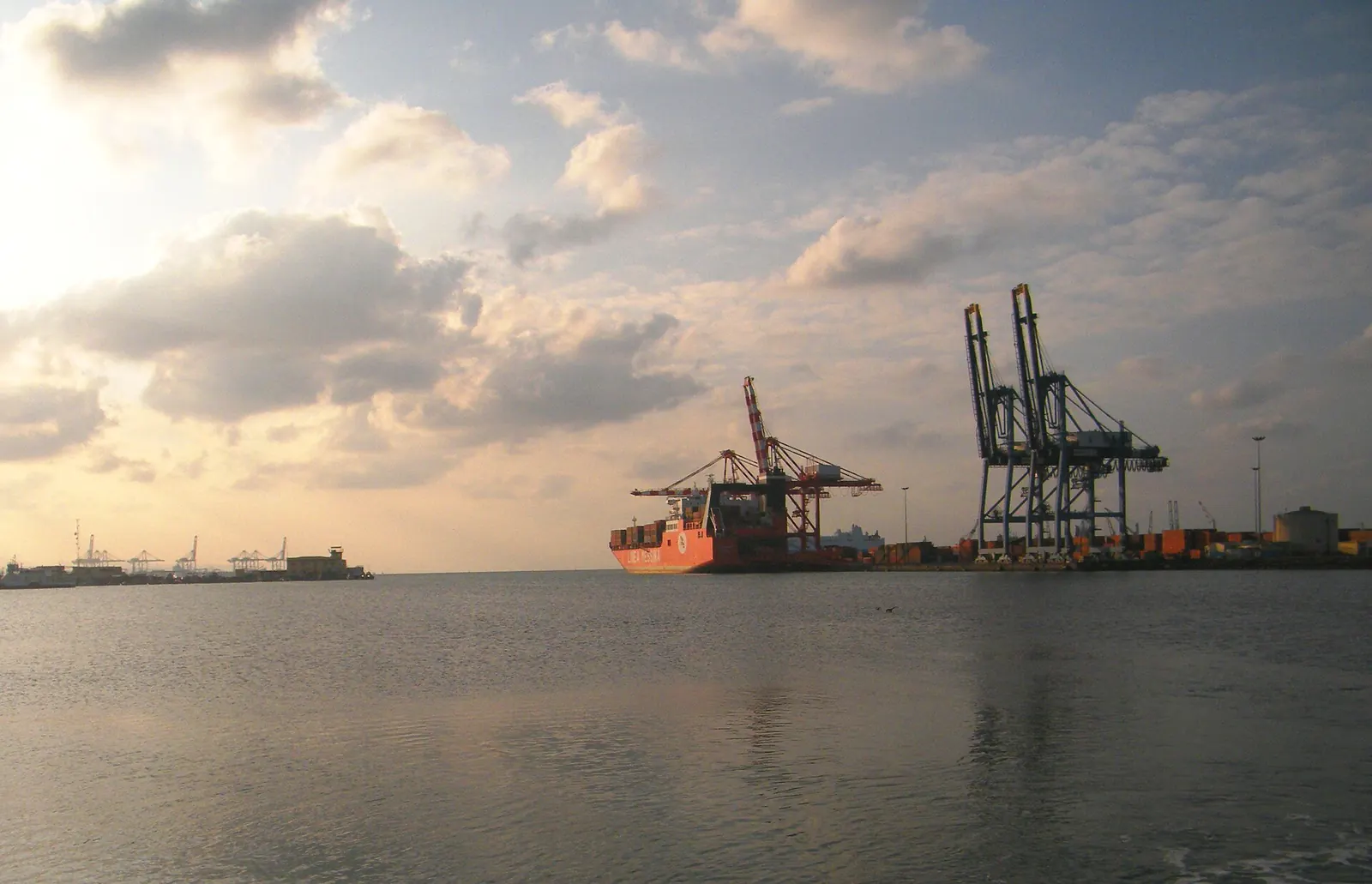
The note shows well how Africa's financing constraint is shifting from aid to investment. But the concentration of the 69.5 billion-dollar flow in 5 countries does not change the fact that, across the continent, 89 billion dollars of debt service exceeds investment inflows. The likeliest path is great-power rivalry channelling money to selected mining and port economies, while the 23 countries in debt distress stay on the outside. Türkiye is in the game with a stock above 10 billion dollars, but it looks small next to Emirati and Saudi capital.
Likely effects
- African sovereign debtNegative1–6 months
New borrowing has fallen to 15–18 billion dollars a year against 89 billion of debt service; unless investment closes that gap, restructuring pressure on the 23 countries in debt distress persists.
- Critical minerals bargainingPositive6 months+
China refines 60% of lithium and 85% of rare earths while the US and EU seek alternatives; that rivalry gives African producers room to impose local processing requirements.
- Gulf capitalPositive1–6 months
Hormuz risk is steering the Gulf towards Red Sea ports and Egypt's SUMED pipeline; Saudi Arabia plans about 25 billion dollars of new investment over 10 years.
- Turkish contractors and investorsUncertain6 months+
Türkiye's African stock of over 10 billion dollars competes in the same countries as the UAE's claimed 144 billion; the gap opens up in the financing package.
Possibilities, ranked
- 1Investment rises but clusters in a few countries55%
Flows in 2026 stay around the 69.5 billion dollars of 2025; Egypt, South Africa and mining economies take most of it, and debt distress neither spreads nor resolves.
Watch: The Africa total and the top 5 countries' share in UNCTAD's 2026 investment report
- 2Mineral producers form a common table25%
Several producers make processing a joint condition, and new deals are signed with refinery and employment commitments.
Watch: An announcement of a joint platform or a common export condition by African mineral exporters
- 3Debt distress overtakes investment20%
High dollar rates and the oil bill trigger new defaults, and investors pull out of riskier countries.
Watch: A new African country seeking debt relief or applying to the IMF for emergency financing
Probabilities are calibrated judgement based on the sources, not measurement, and are revised as new information arrives. Not investment advice.
Original publication: policycenter.ma · 9 November 2026
This page summarises the institution's view and does not reflect the view of Talay Insight. No direct quotation is used.