IV Macro Policy & Sovereign Debt·Analysis·Türkiye and Its Neighbourhood
Food pulled headline inflation down; reserves hold the key to rates
Annual CPI fell to 29.73% in September, but the decline was carried by food, down 0.20% on the month. Core C rose 2.1% on the month, above the headline. The room the MPC has on 22 October is set by a 21.2 billion dollar reserve drain and $100 Brent.
Macro & Debt Markets Desk · 6 October 2026 · 6 min read · 10 sources
Why it matters
Noise: inflation is below 30% and a cut is coming on 22 October. Signal: the only large item pulling September's 1.84% monthly headline down was food, down 0.20% on the month. Core C ran at 2.1%, above the headline, while housing was up 39.99% on the year and transport 35.10%. With eşel mobil ending on 1 October, the petrol excise will reach 14.8277 lira by December. Gross reserves have shrunk by $21.2 billion in six weeks, and CDS has climbed from 220.50 to 255.69. Room for a cut is being set by reserves and the energy bill, not by inflation.
Implications
- Annual CPI fell to 29.73% in September, but core C rose 2.1% on the month, above the 1.84% headline; the decline was carried by food, down 0.20% on the month.
- For the official year-end forecast of 28.4% to hold, monthly inflation must average about 1.1% in the final quarter, while excise steps are added in October and November.
- Gross reserves fell by $21.2 billion between 21 August and 2 October to $167.2 billion; over the same period Türkiye's CDS rose from 220.50 to 255.69 basis points.
Noise
Inflation is below 30%, and a cut is coming on 22 October
Signal
The headline decline came from food; core is above the headline
The headline fell; core did not
Annual CPI fell from 31.51% to 29.73% in September, according to TurkStat data released on 5 October. It is the first reading below 30% since November 2021. The market's first take was simple: disinflation is on track and a cut is coming at the Monetary Policy Committee (MPC) meeting on 22 October. Tradingpedia reported on 6 October that Commerzbank expects a 100 basis point cut this month. That reading is noise, because it ignores why the headline fell.
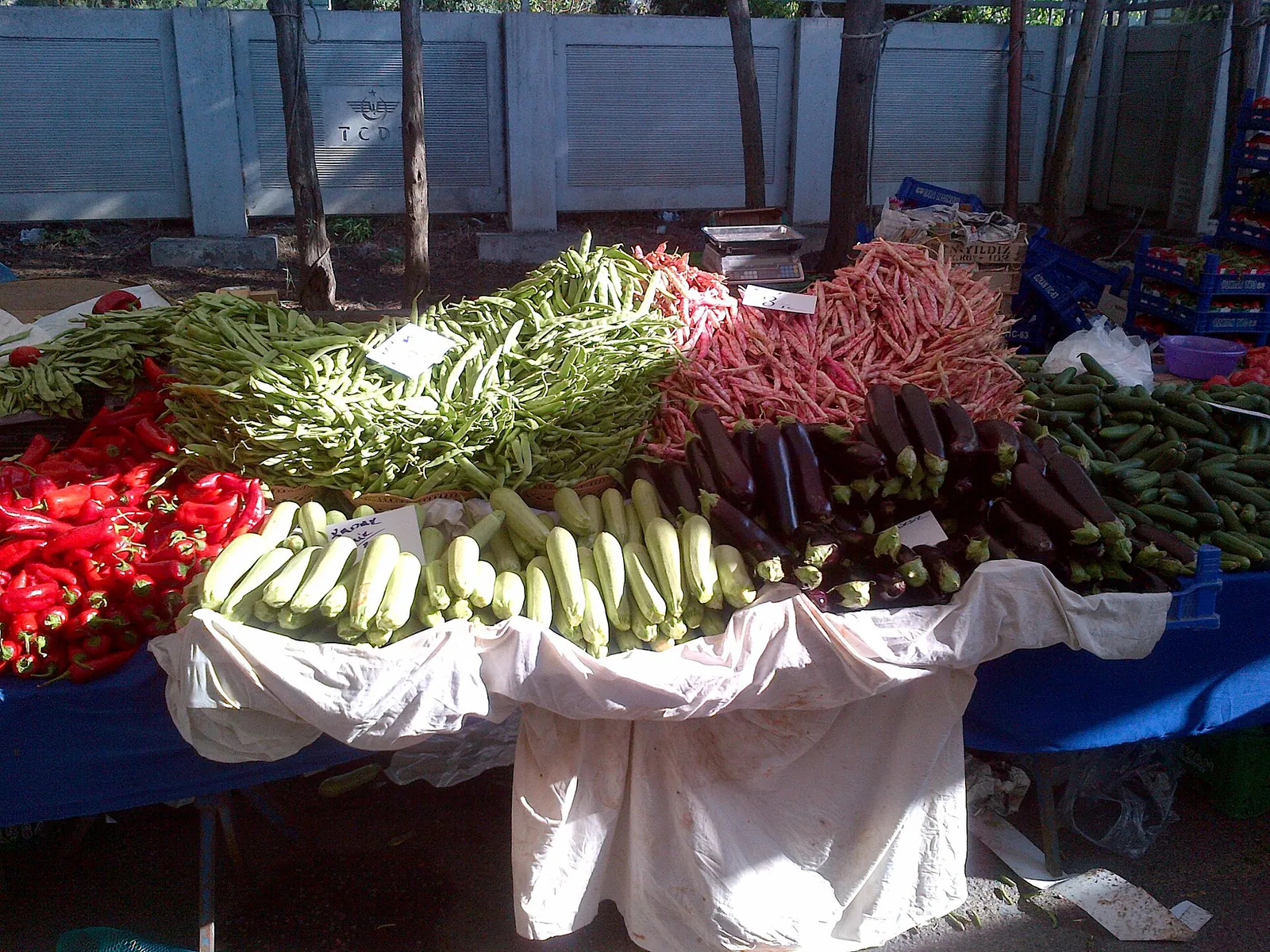
Monthly inflation was 1.84% in September, but the core C index, which excludes unprocessed food, energy, alcohol, tobacco and gold, rose 2.1%. Core ran above the headline. TurkStat data cited by Habertürk show the only large item pulling the headline down was food: food and non-alcoholic beverages fell 0.20% on the month. Citrus prices dropped 24.41% and other vegetables 17.62%. That is a seasonal and fragile decline. Strip out food and the price pressure is still there.
The broader core measure points the same way. TurkStat data show the special aggregate B index rose 2.01% on the month and 29.00% on the year in September. In services, the back-to-school effect is clear: higher education prices rose 25.79% on the month and university dormitories 19.99%. These items are seasonal but driven by demand and rents; unlike food, they do not reverse the following month. Twelve-month average inflation still stands at 31.49%.
Energy and housing are the sticky groups
Housing, water, electricity and gas rose 2.71% on the month in September and 39.99% on the year. Transport was the fastest-rising main group at 2.79% on the month, up 35.10% on the year. Both groups are running 5 to 10 points above the headline. What they share is energy prices and rents. Brent futures closed at $100.32 on 5 October; while the Hormuz disruption lasts, there is no concrete reason for that price to ease quickly.
In October, tax was added to this pressure. On 1 October the eşel mobil system, which offset fuel price rises with tax cuts, came to an end. According to Hürriyet, the excise on petrol will be 7.90 lira a litre in October, 11.36 lira in November and 14.8277 lira in December. The first step in October adds about 4.15 lira at the pump. November and December each bring a further tax step of roughly 3.46 lira. Transport's 2.79% rise in September is the picture before this schedule began.
The arithmetic of the year-end target
The official year-end forecast cited by Daily Sabah is 28.4%. TurkStat data put cumulative inflation from January to September at 24.32% already. For the forecast to hold, October, November and December combined must stay at about 3.3%. That means a monthly average of around 1.1%. September's 1.84% reading is about 0.7 points above that. With excise steps added in October and November, hitting this arithmetic depends on food prices falling every month.
The Commerzbank note on Tradingpedia spells out the same risk: inflation could re-accelerate towards year-end and keep the lira under pressure. The policy rate is 37% and the annual headline 29.73%, a gap of 7.27 points. The headline's decline widens that gap and opens room for a cut on paper. Annualised, however, core C's monthly pace of 2.1% points to a path well above 28%. The real rate buffer is not as wide as the headline suggests.
That distinction is decisive for the MPC. If the committee looks at the headline, it sees a 7.27-point buffer. If it looks at core and the tax schedule, it sees that buffer narrowing in October and November. Our reports of 2 and 4 October read the constraint through reserves and the external deficit; September CPI confirms the same constraint from the price side. When a food-driven decline meets a currency held steady by spending reserves, the safety margin for a cut gets thin.
The real constraint is reserves and the energy bill
The variable that will decide the cut is not inflation but the price at which the lira is being held steady. According to Dünya on 5 October, based on Matriks calculations, gross reserves fell by about $4 billion to $167.2 billion in the week to 2 October. The decline has run for six weeks; the loss since $188.4 billion on 21 August is $21.2 billion. That is an average of $3.5 billion a week. Official data are due on 8 October at 14:30.
Over the same period the currency barely moved. USD/TRY stood at 48.99 on 29 September and 49.18 on 6 October. Commerzbank says the lira is supported by central bank and state bank intervention. The price of that calm shows up in the risk premium. Türkiye's 5-year CDS was 220.50 basis points on 21 August and rose to 255.69 on 2 October. The day reserves peaked and the day CDS began to climb are almost the same.
The yield curve does not fully endorse the rate-cut story either. Bloomberg HT data put the 2-year benchmark at 39.78% on 6 October, 2.78 points above the 37% policy rate. At the two-year tenor, the market either does not believe in an easing path or is demanding an extra risk premium. In the Investing.com series, the 10-year yield jumped from 32.72% to 35.46% on 5 October. Whether the jump reflects selling pressure or a change of benchmark bond could not be verified.
The calendar to 22 October
Three data points stand before the MPC. The first is official reserve data on 8 October; if the $167.2 billion in the Matriks calculation is confirmed, the drain will have stretched into a seventh week. The second is reserves and FX deposits for the week of 15 October. The third is Brent: a price around $100 is the source of the pressure that kept transport and housing above the headline in September.
Our reading: the September data produced a justification for a cut but did not widen the room for one. A 100 basis point cut would bring the lira yield down to 36%. If weekly reserve losses continue at a pace of $3.5 billion, it would raise the cost of currency stability. If the CBRT does cut, it is more likely to pair the move with tight liquidity and state bank support. A large step before the reserve drain stops would put too much weight on a single month's fall in food prices.
Probabilities
Scenarios
| Scenario | Probability | Trigger | Market impact |
|---|---|---|---|
| H1Modest cut, tight liquidity | 45% | The CBRT cuts by 100 basis points on 22 October but keeps liquidity tight, and state bank support continues. | The policy rate falls to 36%; the reserve drain slows but does not stop, and the lira slides in a controlled way. |
| H2Rates on hold, reserves first | 35% | The 8 and 15 October data show the drain running into a seventh and eighth week; the CBRT holds the rate at 37%. | The real rate buffer widens and FX demand slows; growth and fund crisis pressures build on the government side. |
| H3Large cut, currency pressure | 20% | The CBRT takes the headline decline at face value and cuts by 150 basis points or more. | FX demand accelerates and reserve losses exceed $3.5 billion a week; October and November CPI re-accelerate along with the excise steps. |
Module A
Constraints Matrix
STRUCTURAL AVG 4.3 · TACTICAL AVG 2.7Structural constraints dominate: the outcome is set more by these limits than by the actors' preferences.
Hard structural constraintspersistent · beyond the actors' will
Reserve drain · Türkiye
5/5Gross reserves fell from $188.4 billion to $167.2 billion between 21 August and 2 October; an average weekly loss of $3.5 billion shows the price of currency stability.
Energy prices
4/5Brent futures stood at $100.32 on 5 October; housing at 39.99% and transport at 35.10% on the year are running 5–10 points above the headline.
Excise schedule · Türkiye
4/5Eşel mobil ended on 1 October; the petrol excise will be 7.90 lira in October, 11.36 lira in November and 14.8277 lira in December, adding a price step each month.
Pace of core inflation
4/5Core C rose 2.1% on the month in September, above the 1.84% headline; the 28.4% year-end forecast requires about 1.1% a month in the final quarter.
Tactical frictiontemporary · eases over time
State bank intervention weeks
3/5Commerzbank says the lira is supported by central bank and state bank intervention; USD/TRY moved only from 48.99 to 49.18 between 29 September and 6 October.
Seasonality of food months
3/5Citrus fell 24.41% and other vegetables 17.62% in September; there is no guarantee the decline will repeat in October and November.
Data lag days
2/5The $167.2 billion reserve figure is a Matriks calculation; official data are due on 8 October at 14:30, and two more weeks of data will be released before the MPC.
Module B
Signal vs Noise
SIGNAL 71% · NOISE 29%
- NOISE
Inflation is below 30%, and a cut is coming on 22 October
Annual CPI fell from 31.51% to 29.73% in September, below 30% for the first time since November 2021; Commerzbank expects a 100 basis point cut.
Daily Sabah — Türkiye's inflation drops below 30% for 1st time in nearly 5 years
- SIGNAL
The headline decline came from food; core is above the headline
Food fell 0.20% on the month; core C rose 2.1%, above the 1.84% headline, with housing up 39.99% on the year and transport 35.10%.
Tradingpedia — Turkey inflation slowdown opens door to cut, lira risks
- SIGNAL
Gross reserves have been draining for six weeks
Gross reserves fell from $188.4 billion on 21 August to $167.2 billion on 2 October, a $21.2 billion loss; official data are due on 8 October.
- SIGNAL
The risk premium is climbing along with the reserve drain
Türkiye's 5-year CDS stood at 220.50 basis points on 21 August and 255.69 on 2 October.
Data: Türkiye 5-year CDS ›Investing.com — Turkey CDS 5 Years USD historical data
- SIGNAL
The two-year yield is above the policy rate
Bloomberg HT data put the 2-year benchmark at 39.78% on 6 October against a 37% policy rate, a gap of 2.78 points.
- NOISE
The lira is calm, so there is no risk
USD/TRY was 48.99 on 29 September and 49.18 on 6 October; the calm is bought with state bank intervention and reserve spending.
- SIGNAL
Tax steps are being added to October and November inflation
The petrol excise is 7.90 lira in October, 11.36 in November and 14.8277 in December; the pump impact in October is about 4.15 lira.
Module C
Asset-Class and Positioning Implications
| Asset class | Exposure | Transmission channel | H1 | H2 | H3 | Expected | Conviction | Horizon | What to watch |
|---|---|---|---|---|---|---|---|---|---|
| FX | Turkish lira | A cut lowers lira yields, and FX demand strains reserves and state bank support | − | + | −− | −0.50 | ●●● | 0–3 months | USD/TRY 50 threshold and official reserve data on 8 October |
| Sovereign debt | Front end of the lira bond curve | Two-year yield above the policy rate; an easing path is not being priced | + | + | − | +0.60 | ●●● | 0–3 months | Spread between the 2-year benchmark and the policy rate |
| Sovereign debt | Far end of the lira bond curve | Tax-driven inflation acceleration in October and November raises the inflation premium at extended maturities | − | + | −− | −0.50 | ●●● | 3–12 months | Türkiye 10-year yield at 36% |
| Credit | Türkiye 5-year CDS | The reserve drain is passing into the sovereign risk premium | − | + | −− | −0.50 | ●●● | 0–3 months | Türkiye CDS at 270 basis points and the weekly reserve series |
| Commodities | Brent crude | Energy prices keep housing and transport above the headline | 0 | 0 | + | +0.20 | ●●● | 0–3 months | Whether Brent futures hold around $100 |
Second-order effects
And then what?
Starting point
Annual CPI fell to 29.73% in September on a 0.20% monthly drop in food, and Commerzbank expects a 100 basis point cut on 22 October. Gross reserves, meanwhile, have shrunk by $21.2 billion in six weeks.
- 1
FX deposits and the lirawithin weeks
If a cut comes on 22 October, lira deposit and bond yields fall; residents' demand for foreign currency rises and the need for state bank intervention grows.
Watch: CBRT weekly resident FX deposits and the USD/TRY 50 threshold after 23 October
- 2
CBRT reserves and CDSwithin weeks
As rising FX demand is met from reserves, the average weekly drain of $3.5 billion continues, and the risk premium climbs along with it.
Watch: CBRT weekly gross reserve data (8, 15, 22, 29 October) and Türkiye CDS at 270 basis points
- 3
Inflation expectationswithin months
Currency slippage combines with excise steps and Brent near $100, so transport and housing re-accelerate in October and November CPI; room for a cut at the December MPC closes.
Watch: October CPI, due in early November: whether monthly core C is above 2%
What breaks the chain
The chain breaks at the first step if Brent falls durably below $90, or if the 8 and 15 October reserve data show the drain stopping and portfolio inflows starting.
Triggers
Thresholds to watch
| Indicator | Threshold | Today | What it means |
|---|---|---|---|
| USD/TRY | > 50 | 49.16 | A move above 50 from 49.18 on 6 October would show that currency calm bought with reserves is being tested alongside rate-cut expectations. |
| Türkiye 5-year CDS | > 270 bp | 256 | Closes settling at 270 basis points, above 255.69 on 2 October, would show the reserve drain passing durably into the sovereign risk premium and room for a 22 October cut narrowing. |
| Türkiye 10-year yield | > 36% | 32.84 | A sustained move above 35.51% on 6 October would signal that the bond market does not trust the year-end inflation forecast or the easing path. |
Sources
- Habertürk — TurkStat releases September inflation
- Daily Sabah — Türkiye's inflation drops below 30% for 1st time in nearly 5 years
- Tradingpedia — Turkey inflation slowdown opens door to cut, lira risks
- Dünya — Decline in CBRT reserves continues
- Hürriyet — The sliding-scale system for fuel has ended
- Bloomberg HT — Rates and bonds
- Investing.com — Turkey CDS 5 Years USD historical data
- Investing.com — USD/TRY historical data
- Investing.com — Turkey 10-Year Bond Yield historical data
- Investing.com — Brent Oil Futures historical data
Sourcing and verification rules: methodology · Report an error: contact
Related reports
IGeo-Economics·Analysis·Türkiye and Its Neighbourhood
Black Sea risk reaches NATO economic zones; small Turkish owners pay
On 5 and 6 October three Turkish-owned ships were hit in the economic zones of Romania and Bulgaria, and two sank. The 12-mile territorial waters that the insurance market carved out on 16 September are now the only safe lane, and Ankara's moratorium proposal has sat in Moscow for two months.
Türkiye & Neighbourhood Desk · 6 October 2026 · 6 min
IVMacro & Debt·Analysis·Türkiye and Its Neighbourhood
Record exports leave reserves, not inflation, as the MPC's binding constraint
September exports hit a record $26 billion, yet the annualised deficit of $96 billion sits above its end-2025 level. Net reserves excluding swaps fell $16 billion in a month to $39.9 billion, and the fund crisis adds household dollar demand to the same pool.
Macro & Debt Markets Desk · 4 October 2026 · 5 min
IGeo-Economics·Analysis·Türkiye and Its Neighbourhood
The Ukraine trade door opens, but Black Sea insurance narrows it
The Türkiye–Ukraine free trade agreement took effect on 1 October, removing duties on 10,337 tariff lines. In the same days almost the whole Black Sea was declared a war risk area, and the extra premium per Odesa voyage rose to 150,000 dollars.
Türkiye & Neighbourhood Desk · 3 October 2026 · 7 min