I Geo-Economics & Chokepoints·Analysis·Eurasia
Russia's maritime front stretches from the Baltic to Arctic LNG
On the night of 1 October, Russia stopped an Estonia-bound cargo ship in the Gulf of Finland. The same day, Britain listed three Arc7 LNG tankers. Moscow has classified its export data and found no buyers at a bond auction.
Eurasia Desk · 2 October 2026 · 6 min read · 16 sources
Why it matters
Sanctions and retaliation now run on the same line, at sea. Russia stopped a ship in the Gulf of Finland for the first time since May 2025. Sanctioned vessels number about 600 in Britain and 673 in the EU. Moscow classified tanker routes and buyers on 29 September and cancelled a 96.5 billion rouble bond auction on 30 September. The cost lands first in insurance premiums and waiting times. For Türkiye, the channel is the Straits and refinery feedstock. The whole Black Sea entered high-risk reporting on 18 September, and Turkish diesel imports lost at least 50% of their Russian allocation.
Implications
- Russian border guards stopped the 6,800-tonne Västerbotten in the Gulf of Finland overnight from 30 September to 1 October. About 150 ships are waiting off Russian ports, 65 of them tankers.
- On 1 October Britain listed three Arc7 LNG tankers with capacities above 172,000 cubic metres. A ban on services to Russian LNG takes effect on 1 January 2027.
- The Lloyd's market's Joint War Committee brought the entire Black Sea into its reporting area on 18 September. Since the war began, 226 civilian ships have been attacked.
A new threshold in the Baltic
Overnight from 30 September to 1 October, Russian border guards stopped the 6,800-tonne Västerbotten in the Gulf of Finland. The ship was bound for Estonia's port of Sillamäe and was released on 1 October. According to Maritime Executive, it is the first known detention in the area since the Green Admire incident in May 2025.
The ship was following a transit corridor agreed by three countries, which in places passes through Russian territorial waters. When stopped, it was about six miles from the Estonian border. ERR reports that Estonia's Transport Administration acknowledged on 1 October that each country has the right to inspect ships in its own territorial waters.
The incident carries weight because of how busy the corridor is. Maritime Executive's ship-tracking data for 30 September show about 150 vessels waiting off Russian ports, 65 of them tankers. Waiting time off Laukaansuu has risen to 4.61 days. Over the past two to three months, Ukraine's Black Sea strikes have pushed Russian cargo into the Baltic. Seventeen days after the Danish helicopter incident of 14 September, Russia again showed it can touch a neighbour's trade. It did so in the corridor that carries the largest share of its own exports.
The sanctions list reaches the ice-class fleet
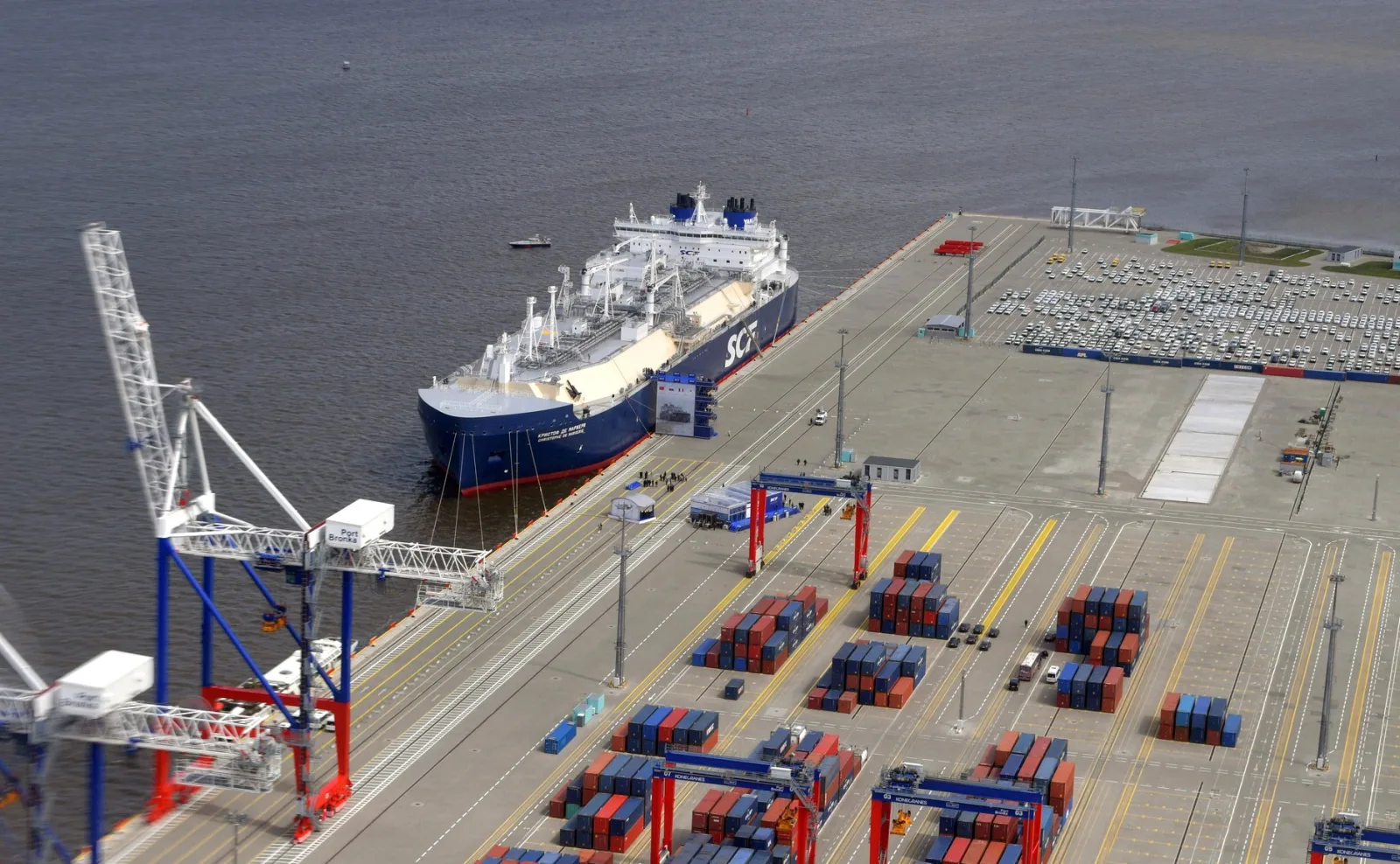
On 1 October Britain listed three Arc7 tankers in a new 31-item package. Arc7 is a class of ship able to move through ice more than two metres thick, and each carries more than 172,000 cubic metres of LNG. gCaptain counts five LNG tankers and eight ships in total in the package. Maritime Executive's breakdown differs, so the two sources diverge on the ship list.
According to the same report, Britain's count of sanctioned Russia-linked vessels has reached about 600. The EU's has reached 673 with its 21st package. A broad ban on services to Russian LNG takes effect on 1 January 2027, while the exemption for Japan and South Korea runs until early 2028. Ice-class tankers are hard to replace. Each new Arc7 listing therefore directly shrinks Arctic LNG capacity on the winter route.
Moscow shuts off data and struggles to borrow
On 29 September Putin signed a decree classifying refinery volumes, export prices, buyer identities and tanker routes as non-disclosable information. Agencies were given 10 days to comply. The decree cuts off much of the data insurers and sanctions enforcers use to price risk. As data shrink, insurers price the uncertainty as a premium, and that extra cost passes straight into the freight bill.
Fiscal pressure became visible the same week. According to Interfax, the Finance Ministry cancelled a 96.5 billion rouble bond auction on 30 September after receiving no acceptable bids. It was the second failed auction of 2026. The Moscow Times reports that the 2026 deficit forecast has risen from 3.6 trillion to 7.3 trillion roubles. Issuance of 7.7 trillion roubles is planned for 2027, and yields on longer maturities are approaching 17%. Protecting export revenue is now a budget necessity for Moscow, which explains the hard line at sea.
Retaliation targets energy infrastructure
On 30 September, in the first mass attack since last heating season, Russia struck the Trypilska thermal power plant in the Kyiv region. According to the Kyiv Independent, 285 drones were sent towards the capital and 254 were shot down. Four people were killed, and emergency outages were imposed in three regions and in Kyiv.
In the other direction, Ukraine's General Staff said on 21 September that more than 45% of Russian refining capacity was out of action. Because the source is a party to the conflict, the figure could not be verified. Russia has extended its diesel export ban to 31 October. With winter approaching, each side is targeting the other's energy revenue and supply. This suggests the risk at sea will last at least one more season.
For Türkiye, the bill passes through the Straits
According to gCaptain, the Lloyd's market's Joint War Committee extended its reporting requirement to the entire Black Sea on 18 September. The territorial waters of neighbouring states still require no notification. Data from the Turkish Chamber of Shipping cited by France 24 show 226 civilian ships attacked since the war began, 163 of them in the first eight months of 2026. The same report records at least 26 attacks on Turkish-flagged or Turkish-owned ships in the past two months.
Türkiye was already pulling back on refinery feedstock. A Baird Maritime report dated 27 May says Türkiye's Urals purchases fell to 161,000 barrels a day in May. The January–April average was 189,000, and the figure in May 2025 was 302,000 barrels. These data are four months old, and the September volume could not be verified. According to OilPrice, Türkiye has lost at least 50% of its Russian diesel cargo allocation.
The decree also makes Türkiye's Russian purchases harder to track. After 10 days, flows will be measurable only through Turkish customs data and ship tracking. The bill, meanwhile, stays indexed to Brent; OilPrice puts Brent futures at $102.31 on 1 October. As Russian barrels decline, Turkish refiners must find crude and diesel from more distant sources, at higher freight and insurance costs.
What to watch
Three indicators stand out for the next four weeks. The first is whether a second detention follows the Västerbotten in the Gulf of Finland. The second is whether the implementing rules for the Russian decree are published within the 10-day window. The third is whether the Russian diesel ban is lifted on 31 October. A Brent price above $105 would mean this burden lands quickly on Türkiye's bill.
Probabilities
Scenarios
| Scenario | Probability | Trigger | Market impact |
|---|---|---|---|
| H1The cycle settles into insurance premiums | 55% | Occasional inspections continue in the Gulf of Finland, the Russian diesel ban is extended beyond 31 October and the entire Black Sea stays under high-risk reporting. | Russian exports keep flowing, but with longer waits, fewer eligible ships and higher premiums. Turkish refiners keep shifting to substitute sources. |
| H2Inspections become routine in the Baltic | 30% | Russia detains a second ship in the Gulf of Finland within four weeks, and the EU lists new vessels in its 22nd package. | The Baltic corridor is priced like the Black Sea. The 150-ship queue off Russian ports lengthens, and trade bound for EU ports takes longer routes to avoid Russian territorial waters. |
| H3Tension eases before winter | 15% | The parties reach an interim arrangement limiting attacks on energy infrastructure, and the Russian diesel ban is lifted on 31 October. | Black Sea traffic partly normalises and Russian diesel cargoes return to the Mediterranean, while sanctions lists stay in place. |
Module A
Constraints Matrix
STRUCTURAL AVG 3.8 · TACTICAL AVG 2.8Structural constraints dominate: the outcome is set more by these limits than by the actors' preferences.
Hard structural constraintspersistent · beyond the actors' will
Inspection rights in territorial waters · Russia
4/5The Gulf of Finland transit corridor passes in places through Russian territorial waters. Even Estonia acknowledged on 1 October that each country may inspect ships in its own waters.
Scarcity of the ice-class fleet · Russia
4/5Arc7 tankers can move through ice more than two metres thick, and each carries over 172,000 cubic metres of LNG. Listed ships are hard to replace.
Russian budget's borrowing needs · Russia
4/5The 2026 deficit forecast has risen to 7.3 trillion roubles, and bond sales of 7.7 trillion roubles are planned for 2027. A 96.5 billion rouble auction found no buyers on 30 September.
Türkiye's Brent-indexed bill · Türkiye
3/5Türkiye imports crude at Brent-indexed prices. Brent futures were $102.31 on 1 October, and at least 50% of the Russian diesel allocation has been lost.
Tactical frictiontemporary · eases over time
Black Sea high-risk reporting months
4/5The Joint War Committee extended its reporting requirement to the entire Black Sea on 18 September. At least 26 attacks on Turkish-flagged or Turkish-owned ships were recorded in two months.
Queues off Russian ports weeks
3/5About 150 ships were waiting off Russian ports on 30 September, 65 of them tankers. The wait off Laukaansuu is 4.61 days.
Export data going dark weeks
3/5The 29 September decree hides tanker routes and buyer identities. Ten days were given for implementing rules, after which flows can be measured only by ship tracking.
Sources differ on the ship list days
1/5For Britain's 1 October package, gCaptain counts five LNG tankers and eight ships, while Maritime Executive gives a different breakdown.
Module B
Signal vs Noise
SIGNAL 67% · NOISE 33%
- SIGNAL
Russia has reopened the detention threshold in the Baltic
The Västerbotten was stopped overnight from 30 September to 1 October, the first detention in the area since the Green Admire incident of May 2025.
Maritime Executive — Russia Briefly Detains Cargo Ship Bound for Estonia
- SIGNAL
The sanctions list has reached the Arctic LNG fleet
Britain listed three Arc7 tankers on 1 October. Sanctioned vessels number about 600 in Britain and 673 in the EU.
Maritime Executive — UK Extends Russian Sanctions to Newest ARC7 LNG Tankers
- SIGNAL
The entire Black Sea is under high-risk reporting
On 18 September the Joint War Committee extended its reporting requirement from the Russian and Ukrainian coasts alone to the entire Black Sea.
Data: Turkish Straits waiting time ›gCaptain — London's marine insurers widen Black Sea high-risk zone as shipping attacks surge
- SIGNAL
Russian government debt is struggling to find demand
A 96.5 billion rouble auction was cancelled on 30 September, the second failed auction of 2026. Yields on longer maturities are approaching 17%.
The Moscow Times — Russia's Finance Ministry Fails to Sell Bonds as Borrowing Plans Weigh on Market
- NOISE
The Gulf of Finland is closing to trade
The Västerbotten was released on 1 October and continued its voyage. So far there has been only one detention.
ERR News — Russia detains cargo ship bound for Estonia's Sillamäe port
- NOISE
Türkiye is deepening its reliance on Russian crude
Türkiye's Urals purchases fell to 161,000 barrels a day in May 2026, against 302,000 barrels in May 2025.
Baird Maritime — Turkey shuns costlier Russian crude despite global supply squeeze
Module C
Asset-Class and Positioning Implications
| Asset class | Exposure | Transmission channel | H1 | H2 | H3 | Expected | Conviction | Horizon | What to watch |
|---|---|---|---|---|---|---|---|---|---|
| Freight & insurance | Black Sea and Baltic tanker war premium | A detention precedent, a wider risk zone and vanishing export data raise insurers' price for uncertainty | + | ++ | − | +1.00 | ●●● | 0–3 months | A second detention in the Gulf of Finland and Joint War Committee zone updates |
| Commodities | Crude oil curve | Slower and costlier shipping of Russian exports keeps supply tight | + | ++ | − | +1.00 | ●●● | 0–3 months | The $105 threshold on Brent futures |
| Commodities | Mediterranean diesel product supply | The Russian diesel export ban and refinery damage push buyers such as Türkiye towards substitute sources | + | + | −− | +0.55 | ●●● | 0–3 months | Whether the Russian diesel ban is lifted on 31 October |
| Sovereign debt | Russian rouble government debt | A widening budget deficit and weak auction demand keep yields elevated | − | −− | + | −1.00 | ●●● | 3–12 months | Demand at October auctions and the Bank of Russia decision on 23 October |
| FX | Turkish lira | Costlier substitute crude and diesel enlarge the energy bill and demand for foreign currency | − | −− | + | −1.00 | ●●● | 0–3 months | The 50 threshold on the dollar/lira rate and September trade data due in late October |
Second-order effects
And then what?
Starting point
On the night of 1 October Russia stopped an Estonia-bound ship in the Gulf of Finland. Britain listed three Arc7 LNG tankers the same day, and on 29 September Moscow classified tanker routes as secret.
- 1
Freight and insurancewithin weeks
The detention precedent and the loss of data lead insurers to price voyages to Russian ports and through the Gulf of Finland corridor as tightly as the Black Sea.
Watch: A second detention in the Gulf of Finland and a Joint War Committee zone update
- 2
Russian export costswithin weeks
Russian crude and diesel move on fewer eligible ships, with longer waits and higher premiums. The 150-ship queue makes Russian barrels more expensive by the time they reach buyers.
Watch: The 4.61-day wait off Laukaansuu and the 31 October diesel ban decision
- 3
Türkiye's energy billwithin months
Turkish refiners keep moving away from Russian supply. Because substitute barrels are Brent-indexed and more distant, the energy bill and demand for foreign currency grow.
Watch: Energy imports in September trade data due in late October, and the $105 threshold on Brent
What breaks the chain
Lifting the Russian diesel ban on 31 October and an arrangement limiting attacks on energy infrastructure would weaken the second link. Insurers narrowing the Black Sea reporting zone again would break the first.
Triggers
Thresholds to watch
| Indicator | Threshold | Today | What it means |
|---|---|---|---|
| Brent crude oil (futures) | > $105 | 102.31 | A rise to this level from $102.31 on 1 October would show tighter Russian supply and insurance costs feeding quickly into Türkiye's Brent-indexed bill. |
| USD/TRY | > 50 | 49.03 | A rise to this threshold from 49.0175 lira on 30 September would signal that costlier substitute crude and diesel are increasing demand for foreign currency. |
Sources
- Maritime Executive — Russia Briefly Detains Cargo Ship Bound for Estonia
- ERR News — Russia detains cargo ship bound for Estonia's Sillamäe port
- Maritime Executive — Vessel Backlog Builds in the Baltic Off Russian Ports
- Maritime Executive — UK Extends Russian Sanctions to Newest ARC7 LNG Tankers
- gCaptain — UK Hits Eight Russian Ships in New Sanctions Package
- gCaptain — London's marine insurers widen Black Sea high-risk zone as shipping attacks surge
- Anadolu Ajansı — Putin tightens Russia's energy data secrecy to hinder Western sanctions
- Interfax — OFZ 26228 auction declared void
- The Moscow Times — Russia's Finance Ministry Fails to Sell Bonds as Borrowing Plans Weigh on Market
- Kyiv Independent — Russia pounds Kyiv's power grid in first mass assault since last fall
- Interfax-Ukraine — Russian strike damages power equipment at Trypilska TPP
- France 24 — Black Sea drone attacks spell terror for Turkish sailors
- Baird Maritime — Turkey shuns costlier Russian crude despite global supply squeeze
- OilPrice — Russia Extends Diesel Export Ban Through October
- OilPrice — Oil price charts
- AA (English) — Turkish stock exchange ends midweek in red
Sourcing and verification rules: methodology · Report an error: contact
Related reports
IGeo-Economics·Analysis·Middle East and North Africa
As Hormuz heats up, oil's real risk shifts to the Red Sea
Three ships were hit in the Strait of Hormuz on 29 September, yet transits rose to 17. Saudi crude has moved back from the Red Sea to the strait, and Bab el-Mandeb flows have more than halved. Somali pirates have also killed crew for the first time in over a decade.
Energy & Shipping Desk · 1 October 2026 · 7 min
IGeo-Economics·Analysis·Middle East and North Africa
A data fog settles on oil as two major supply sources blur
Washington puts Hormuz flows at 13–22 million barrels a day, while Kpler measures a September average of 7.4 million. On 29 September Putin classified Russian refinery and export data. Prices now react to headlines, not to measured flows.
Energy & Shipping Desk · 30 September 2026 · 7 min
IGeo-Economics·Analysis·Middle East and North Africa
Yanbu oil flows again as Red Sea risk settles into insurance premiums
Saudi Arabia resumed loadings at Yanbu on 28 September after 17 days, and Brent fell from a high of $108.83 to $105.28. But war risk insurance at Yanbu has tripled since July, and Bab el-Mandeb traffic is below half of normal.
Energy & Shipping Desk · 29 September 2026 · 7 min