V Technology Geopolitics & AI·Analysis·Asia-Pacific
Xi–Trump summit ends with a two-month truce: decisions on chips, Taiwan and artificial intelligence deferred to 10 January
No joint statement emerged from the 24 September summit. The tariff truce had been extended a day earlier from 10 November to 10 January; no signed decision was announced on tariff cuts, new chip licences, the Taiwan package or an AI incident hotline.
Technology Geopolitics Desk · 25 September 2026 · 8 min read · 10 sources
Why it matters
The Washington summit did not pull the two economies apart, but nor did it bring them closer. The US average tariff of 36.5% on Chinese goods and China's 31% on US goods remain in place; China's planned restrictions on 7 additional rare earth metals have been deferred to 10 January 2027. The sides chose a two-month extension over a lasting settlement; the hardening on the technology front is coming not from the executive but from Congress.
Implications
- With Treasury Secretary Bessent's announcement on 23 September, the tariff truce was extended from 10 November to 10 January, only two months; by January either a larger package or another extension will be needed.
- The restrictions China imposed on 5 rare earth metals in April 2026 remain in force; the restrictions on 7 additional metals expected to take effect in October have been deferred to 10 January 2027. Rare earth magnet exports to the US fell 20% month on month in August.
- No decision was announced at the summit on chip export controls or the suspended 14-billion-dollar Taiwan arms package; meanwhile 3 chip bills in the Senate's 2027 defence authorisation package are advancing towards tighter controls.
What came out: tangible gains stayed symbolic
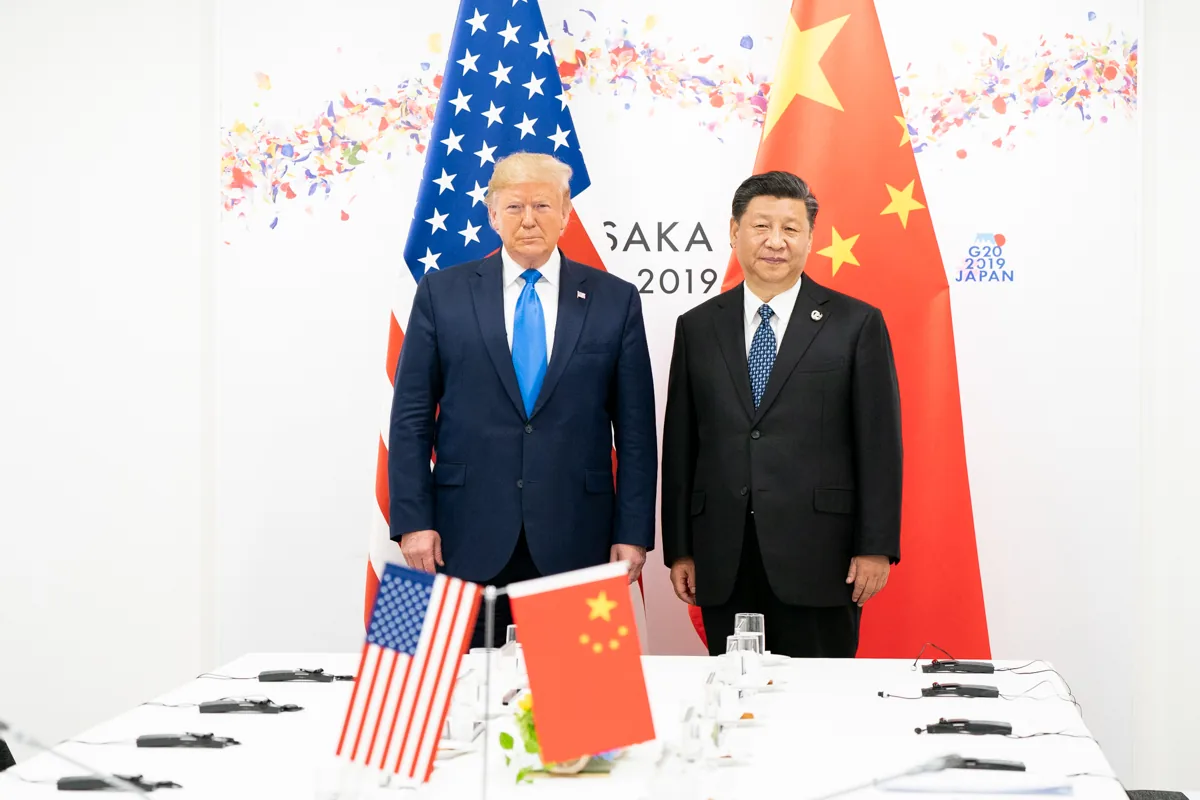
No joint statement emerged from the talks at the White House on 24 September, the main day of Xi Jinping's first state visit to the US in 11 years. According to reporting by Foreign Policy, Time and CBS, no comprehensive agreement was announced on tariffs, critical minerals or soybeans, and no change in Taiwan policy was declared. The tangible outcomes announced were limited: 2 pandas for the zoo in Atlanta, and Xi's invitation to 100,000 US students to join exchange programmes over 5 years.
The real economic decision came a day before the summit. According to an NBC report on 23 September, Treasury Secretary Bessent announced after talks with Chinese Vice Premier He Lifeng that the tariff truce had been extended from 10 November to 10 January. According to Bessent, by January either a larger package will be prepared or the current arrangement will be extended once more. According to Al Jazeera's analysis of 24 September, as of July 2026 the average US tariff on Chinese goods stood at 36.5% and China's on US goods at 31%, and these rates have not changed.
The deferred files: rare earths, purchases and chips
On rare earths the decision was deferred, not reversed. China had introduced export restrictions on 5 rare earth metals in April 2026; the planned restrictions on 7 additional metals, expected to apply in October, slipped to 10 January 2027 along with the truce. According to data compiled by TIPP Insights, China's rare earth magnet exports to the US fell 20% month on month in August. In other words, the supply chain risk has not gone away; only its timetable has been pushed back.
Purchase commitments are also lagging expectations. According to a Yournews report on 23 September, China had bought 4.9 billion dollars of soybeans by the end of July; of 9.9 million tonnes booked for the 2026/27 season, only about 330,000 tonnes had been shipped as of 10 September. Non-soy agricultural purchases stand at 3.9 billion dollars; this pace equates to roughly 6.7 billion dollars a year, less than half of the 17-billion-dollar commitment. About 140 of a 200-aircraft commitment to Boeing are reported to be progressing, but this figure could not be verified from a primary source.
Chip export controls did not reach the summit agenda. According to a report by The Next Web on 19 September, around 10 Chinese companies had been granted licences to acquire up to 75,000 H200 units each, but very few shipments were made by July and Chinese customs blocked the purchases. According to a Roll Call report on 23 September, the Senate's fiscal 2027 defence authorisation package contains 3 chip bills: location tracking of chips, coordination of controls on allied equipment and an 18-month ban on the most powerful chips. Votes in the House Foreign Affairs Committee passed 42-0, 36-8 and 42-2. The pressure to harden is coming not from the executive but from a bipartisan majority in Congress.
Taiwan and artificial intelligence: two tables left open
According to the Chinese side's readout, Xi asked the US to maintain its stance of opposing Taiwanese independence; the White House did not publish a record of the talks, and the full text of Xi's remark could not be independently verified. According to Al Jazeera, the 14-billion-dollar Taiwan arms package has been on hold since 22 May on the grounds of munitions needs for the Iran war; no decision on the package was announced at the summit. A separate package of 11.1 billion dollars was approved in December 2025.
Sources conflict on the AI incident notification hotline. Asia Times wrote on 21 September that the hotline had been agreed, whereas Tech Times reported that as of the morning of 24 September there was no signed text, and Foreign Policy reported that there was no consensus on AI safety measures. A technical meeting is envisaged in Shenzhen in about two months. This means a concrete text could emerge at the end of November at the earliest.
Market and Türkiye reading
The summit was not decisive for markets. According to Yahoo Finance data, the S&P 500 closed 24 September down 0.02% at 7,704.13 points; US bond yields set the day's agenda. In Asia on the morning of 24 September Shanghai fell 0.48% and Shenzhen 1.08%, while the Nikkei rose 1.36%. On yields, sources give different measurements: the US Treasury par curve shows the 10-year yield at 5.18%, while Yahoo's reporting shows 5.10%.
For Türkiye the direct channel is limited, but there are two indirect channels. First, the mere deferral of the rare earth restrictions keeps supply uncertainty alive until January for inputs to the electronics and defence industries. Second, the two-month extension creates a short-interval calendar of uncertainty: a return of trade tension as 10 January approaches could feed through to Türkiye's external financing costs via the dollar and emerging-market risk premia. This second effect is for now a possibility; there is as yet no transmission that can be verified in figures.
Probabilities
Scenarios
| Scenario | Probability | Trigger | Market impact |
|---|---|---|---|
| H1Muddling through with extensions | 55% | No comprehensive package emerges by 10 January, and the truce is extended once more for a brief period. | Tariffs stay at 36.5% and 31%; the rare earth restrictions wait in deferral, and chip controls tighten through Congress. |
| H2January package | 25% | The Shenzhen technical meeting and trade board talks result in tariff cuts and higher purchases before January. | Gradual tariff cuts, faster agricultural and Boeing purchases and the lifting of rare earth restrictions. |
| H3Rupture in January | 20% | The chip bills in Congress become law or the Taiwan package is released, and China activates the restrictions on 7 additional metals on 10 January. | The truce is not extended and both sides return to additional tariffs. |
Module A
Constraints Matrix
STRUCTURAL AVG 3.7 · TACTICAL AVG 2.7Structural constraints dominate: the outcome is set more by these limits than by the actors' preferences.
Hard structural constraintspersistent · beyond the actors' will
Rare earth leverage · China
4/5China restricted 5 rare earth metals in April 2026 and deferred restrictions on 7 additional metals to 10 January 2027; magnet exports to the US fell 20% month on month in August.
Congress's chip agenda · United States
4/5The 3 chip bills in the Senate defence package passed committee by votes of 42-0, 36-8 and 42-2; they narrow the executive's room for manoeuvre.
Taiwan package and munitions · Taiwan
3/5The 14-billion-dollar Taiwan arms package has been on hold since 22 May on the grounds of munitions needs for the Iran war.
Tactical frictiontemporary · eases over time
Tight calendar weeks
3/5Extending the truce by only two months makes a new round of negotiations before 10 January unavoidable.
Purchase shortfall months
3/5Non-soy agricultural purchases are running at about 6.7 billion dollars a year, less than half of the 17-billion-dollar commitment.
AI hotline text months
2/5As of 24 September there is no signed text for the notification hotline; a technical meeting is due in Shenzhen in about two months.
Module B
Signal vs Noise
SIGNAL 50% · NOISE 50%
- SIGNAL
The truce is being renewed at brief intervals
On 23 September Bessent extended the truce from 10 November to 10 January, by only two months.
- SIGNAL
Chip hardening is coming from Congress
3 chip bills in the Senate defence package; committee votes of 42-0, 36-8 and 42-2.
- NOISE
Pandas and student exchanges signal a thaw in the relationship
The summit's tangible outcomes were 2 pandas and an invitation to 100,000 students; tariffs remained unchanged at 36.5% and 31%.
- NOISE
The AI hotline has been established
Asia Times wrote that the hotline had been agreed; Tech Times reported that as of 24 September there was no signed text.
Module C
Asset-Class and Positioning Implications
| Asset class | Exposure | Transmission channel | H1 | H2 | H3 | Expected | Conviction | Horizon | What to watch |
|---|---|---|---|---|---|---|---|---|---|
| Commodities | Rare earth and critical mineral supply | Deferred export restrictions and stockpiling | + | − | ++ | +0.70 | ●●● | 3–12 months | China's monthly rare earth magnet exports |
| Equities | Global semiconductor sector | Export controls and congressional bills | − | + | −− | −0.70 | ●●● | 3–12 months | The fate of the chip provisions in the defence authorisation act |
| FX | Dollar/yuan | Trade tension and the January calendar | 0 | − | ++ | +0.15 | ●●● | 3–12 months | Dollar/yuan relative to the 6.90 threshold (24 September: 6.71) |
| Commodities | US agricultural export prices | China's soybean and agricultural purchases | 0 | ++ | −− | +0.10 | ●●● | 0–3 months | China's share of weekly USDA export sales |
Second-order effects
And then what?
Starting point
The tariff truce was extended from 10 November only to 10 January; China's restrictions on 7 additional rare earth metals were deferred to the same date, and no joint statement emerged from the summit.
- 1
Stockpiling and supplywithin weeks
The brief extension leads companies to make supply decisions on a two-month horizon; manufacturers using rare earths and magnets turn to stockpiling ahead of January, creating a temporary movement in China's export data.
Watch: October–November rare earth magnet exports in Chinese customs data; whether August's 20% monthly fall reverses
- 2
Export controls and countermeasureswithin months
While the executive softens, the chip bills in Congress advance; if the 18-month ban or location tracking becomes law, China brings the deferred rare earth restrictions to the January negotiations as a bargaining chip.
Watch: Whether the fiscal 2027 defence authorisation act passes the Senate with its chip provisions intact
- 3
Risk premium and input costwithin months
Trade uncertainty rising again as January approaches spreads to importing economies via the dollar and emerging-market risk premia; in Türkiye the lira cost of inputs for the electronics and defence industries rises.
Watch: The path of dollar/yuan and Türkiye's 5-year CDS in December
What breaks the chain
If a comprehensive package including tariff cuts and the permanent lifting of rare earth restrictions is announced before January, or if the chip bills are removed from the package in Congress, the chain stops at the second step.
Triggers
Thresholds to watch
Sources
- NBC News — US and China extend trade truce
- Foreign Policy — Trump–Xi White House meeting: AI, trade, Taiwan
- Time — Trump–Xi meeting 2026
- Al Jazeera — Hostile but hooked: what's behind the US–China trade truce extension
- Roll Call — AI export controls debate rages as Trump, Xi meet
- The Next Web — White House dinner, AI CEOs and chips that are not moving
- Tech Times — US–China AI hotline needs text, tiers and technicians
- Yournews — China lags on 17-billion-dollar farm pledge
- Yahoo Finance — Stock market today, 24 September
- Al Jazeera — US pausing 14-billion-dollar arms sale to Taiwan due to Iran war
Sourcing and verification rules: methodology · Report an error: contact
Related reports
VTech & AI·Analysis·Asia-Pacific
Beijing now has the final say on chip sales to China
The US granted H200 licences to 10 Chinese companies in May, but shipments have not begun. On 27 September Beijing signalled approval for the RTX Pro 5500, a chip of its own choosing; ByteDance is reported to be considering about 1 million units.
Technology Geopolitics Desk · 29 September 2026 · 6 min
VTech & AI·Analysis·Asia-Pacific
TSMC makes promises to Arizona as packaging capacity gathers in Taiwan
Against TSMC's 265-billion-dollar Arizona plan, Taiwan has approved 44 billion dollars since 2020. In the same week the way opened for 5 new packaging plants in Chiayi, where the park's target is 10 facilities.
Technology Geopolitics Desk · 28 September 2026 · 5 min
VTech & AI·Analysis·Americas
Diplomacy talks superintelligence, incidents happen at the guest login: a US–China incident channel that skips agents, supply chains and identity stays empty
As Washington and Beijing set up a channel for 'superintelligence incidents' on 25 September, that week's 4 cases were access problems, not model problems: a Medicare endpoint asking for no identity, 2 re-enabled GitHub actions, a WAF bypassed with one character and a 6-hour forced shutdown.
Technology Geopolitics Desk · 27 September 2026 · 5 min