V Technology Geopolitics & AI·Analysis·Asia-Pacific
TSMC makes promises to Arizona as packaging capacity gathers in Taiwan
Against TSMC's 265-billion-dollar Arizona plan, Taiwan has approved 44 billion dollars since 2020. In the same week the way opened for 5 new packaging plants in Chiayi, where the park's target is 10 facilities.
Technology Geopolitics Desk · 28 September 2026 · 5 min read · 9 sources
Why it matters
Diversification towards the US exists largely on paper: the approved 44 billion dollars is about one sixth of the announced 265 billion dollars. Advanced packaging, the bottleneck for AI chips, is meanwhile gathering in a single 10-facility cluster in Chiayi. The Xi–Trump summit's decision to defer chips and Taiwan to 10 January does not reduce this concentration; it feeds it.
Implications
- TSMC's 2026 capital expenditure guidance is 60–64 billion dollars; a single year's budget exceeds the 44 billion dollars approved for the US over roughly 6 years.
- If 5 new plants lift the number of packaging facilities in Chiayi Science Park to 10, the bulk of CoWoS capacity will remain in a single Taiwanese cluster.
- A 14-billion-dollar US arms package left pending since May strengthens Taipei's incentive to keep critical production on the island.
The plan on paper and the money approved
TSMC's announced investment plan for Arizona is worth 265 billion dollars. According to a Focus Taiwan report of 26 September, however, Taiwan's Ministry of Economic Affairs has approved applications totalling 44 billion dollars against this plan since December 2020. The approved amount is roughly one sixth of the announced plan. The largest tranche was a 20-billion-dollar capital increase granted in July 2026. That approval covered a 12-inch wafer fab and 1 advanced packaging facility in Arizona.
The gap on its own is not a retreat. Overseas investments from Taiwan are approved tranche by tranche, and in March 2025 TSMC added 100 billion dollars to its plan, targeting 6 advanced fabs, 2 packaging facilities and 1 research centre. Even the number of approvals is unclear. On 2 July Focus Taiwan described the 20-billion-dollar approval as the sixth, while on 26 September it referred to 7 applications in total. The real yardstick is the Taiwanese side of the same ledger. The company operates 19 advanced facilities on the island and is building 13 new fabs and packaging plants. TSMC raised its 2026 capital expenditure guidance from 52–56 billion dollars in April to 60–64 billion dollars. In other words, a single year's spending budget exceeds the 44 billion dollars approved for the US over roughly 6 years.
The bottleneck is packaging, and it is growing in Chiayi
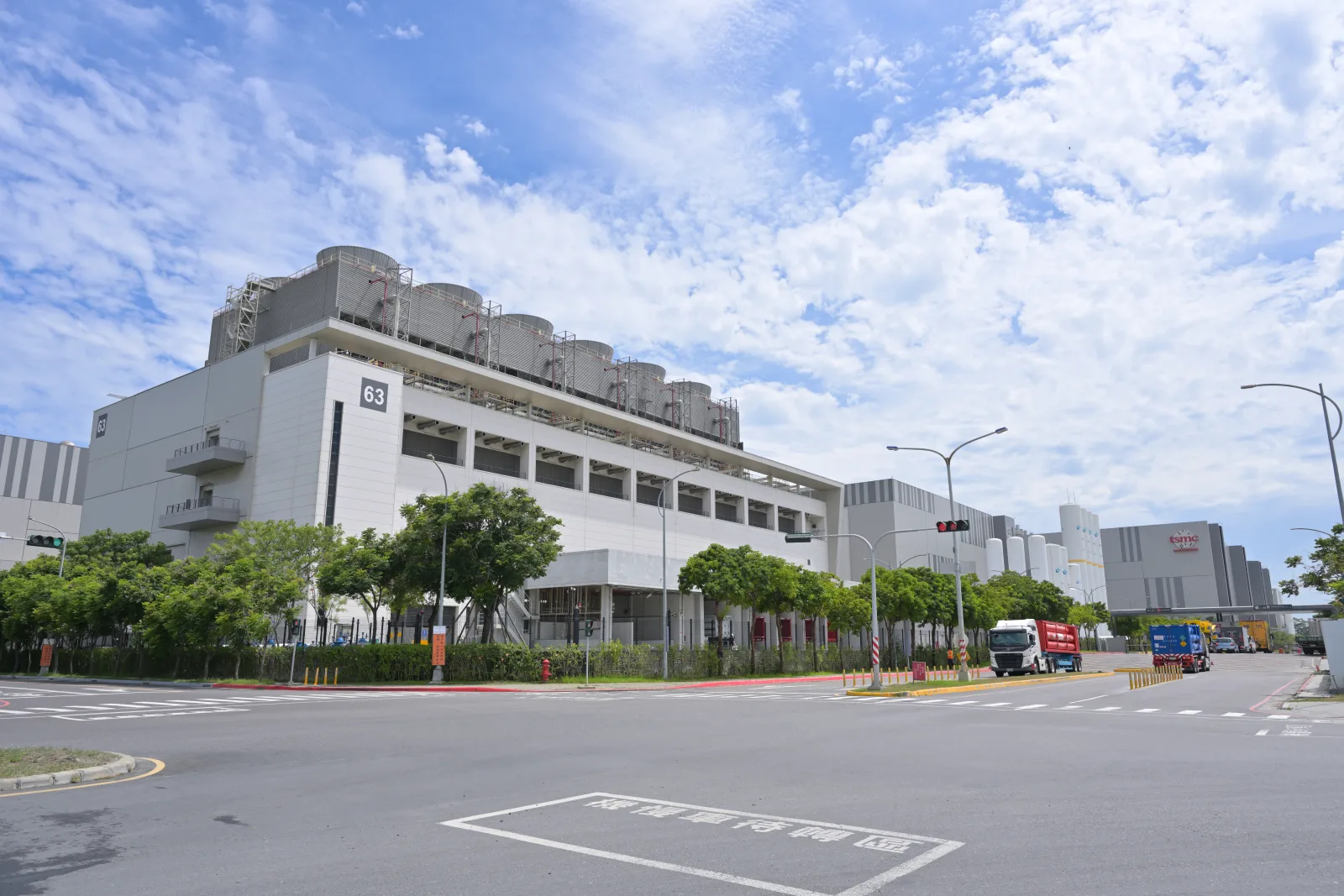
Advanced packaging is the production stage that combines several chips in a single package to raise the performance of AI accelerators. Its most sought-after form is CoWoS, the TSMC technique that places a processor and high-bandwidth memory (HBM) on the same substrate. According to a Taipei Times report of 28 September, Taiwan's National Science and Technology Council has launched a 1-month public consultation on the 198.65-hectare third phase of Chiayi Science Park. TSMC plans 5 additional packaging plants there. Together with 2 facilities in the first phase and 3 in the second phase due by 2031, the park's total will rise to 10.
The comparison is striking. The Arizona plan includes 2 packaging facilities, while the target in Chiayi is 10 facilities in a single park. According to the Taipei Times, the demand comes from CoWoS orders placed by Nvidia, AMD and Apple. The memory side pulls in the same direction. A Seoul Economic Daily report of 20 September said Samsung will raise monthly HBM wafer starts from about 180,000 to 250,000, and the share of the HBM4 family will rise from 40% to 80%. Our reading is this: the more HBM output grows, the heavier the load on the CoWoS line that joins this memory to the processor. As of 2026, the weight of that line sits in Taiwan.
Summit uncertainty feeds concentration
The Xi–Trump summit ended on 24 September without a joint statement. According to NBC News, the tariff truce was extended to 10 January instead of 10 November, but no change to chip export controls was announced. A Focus Taiwan report of 25 September said Xi asked the US to oppose Taiwanese independence; Taipei rejected the call the same day. The summit produced no decision on the 14-billion-dollar US arms package, which has been pending since May.
In the same week Taipei turned to its own capacity. According to a Taipei Times report of 28 September, the Ministry of National Defense has prepared a programme for about 200 Hsiung Feng anti-ship missiles. It is worth 22 billion NT dollars (692.3 million US dollars) and runs over 2027–2035. In Washington, Congress is hardening its stance. A Roll Call report of 23 September said the Senate's 2027 defence bill package contains 3 chip bills, one of which writes an 18-month ban on the most powerful AI chips into law.
Our reading is that these two trends reinforce each other. As US security support turns into a bargaining chip, as the 14-billion-dollar package illustrates, Taipei's incentive to keep its most critical production on the island grows. This incentive is known as the "silicon shield": the assumption that keeping production the world cannot do without on the island secures outside support. That is why the gap between 265 billion and 44 billion dollars may not close before 2027. The other side of the risk is equally clear. In a blockade or a crisis in the Strait, the global supply of AI chips would depend on a single park that is set to host 10 packaging facilities.
What to watch over the next 3 months
The first indicator is the approval list of Taiwan's Ministry of Economic Affairs. If a new application for the second packaging facility in Arizona follows the 20-billion-dollar tranche of July 2026, the plan on paper moves closer to reality. The second indicator is the Chiayi timetable. The 1-month public consultation will be followed by a feasibility study and approval from the Executive Yuan; if these steps accelerate, the concentration thesis strengthens. The third indicator is 10 January. If the truce is again extended for only a short period on that date, chips and Taiwan will have been deferred once more. The fourth indicator is the yuan. USD/CNY closed at 6.7132 on 25 September; a sustained move above 6.80 would show that trade tensions are being repriced. Finally, the start date of volume production at the first-phase facilities should be tracked. The Taipei Times says June 2026 while BigGo gives 2027; until this contradiction is resolved, Chiayi's actual capacity could not be verified.
Probabilities
Scenarios
| Scenario | Probability | Trigger | Market impact |
|---|---|---|---|
| H1Diversification continues on paper | 55% | Approvals arrive tranche by tranche, and Chiayi's third phase clears feasibility in 2027. | The gap between 265 and 44 billion dollars closes slowly; the weight of packaging stays in Taiwan. |
| H2Washington mandates domestic packaging | 25% | The 3 chip bills in the 2027 NDAA pass, adding an incentive or requirement for packaging inside the US. | The 2 packaging facilities in Arizona are brought forward, and Taiwan is forced to grant large new approvals. |
| H3Strait risk forces concentration to be priced | 20% | The 10 January truce breaks down or a large-scale exercise takes place in the Taiwan Strait. | Packaging capacity tied to a single cluster is seen as a systemic risk, and supply chains seek urgent diversification. |
Module A
Constraints Matrix
STRUCTURAL AVG 3.8 · TACTICAL AVG 2.0Structural constraints dominate: the outcome is set more by these limits than by the actors' preferences.
Hard structural constraintspersistent · beyond the actors' will
The geography of capacity · Taiwan
5/5TSMC operates 19 advanced facilities in Taiwan and is building 13 new fabs and packaging plants; the target in Chiayi is 10 packaging facilities.
Taiwan's investment approval regime · Taiwan
4/5TSMC's overseas investments pass tranche by tranche through the Investment Commission of the Ministry of Economic Affairs; the total approved since 2020 is 44 billion dollars.
Pending arms package · United States
3/5The 14-billion-dollar package passed by Congress in January 2026 has awaited presidential approval since May; the summit produced no decision.
China's demand for a statement on independence · China
3/5On 24 September Xi asked the US to oppose Taiwanese independence; Taipei rejected the call on 25 September.
Tactical frictiontemporary · eases over time
Brief truce window months
3/5The tariff truce was extended by only 2 months and expires on 10 January; chips and Taiwan remain uncertain until then.
Chiayi approval process months
2/5After the 1-month public consultation on the third phase come a feasibility study, Executive Yuan approval and an environmental impact assessment.
Conflicting approval counts weeks
1/5Focus Taiwan referred to a sixth approval on 2 July and to 7 applications in total on 26 September; the official list and the news count do not match.
Module B
Signal vs Noise
SIGNAL 67% · NOISE 33%
- SIGNAL
There is a wide gap between the US plan and the amount approved
The Ministry of Economic Affairs has approved 44 billion dollars since December 2020; TSMC's Arizona plan is 265 billion dollars.
Focus Taiwan — Economics Ministry approves US$44B in TSMC U.S. investments since 2020
- SIGNAL
Packaging capacity is gathering in a single Taiwanese cluster
A 198.65-hectare third phase is opening in Chiayi; TSMC plans 5 additional packaging plants, for a total of 10 facilities.
Taipei Times — Chiayi Science Park signaling Phase III development
- SIGNAL
Rising HBM supply is increasing demand for packaging
Samsung will raise monthly HBM wafer starts from about 180,000 to 250,000; the HBM4 share will rise from 40% to 80%.
Seoul Economic Daily — Samsung to double HBM4 output next year, sources say
- SIGNAL
Taipei is turning to domestic production for defence
A programme allocating 22 billion NT dollars (692.3 million US dollars) to about 200 Hsiung Feng missiles for 2027–2035 has been prepared.
- NOISE
The truce extension has eased the technology front
The truce was extended by only 2 months, from 10 November to 10 January; no change to chip export controls was announced.
- NOISE
H200 licences have opened the flow of chips to China
According to Roll Call, H200 sales to China made up less than 1% of Nvidia's second-quarter data centre revenue.
Roll Call — AI export controls debate rages as Trump, Xi meet
Module C
Asset-Class and Positioning Implications
| Asset class | Exposure | Transmission channel | H1 | H2 | H3 | Expected | Conviction | Horizon | What to watch |
|---|---|---|---|---|---|---|---|---|---|
| Equities | Taiwan semiconductor sector | Concentration of packaging and advanced production capacity on the island | + | − | −− | −0.10 | ●●● | 3–12 months | Feasibility and Executive Yuan approval for Chiayi's third phase |
| Equities | US semiconductor equipment and packaging sector | A domestic packaging requirement or incentive | 0 | ++ | + | +0.70 | ●●● | 12+ months | Chip provisions in the 2027 NDAA conference text |
| FX | USD/CNY | Expiry of the trade truce and technology tensions | 0 | + | ++ | +0.65 | ●●● | 0–3 months | The 6.80 threshold on USD/CNY and the 10 January truce deadline |
| Volatility | Semiconductor index volatility | Strait risk feeding through to capacity tied to a single cluster | − | 0 | ++ | −0.15 | ●●● | 0–3 months | VIX and announcements of Taiwan Strait exercises |
| Freight & insurance | Taiwan Strait war-risk premium | Cost of hull and cargo insurance during tensions | 0 | 0 | ++ | +0.40 | ●●● | 3–12 months | War-risk premium notices for Strait transits |
Second-order effects
And then what?
Starting point
Since 2020 Taiwan has approved 44 billion dollars for TSMC's US investments, while in Chiayi the number of packaging facilities is planned to rise to 10.
- 1
Supply chainwithin months
Even if wafer output rises in Arizona, CoWoS assembly of AI chips stays largely in Taiwan; some of the chips made in the US return to the island for packaging.
Watch: New approvals by Taiwan's Ministry of Economic Affairs for TSMC Arizona and the construction timetable of the Arizona packaging facility
- 2
US industrial and export policywithin months
As Washington recognises this dependence, Congress moves to add conditions such as domestic packaging and location tracking to chip legislation; the 3 chip bills enter bargaining over the 2027 defence bill.
Watch: Whether the 3 chip bills survive in the FY2027 NDAA conference text
- 3
Risk premiumwithin weeks
If tensions in the Strait rise or the truce breaks down on 10 January, markets price packaging capacity tied to a single cluster as a risk premium; the yuan and Asian technology assets come under pressure.
Watch: USD/CNY moving above 6.80 and statements in the run-up to the 10 January truce deadline
What breaks the chain
The chain breaks at the first step if the Ministry of Economic Affairs quickly approves the 2 packaging facilities in Arizona or the first CoWoS line in the US enters volume production.
Triggers
Thresholds to watch
| Indicator | Threshold | Today | What it means |
|---|---|---|---|
| USD/CNY | > 6.80 | 6.7105 | The zone where trade and technology tensions are repriced through the yuan; the 25 September close was 6.7132. |
Sources
- Focus Taiwan — Economics Ministry approves US$44B in TSMC U.S. investments since 2020
- Focus Taiwan — TSMC wins approval for US$20 billion investment in Arizona unit
- Taipei Times — Chiayi Science Park signaling Phase III development
- Taipei Times — Taiwan to build more anti-ship missiles
- Seoul Economic Daily — Samsung to double HBM4 output next year, sources say
- Roll Call — AI export controls debate rages as Trump, Xi meet
- NBC News — US and China extend trade truce
- Focus Taiwan — Taiwan rejects Xi's call for US to oppose independence
- BigGo Finance — Chiayi Science Park Phase 3 expansion kicks off; TSMC reportedly plans 5 additional packaging plants
Sourcing and verification rules: methodology · Report an error: contact
Related reports
VTech & AI·Analysis·Asia-Pacific
Beijing now has the final say on chip sales to China
The US granted H200 licences to 10 Chinese companies in May, but shipments have not begun. On 27 September Beijing signalled approval for the RTX Pro 5500, a chip of its own choosing; ByteDance is reported to be considering about 1 million units.
Technology Geopolitics Desk · 29 September 2026 · 6 min
VTech & AI·Analysis·Americas
Diplomacy talks superintelligence, incidents happen at the guest login: a US–China incident channel that skips agents, supply chains and identity stays empty
As Washington and Beijing set up a channel for 'superintelligence incidents' on 25 September, that week's 4 cases were access problems, not model problems: a Medicare endpoint asking for no identity, 2 re-enabled GitHub actions, a WAF bypassed with one character and a 6-hour forced shutdown.
Technology Geopolitics Desk · 27 September 2026 · 5 min
VTech & AI·Analysis·Asia-Pacific
Xi–Trump summit ends with a two-month truce: decisions on chips, Taiwan and artificial intelligence deferred to 10 January
No joint statement emerged from the 24 September summit. The tariff truce had been extended a day earlier from 10 November to 10 January; no signed decision was announced on tariff cuts, new chip licences, the Taiwan package or an AI incident hotline.
Technology Geopolitics Desk · 25 September 2026 · 8 min