III Kinetic Conflicts & Defence·Analysis·Türkiye and Its Neighbourhood
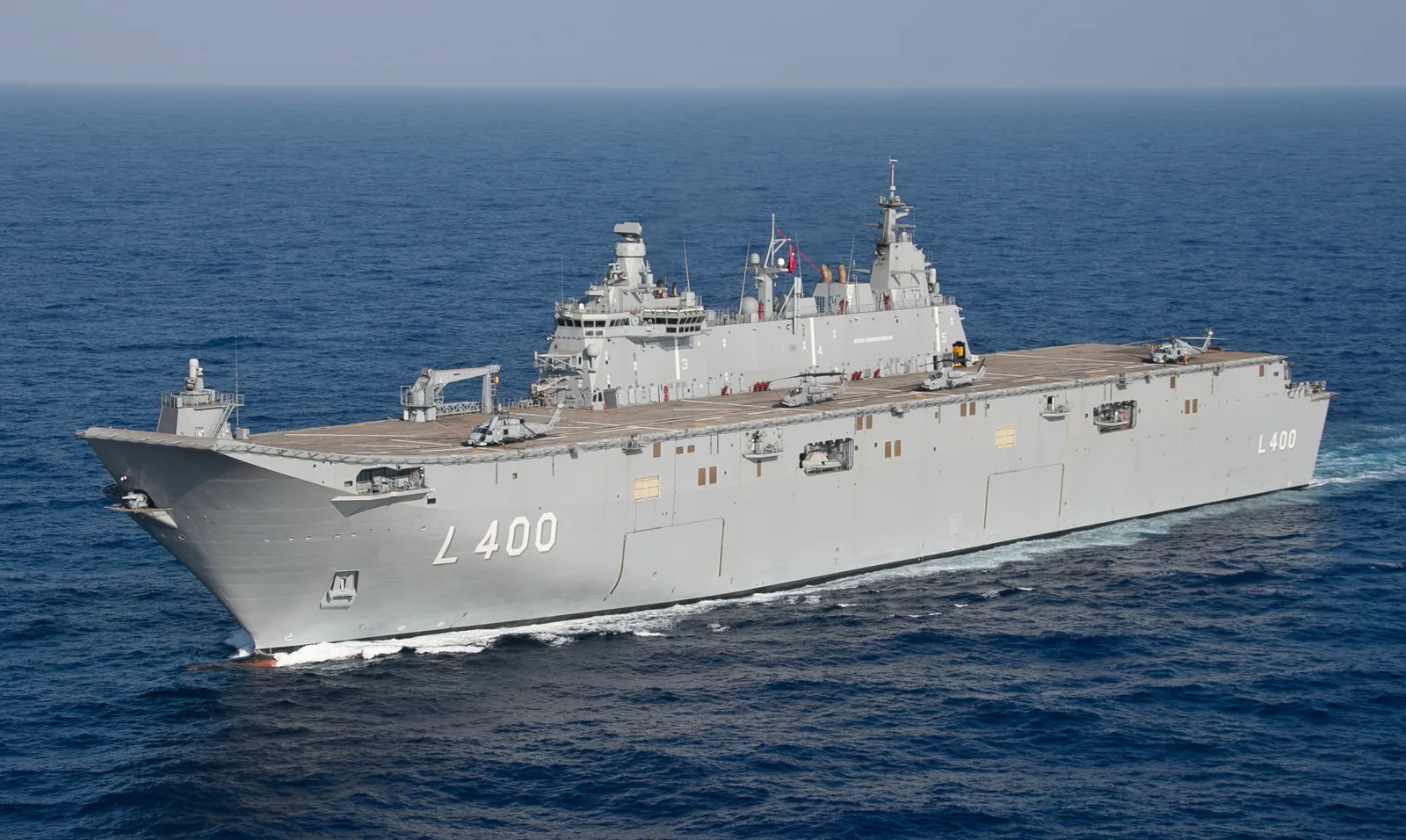
Türkiye's military presence becomes a bargaining chip at three tables: the Bashiqa handover, parliamentary approval in Syria, 226 ships in the Black Sea
On 22–23 September Iraq tied the phased handover of the Bashiqa base to Sinjar and the 1,200 km Development Road, Damascus proposed parliamentary approval for Turkish bases, and the Cairo trilateral agreed to jointly protect energy infrastructure. Ships attacked in the Black Sea reached 226.
Türkiye & Neighbourhood Desk · 24 September 2026 · 7 min read · 13 sources
Why it matters
Within 48 hours, Türkiye's military presence in the region became a trade-off item at two tables, a deterrence signal at a third and a cost item on one front. In Iraq and Syria, presence is being exchanged for a corridor and legal status, but both trades lack a timetable and depend on the other side's performance. In the Eastern Mediterranean, the 6th trilateral moved the jurisdiction dispute onto the security agenda; in the Black Sea, 163 of 226 attacks occurring in 2026 hands Ankara an insurance bill rather than bargaining power.
Implications
- According to the 23 September joint statement, the Bashiqa-Zilkan base, home to Turkish troops since 2015, will be handed over to Iraq in phases; the timetable and mechanism are to be set separately, and no date had been announced as of 24 September.
- According to al-Sharaa, Russia's roughly 170 bases in Syria have fallen to 2; the remaining Turkish presence is to gain legal status through People's Assembly approval, and Türkiye's current troop numbers could not be verified.
- According to İMEAK data, 226 ships have been attacked in the Black Sea, 163 of them in the first 8 months of 2026; at least 26 attacks on Turkish-flagged or Turkish-owned vessels were recorded in the last 2 months.
Same week, four fronts, one question
Decisions taken on 22 and 23 September on the sidelines of the UN General Assembly in New York and in Cairo turned Türkiye's military and naval presence in the region into a bargaining chip at three separate tables within the same 48 hours for the first time. The joint statement with Iraq published on 23 September tied the phased handover of the Bashiqa-Zilkan base, where Turkish troops have been stationed since 2015, to Sinjar security and the roughly 1,200 km Development Road. In Syria, President Ahmed al-Sharaa said on 22 September that the remaining Turkish military presence would be given legal status through People's Assembly approval. In the Eastern Mediterranean, Greece, the Greek Cypriot Administration and Egypt agreed at their 6th trilateral meeting on 22 September to jointly protect energy infrastructure.
The fourth front produces cost rather than leverage: according to data from the Turkish Chamber of Shipping (İMEAK), 226 civilian and commercial vessels have been attacked in the Black Sea since the start of the war, 163 of them in the first 8 months of 2026. The common question behind these four developments is at which table Ankara can convert the military presence it holds in 2026 into something, and at which table it is merely paying the cost of defence.
Iraq: Sinjar and a 1,200 km corridor in exchange for Bashiqa
According to Daily Sabah and Reuters, Erdoğan and Iraqi Prime Minister Ali al-Zaidi agreed on 23 September on the phased handover of the Bashiqa-Zilkan base to the Iraqi federal government under an agreed mechanism and timetable. According to Reuters, the timetable and mechanism are to be determined separately; the start date of the handover and the number of troops at the base had not been announced as of 24 September and could not be verified. According to Daily Sabah, the handover depends on progress in joint security steps such as Iraq fully establishing state authority in Sinjar and removing proscribed foreign armed groups; in other words, the handover of 1 base was written as a condition indexed to Baghdad's performance on the ground.
The economic side of the trade is the Development Road. According to an Iraq Business News report dated 21 September, the two countries completed and signed a draft framework agreement on transport infrastructure after 4 days of negotiations in Baghdad, and the draft was sent for approval by both countries' senior leadership. The corridor covers a railway and road line of roughly 1,200 km running from Faw Port through Türkiye to Europe; the 23 September statement also mentioned cooperation on electricity, natural gas and oil pipelines. The statement contains no target figure for bilateral trade; consequently, as of 24 September there is not 1 verifiable figure on the project's cost or timetable.
Syria: legitimacy and an expiry date in the same sentence
According to Turkish Minute, al-Sharaa said at an Atlantic Council session on 22 September that the number of Turkish bases in north-west Syria had fallen and that the remaining presence would be given legal status through People's Assembly approval; Breaking Defense dated the same event 23 September, a 1-day discrepancy between the 2 sources. According to the same source, Defence Minister Yaşar Güler said in June 2025 that there were more than 20,000 Turkish troops in Syria; current troop and base numbers as of September 2026 could not be verified.
Al-Sharaa's framing should be read alongside the Russian example: according to Breaking Defense, Russia's roughly 170 military bases have fallen to 2 (Hmeimim and Tartus), and these 2 bases were converted into joint training centres under an August 2026 memorandum. In the same speech, al-Sharaa also said Syria would very soon no longer need a foreign military presence; the dissolution of the SDF through integration into the army, announced on 25 August, weakens the number 1 security rationale Ankara has advanced for its cross-border presence. While parliamentary approval gives the Turkish presence 1 legal footing, on 22 September it also put on record that this same footing is a revocable permission.
Eastern Mediterranean: a statement, an exercise and 1 October
According to Cyprus Mail and ProtoThema, the joint statement of the 6th trilateral meeting in Cairo provides for the joint protection of gas fields, supply lines and maritime energy infrastructure and for a capacity for a rapid, unified response to threats; the 7th meeting will be held in Greece in 2027. The statement does not name Türkiye but contains an explicit reference to the 1982 UN Convention on the Law of the Sea (UNCLOS); Türkiye is not a party to the convention, and the 2 sides of the jurisdiction dispute diverge over this text.
Ankara's response was in the field the same week: according to the Ministry of National Defence, the Denizkurdu-I/2026 exercise is running from 20 to 25 September with 100 ships, 50 aircraft and 14,000 personnel; DHA counts 3 seas, Bengü Türk 4. According to Greek City Times, Erdoğan repeated his call for recognition of the TRNC at the General Assembly on 22 September; Greek Cypriot Defence Minister Palmas said the 1 October parade would differ from previous years. Unlike the 3 tables, there is as yet no trade-off proposal in the Eastern Mediterranean; here military presence is used less as a bargaining chip than as a mutual deterrence signal.
Black Sea: an insurance bill instead of bargaining power
According to an Ukrinform report based on the Ukrainian Sea Ports Authority, an Antigua and Barbuda-flagged cargo ship was struck on the night of 23 September and its Ukrainian captain was killed; the Russian Ministry of Defence made no separate statement on the ship, so the information on the perpetrator is 1-sided. According to a France 24 report dated 23 September, at least 26 attacks on Turkish-flagged or Turkish-owned vessels were recorded in the last 2 months, and Erdoğan told the UN General Assembly that these attacks were unacceptable regardless of the perpetrator.
Economic transmission works fastest on this front: the fact that more than 70% of the 226 attacks occurred in 2026 is the main variable pushing up war-risk insurance and freight for ships entering the Black Sea. No open, dated source could be found as of 24 September for the war-risk premium rate or a Black Sea freight index; these items could not be verified. Türkiye's 5-year CDS stood at 242.43 basis points on 21 September, a move explained by the global interest-rate regime; no separate effect of the 23 September attack has yet been observed.
Probabilities
Scenarios
| Scenario | Probability | Trigger | Market impact |
|---|---|---|---|
| H1Conditional and slow trade-off | 55% | No timetable is announced for the Bashiqa handover, the Development Road draft stays in the approval process, and Damascus limits parliamentary approval to a small number of bases. | The Turkish military presence in Iraq and Syria shrinks gradually but stays in the region; in the Eastern Mediterranean the statement-exercise cycle continues until 1 October. |
| H2Package accelerates | 25% | The framework agreement is approved in both capitals, a timetable for Bashiqa is announced and the Syrian People's Assembly accepts the status arrangement. | Military presence turns into a concrete economic return; the tender calendar for the Iraqi corridor and energy lines becomes clear. |
| H3Rupture on the maritime front | 20% | A life is lost on a Turkish-owned ship in the Black Sea, or physical contact occurs between exercise units in the Eastern Mediterranean. | Ankara's bargaining power turns into a defence cost; the Iraq and Syria trade-offs slip down the agenda. |
Module A
Constraints Matrix
STRUCTURAL AVG 4.0 · TACTICAL AVG 1.8Structural constraints dominate: the outcome is set more by these limits than by the actors' preferences.
Hard structural constraintspersistent · beyond the actors' will
Escalating attack pace in the Black Sea · Russia
5/5According to İMEAK, 163 of 226 attacks came in the first 8 months of 2026; on 23 September a captain died on an Antigua-flagged ship, and the Russian side made no ship-specific statement.
Damascus's sovereignty goal
4/5On 22 September al-Sharaa said every foreign military presence must obtain parliamentary approval and that Syria will soon not need foreign troops; Russian bases fell from about 170 to 2.
UNCLOS divergence · Türkiye
4/5The 6th trilateral statement in Cairo explicitly references UNCLOS; Türkiye is not a party to the convention, and the jurisdiction dispute continues over this text.
No timetable for the Bashiqa handover · Türkiye
3/5The 23 September statement defines the handover as phased and tied to Iraq's Sinjar steps; the timetable and mechanism are to be set separately, and troop numbers at the base were not disclosed.
Tactical frictiontemporary · eases over time
Development Road approval process months
3/5The draft framework agreement signed on 21 September awaits approval by both countries' senior leadership; no figures on cost or timetable were announced.
One-sided attribution days
2/5The perpetrator of the 23 September ship attack rests solely on Ukrainian sources; the ship's name was not disclosed and there was no independent confirmation as of 24 September.
Date discrepancy in sources days
1/5Al-Sharaa's Atlantic Council speech is dated 22 September by Turkish Minute and 23 September by Breaking Defense; the 1-day gap does not change the substance.
Divergence on exercise area days
1/5For Denizkurdu-I/2026, DHA counts 3 seas and Bengü Türk 4 including the Sea of Marmara; there is no divergence on the figures of 100 ships and 14,000 personnel.
Module B
Signal vs Noise
SIGNAL 60% · NOISE 40%
- SIGNAL
Bashiqa handover indexed to Sinjar security steps
According to the 23 September statement, the base, in use since 2015, will be handed over in phases depending on progress in Iraq establishing state authority in Sinjar.
Daily Sabah — Türkiye, Iraq agree on Sinjar security, Bashiqa handover
- SIGNAL
Pace of Black Sea attacks multiplied in 2026
According to İMEAK data, 163 of 226 attacks, or more than 70%, came in the first 8 months of 2026; at least 26 attacks on Turkish-flagged or Turkish-owned ships in the last 2 months.
Data: Turkish Straits waiting time ›France 24 — Black Sea drone attacks spell terror for Turkish sailors
- SIGNAL
Damascus is shrinking foreign bases in number
According to al-Sharaa, Russian bases fell from about 170 to 2, and the 2 bases became joint training centres under an August 2026 memorandum.
Breaking Defense — Syria looks to end foreign military presence, have sovereignty over all bases
- NOISE
The Cairo trilateral created a new joint strike force
The statement intensifies communication, information sharing and coordination within an existing mechanism now in its 6th round; no command structure or unit numbers were disclosed, and the 7th meeting is in 2027.
Cyprus Mail — Cyprus, Greece and Egypt to strengthen protection of East Med energy infrastructure
- NOISE
The Denizkurdu exercise created a de facto change in maritime jurisdiction
The exercise is limited to 20–25 September and is proceeding on a planned schedule with 100 ships and 14,000 personnel; no contact or incident in the field was reported.
DHA — Denizkurdu-I/2026 exercise with 100 ships from the Ministry of National Defence
Module C
Asset-Class and Positioning Implications
| Asset class | Exposure | Transmission channel | H1 | H2 | H3 | Expected | Conviction | Horizon | What to watch |
|---|---|---|---|---|---|---|---|---|---|
| Freight & insurance | Black Sea war-risk insurance and dry bulk freight | 163 of 226 attacks occurring in 2026 raises costs for ships entering the Black Sea | − | − | −− | −1.20 | ●●● | 0–3 months | Pace of the İMEAK attack count rising above 226 and daily Bosphorus transits |
| Credit | Türkiye sovereign risk premium | Regional security costs may add a country-specific premium on top of the global rate effect | 0 | + | −− | −0.15 | ●●● | 0–3 months | Where Türkiye's 5-year CDS stands relative to the 250 basis-point threshold |
| Equities | Turkish construction and logistics sector | Approval of the Development Road framework agreement would create business-volume expectations along the 1,200 km corridor | 0 | ++ | − | +0.30 | ●●● | 12+ months | Approval of the framework agreement in Ankara and Baghdad and the first tender announcement |
| Commodities | Eastern Mediterranean gas supply risk premium | Placing energy infrastructure under joint protection moves the jurisdiction dispute onto the security agenda | 0 | 0 | + | +0.20 | ●●● | 3–12 months | Frequency of Eastern Mediterranean exercises and statements after the 1 October parade |
Second-order effects
And then what?
Starting point
On 23 September Türkiye tied the phased handover of the Bashiqa-Zilkan base, where it has kept troops since 2015, to Iraq's security steps in Sinjar; the same package includes a decision to accelerate the roughly 1,200 km Development Road, whose draft was signed on 21 September.
- 1
Security conditionalitywithin weeks
To trigger the handover, Baghdad accelerates steps to establish state authority in Sinjar and remove proscribed foreign armed groups; since the progress criterion has no timetable, the first concrete step is Ankara announcing a partial withdrawal from 1 base.
Watch: The Iraqi government's formal step on Sinjar and the timetable to be announced for the Bashiqa handover
- 2
Infrastructure agreementwithin months
Security progress clears the way for senior leadership in both countries to approve the draft framework agreement produced by 4 days of negotiations; the electricity, gas and oil pipeline cooperation mentioned in the statement joins the same package.
Watch: Date of approval of the framework agreement by Iraq's Council of Ministers and in Türkiye
- 3
Transit trade and constructionwithin months
The approved corridor turns into a financing and tender timetable; the 1,200 km line from Faw Port to Türkiye gives Türkiye a land-rail transit revenue option against sea routes made costlier by 226 attacks in the Black Sea.
Watch: First tender or financing announcement for the Development Road
What breaks the chain
If Iraq fails to remove proscribed groups from Sinjar, or contact involving Turkish units occurs in the Black Sea or Eastern Mediterranean, the chain stops: the handover is suspended, the framework agreement stalls in the approval queue and military presence reverts from bargaining chip to security rationale.
Triggers
Thresholds to watch
| Indicator | Threshold | Today | What it means |
|---|---|---|---|
| Türkiye 5-year CDS | > 250 | 248 | A rise above 250 from 242.43 basis points on 21 September would show regional security costs adding a country-specific premium on top of the global rate effect. |
| Bosphorus transits | < 50 | 62 | A lasting fall in daily Bosphorus transits below the 54–62 band of 18–20 September would show Black Sea attacks actually shrinking trade volumes. |
| Brent crude oil (futures) | > 110 | 105.28 | A move above $110 from $103.31 on 23 September would mark the zone where risk to Eastern Mediterranean and Black Sea energy routes is being priced in. |
Sources
- Daily Sabah — Türkiye, Iraq agree on Sinjar security, Bashiqa handover
- Cyprus Mail (Reuters) — Turkish forces agree to hand over camps in north Iraq
- Iraq Business News — Iraq-Turkey Deal on Transport Infrastructure Development
- Turkish Minute — Syria's al-Sharaa seeks legal status for Turkish military presence
- Breaking Defense — Syria looks to end foreign military presence, have sovereignty over all bases
- Cyprus Mail — Cyprus, Greece and Egypt to strengthen protection of East Med energy infrastructure
- ProtoThema — Joint strike force of Greece, Cyprus and Egypt against threats
- Greek City Times — Erdoğan Uses UN Speech to Push Cyprus Recognition and Aegean Agenda
- France 24 — Black Sea drone attacks spell terror for Turkish sailors
- Ukrinform — Russians attack warehouses in Odesa region and cargo ship in Black Sea, captain killed
- DHA — Denizkurdu-I/2026 exercise with 100 ships from the Ministry of National Defence
- Bengü Türk — Show of force in four seas with the Denizkurdu-I/2026 exercise
- Investing.com — Turkey CDS 5 Years USD historical data
Sourcing and verification rules: methodology · Report an error: contact
Related reports
IVMacro & Debt·Analysis·Türkiye and Its Neighbourhood
Turkish Treasury leans on floating rates for its heaviest redemption month
In October the Treasury will roll over its entire 409.1 billion lira domestic debt service with new borrowing. At the mid-September auctions, demand for paper indexed to TLREF, which tracks the policy rate, was about 1.8 times that for the fixed-coupon bond.
Macro & Debt Markets Desk · 29 September 2026 · 7 min
IVMacro & Debt·Analysis·Türkiye and Its Neighbourhood
Disinflation snags in October on tax, oil and the risk premium
The sliding-scale mechanism ends on 1 October, Brent topped $106 on 28 September, and Türkiye's CDS rose above 250 basis points on 25 September. Net reserves fell to 55.84 billion dollars.
Türkiye & Neighbourhood Desk · 28 September 2026 · 5 min
IVMacro & Debt·Analysis·Türkiye and Its Neighbourhood
Türkiye's risk premium comes from within: CDS passes 250 as an 18.3-billion-dollar fund liquidation and a MASAK probe test the intermediation chain
According to Bloomberg HT, Türkiye's 5-year CDS exceeded 250 on 25 September for the first time since 27 May. The same week, the liquidation of 131 funds and an espionage probe into MASAK's data system show the premium is fed more by domestic intermediation and governance than by external shocks.
Macro & Debt Markets Desk · 26 September 2026 · 5 min