VI Energy Politics & Supply Security·Analysis·Middle East and North Africa
Iran's winter gas gap puts the Tabriz–Ankara pipeline first in line
Ghalibaf called on 25 October for gas savings of at least 10% before winter; about 130 million cubic metres a day of processing capacity lost in the war is still offline. The Türkiye pipeline, whose contract expired in July, is the volume Iran can cut first when the cold sets in.
Energy & Shipping Desk · 25 October 2026 · 8 min read · 10 sources
Why it matters
The noise: Iran's offer to reopen the Strait of Hormuz in exchange for lifting the blockade. Tasnim rejected the swap the same day, and only 4 ships transited on 18 October. The signal: Iran's own gas balance. The parliament speaker called for savings of at least 10% on 25 October, and the 130 million cubic metre loss persists. The pipeline that sold Türkiye 4.536 billion cubic metres in the first half of 2026 is flowing without a contract.
Implications
- According to the National Iranian Gas Company, strikes on 4 processing plants wiped out about 230 million cubic metres a day of capacity; repairs restored 100 million, leaving roughly 130 million still offline.
- The 9.6 billion cubic metre a year contract between BOTAŞ and Iran expired at the end of July; Türkiye imported 4.536 billion cubic metres from Iran in the first half of 2026, up 34% year on year.
- When 1 technical failure cut Iranian gas in January 2022, Türkiye asked power plants to curb output by 40%; Iran's share of imports was then about 16%.
Noise
Iran offered to reopen Hormuz in exchange for lifting the blockade
Signal
Iran is trying to close its winter gap by curbing demand rather than adding supply
The noise is the swap offer, the signal is the gas balance
Hormuz dominated the headlines on 24 October. According to CBS, Iran's ambassador to Pakistan said the strait would reopen if the US lifted its blockade. Khaama, citing AP, reported that Tasnim, which is close to the Revolutionary Guards, said the same day that no such swap had been accepted. IMF PortWatch data compiled by Straits.live show only 4 ships transiting on 18 October, against a pre-crisis daily average of 85. Neither the offer nor the denial changed a flow of 4 ships.
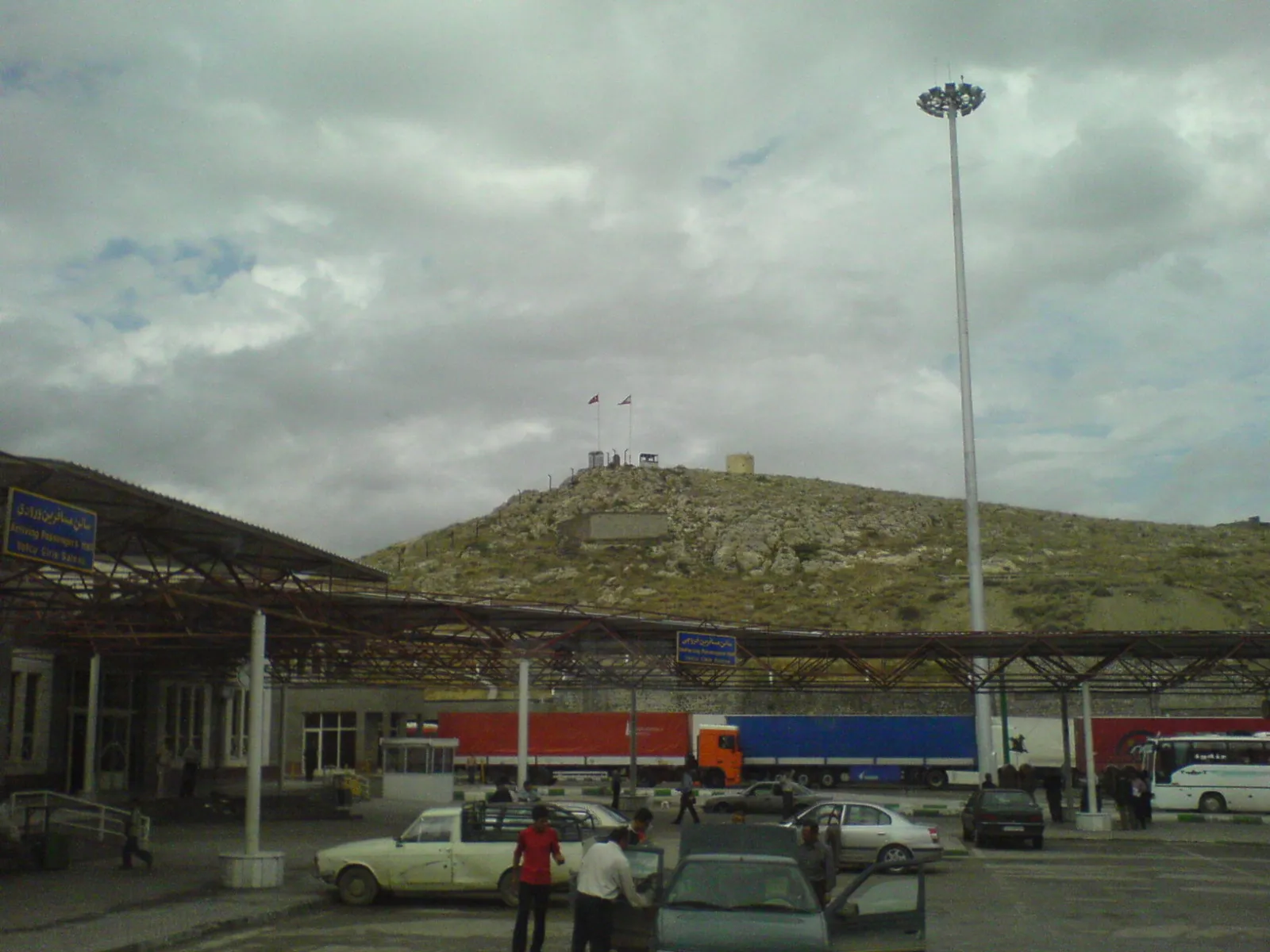
The quiet variable arrived from Tehran on 25 October. According to Iran International and Gulf News, parliament speaker Mohammad Bagher Ghalibaf called for a national campaign to cut natural gas consumption by at least 10% before winter. Ghalibaf also asked for faster roll-out of a savings certificate scheme involving about 100 private companies. When the parliament speaker of a major gas producer asks for 10% savings, it signals that repairs will not be finished by winter. Talay's reading is this: the first volume Iran is likely to cut this winter is the gas flowing through the Tabriz–Ankara pipeline, whose contract expired in July.
1 · The logistical constraint and its threshold
On the oil side, the constraint sits in the fleet. AFP reports that about 12 empty Iranian tankers are waiting off Sri Lanka's port of Galle, and at least 40 sailors were brought ashore for treatment at the weekend. The US blockade stops the ships from returning home to load, and many have drifted towards Malacca and Singapore. Those 12 tankers show that even if the blockade lifts, exports will lag by however long the ships take to return to the Gulf.
On the gas side, the constraint sits in 1 pipeline. According to Iran International, the 25-year contract between BOTAŞ and Iran expired on 29 July, with a maximum annual volume of 9.6 billion cubic metres. Noonpost gives the expiry date as 31 July, so the 2 sources differ by 2 days. For about 3 months the flow has continued under a force majeure arrangement without a new contract. Türkiye imported 4.536 billion cubic metres from Iran in the first half of 2026, 34% more than a year earlier, including 883 million cubic metres in June alone.
The threshold Talay is watching is monthly Iranian flow to Türkiye falling below half of June's 883 million cubic metres. A breach would show that Iran is putting domestic demand ahead of exports, and that the cut is policy rather than a one-off fault.
2 · Security of supply and critical thresholds
According to a NIAC analysis dated 15 October, the National Iranian Gas Company said strikes on 4 processing plants had wiped out about 230 million cubic metres a day of capacity. Repairs restored roughly 100 million of that, while the remaining 130 million is still offline; the figures are official and have not been independently verified. MEES reports that Vice President Kaempenah said on 20 July the loss equalled 35% of sales gas output of about 650 million cubic metres a day. According to Iran International, Oil Minister Paknejad put the loss at 95 million cubic metres in August and said it would be restored by the end of September. The savings call on 25 October suggests that timetable has slipped.
NIAC says Iran's winter peak gas deficit was already between 200 and 250 million cubic metres a day before the war. Tehran's priority is electricity. Tavanir says the peak power deficit fell from about 20,000 megawatts in summer 2025 to about 10,000 megawatts in summer 2026. Power plants have 3.2 billion litres of liquid fuel in storage, about 25% more than a year earlier. Liquid fuels are tight as well: on 25 October Iran International published 1 video showing drivers in Karaj stopping work over a diesel shortage.
For Türkiye, the precedent is 4 years old. Data compiled by Noonpost show that when 1 compressor failure cut Iranian gas in January 2022, Türkiye asked power plants to reduce output by 40%. Iran's share of imports was then about 16%, and gas in storage stood at 3.2 billion cubic metres. In 2025, Iran supplied 8.17 billion cubic metres, a share of 13–14%.
3 · Second-round effects
The first link in the chain is Iran's domestic prioritisation. If the National Iranian Gas Company curbs industry and exports during the first cold snap, flow through the Tabriz–Ankara pipeline falls. Noonpost puts Türkiye's storage capacity at about 6.3 billion cubic metres at the end of 2025. Winter consumption approaches 230 million cubic metres a day, and LNG regasification capacity is given as 151 to 161 million cubic metres a day. Storage fill levels as of October 2026 could not be verified.
The second link is price. According to Noonpost, the Iranian contract was indexed to oil, while about 15.8 billion cubic metres of LNG contracts signed since 2024 are tied to gas benchmarks such as TTF and Henry Hub. If spot LNG replaces Iranian volumes, BOTAŞ will compete with European and Asian buyers for the same cargoes in the most expensive weeks of winter. With Brent closing at 116.72 dollars on 23 October, the old oil-indexed price was not cheap either; the price under the force majeure arrangement has not been disclosed.
The third link is the balance sheet. Expensive replacement gas raises BOTAŞ's costs, which pass either into tariffs or into the budget, while the energy import bill erodes the current account. Insurance adds pressure too. With Hormuz transits down to 4 ships on 18 October, risk on Gulf-sourced LNG cargoes remains elevated.
4 · What would disprove this reading
The thesis holds that Iran's gas deficit in the 2026–27 winter will make flows to Türkiye the first point of curtailment. It fails if monthly Iranian flow to Türkiye stays above 800 million cubic metres from November to January and the National Iranian Gas Company announces no industrial cuts; we put that path at 30%. Our base case, partial curtailment during cold snaps, carries a 50% probability. We assign 20% to flows stopping for weeks after a new strike or a harsh winter.
Probabilities
Scenarios
| Scenario | Probability | Trigger | Market impact |
|---|---|---|---|
| H1Partial cuts in the cold | 50% | In the first cold snap Iran curbs industrial and export gas, and flow on the Türkiye pipeline drops for days or weeks. | Türkiye covers the gap with storage withdrawals and spot LNG; winter costs rise but supply is not interrupted. |
| H2An uninterrupted winter | 30% | The winter is mild, and the savings scheme and repairs close the gap. | Monthly flow to Türkiye stays above 800 million cubic metres and the need for substitutes is limited. |
| H3Flows halted for weeks | 20% | New strikes hit South Pars again, or a harsh winter pushes Iran to halt exports altogether. | Tabriz–Ankara flows stop for weeks and Türkiye resorts to power plant and industrial curtailment, as in 2022. |
Module A
Constraints Matrix
STRUCTURAL AVG 4.3 · TACTICAL AVG 2.5Structural constraints dominate: the outcome is set more by these limits than by the actors' preferences.
Hard structural constraintspersistent · beyond the actors' will
Processing capacity offline · Iran
5/5The National Iranian Gas Company says about 230 million cubic metres a day was lost and 100 million restored; roughly 130 million is still offline, with no independent verification.
Pre-war winter deficit · Iran
4/5NIAC says Iran's winter peak gas deficit was already 200 to 250 million cubic metres a day before the war.
Flow without a contract · Türkiye
4/5The 9.6 billion cubic metre a year BOTAŞ–Iran contract expired at the end of July; flow continues under force majeure and no new deal has been announced.
Blockade has locked the fleet · United States
4/5AFP reports about 12 empty Iranian tankers waiting off Galle; the US blockade stops the ships from returning home to load.
Tactical frictiontemporary · eases over time
Pace of the savings scheme weeks
3/5On 25 October Ghalibaf asked for faster roll-out of a certificate scheme involving about 100 companies; whether it will be ready by winter is unclear.
Türkiye's substitution capacity months
3/5Türkiye has about 6.3 billion cubic metres of storage and 151–161 million cubic metres a day of LNG regasification capacity; October fill levels could not be verified.
Diesel shortage days
2/5On 25 October Iran International published 1 video showing drivers in Karaj stopping work over a diesel shortage; its scale could not be verified.
Conflicting official figures weeks
2/5Kaempenah cited a loss of 230 million cubic metres in July and Paknejad 95 million in August; the repair timetable cannot be read.
Module B
Signal vs Noise
SIGNAL 67% · NOISE 33%
- NOISE
Iran offered to reopen Hormuz in exchange for lifting the blockade
The ambassador floated the offer on 24 October and Tasnim rejected the swap the same day; only 4 ships transited on 18 October, against a pre-crisis average of 85 a day.
Data: Strait of Hormuz transits ›Khaama Press — Iran Offers to Reopen Strait of Hormuz if US Lifts Blockade
- SIGNAL
Iran is trying to close its winter gap by curbing demand rather than adding supply
On 25 October Ghalibaf called for gas savings of at least 10%; about 130 million cubic metres a day of processing capacity is still offline.
Gulf News — Drone, missiles intercepted over Saudi Arabia as King Khalid Airport resumes operations
- SIGNAL
The Türkiye pipeline is flowing without a contract and at higher volumes
The contract expired on 29 July; Türkiye imported 4.536 billion cubic metres from Iran in the first half of 2026, up 34% year on year, with 883 million in June.
Iran International — Iran gas exports to Turkey after contract expiry
- NOISE
Lost gas capacity was due back by the end of September
Paknejad said in August that a 95 million cubic metre loss would be restored by the end of September; the official company said 130 million was still offline as of 15 October.
NIAC — Iran Faces a Winter Gas Shortage Despite Improved Summer Electricity Supply
- SIGNAL
The blockade has trapped Iran's tanker fleet in the Indian Ocean
AFP reports about 12 empty Iranian tankers waiting off Galle, and at least 40 sailors received treatment over the weekend of 24–25 October.
- SIGNAL
Türkiye's precedent for an Iranian gas cut is severe
When 1 compressor failure cut Iranian gas in January 2022, Türkiye asked power plants to reduce output by 40%; Iran's share was then about 16%.
Noonpost — Iran gas exports to Turkey and the South Pars strike
Module C
Asset-Class and Positioning Implications
| Asset class | Exposure | Transmission channel | H1 | H2 | H3 | Expected | Conviction | Horizon | What to watch |
|---|---|---|---|---|---|---|---|---|---|
| Commodities | European and Mediterranean LNG prices | Türkiye's need to cover the Iranian gap with spot LNG in winter weeks | + | 0 | ++ | +0.90 | ●●● | 0–3 months | Monthly LNG cargo arrivals in Türkiye |
| FX | Currencies of emerging market net energy importers | A winter energy bill swollen by expensive replacement gas | − | 0 | −− | −0.90 | ●●● | 3–12 months | TÜİK monthly energy imports and the current account |
| Credit | Türkiye sovereign credit premium | The energy bill and BOTAŞ costs passing into the budget | − | + | −− | −0.60 | ●●● | 3–12 months | Türkiye 5-year CDS |
| Commodities | Front end of the crude oil curve | The Hormuz lock and an idle Iranian tanker fleet | + | 0 | + | +0.70 | ●●● | 0–3 months | IMF PortWatch daily Hormuz transit count |
| Equities | Energy-intensive industry in Türkiye and Europe | Risk of gas curtailment and rising input costs | − | + | −− | −0.60 | ●●● | 0–3 months | BOTAŞ curtailment notices to industry and power plants |
Second-order effects
And then what?
Starting point
On 25 October Iran called for gas savings of at least 10% before winter; about 130 million cubic metres a day of processing capacity lost in the war is still offline, and the pre-war peak deficit was 200–250 million cubic metres.
- 1
Pipeline gas flowwithin weeks
In the first cold snap the National Iranian Gas Company curbs industry and exports to protect households; volumes on the uncontracted Tabriz–Ankara pipeline fall below June's monthly level of 883 million cubic metres.
Watch: Imports from Iran in EPDK's monthly natural gas market report
- 2
LNG importswithin weeks
BOTAŞ covers the gap with storage withdrawals and spot LNG; cargoes tied to gas benchmarks are bought in the most expensive weeks of winter and import costs rise.
Watch: Monthly LNG cargo arrivals in Türkiye and the Silivri storage withdrawal rate
- 3
Current account and tariffswithin months
A rising energy import bill erodes the current account; BOTAŞ's costs pass to households and public finances through tariff increases or budget transfers.
Watch: Energy imports in TÜİK's monthly foreign trade data and BOTAŞ tariff announcements
What breaks the chain
The chain breaks at the first step if the winter is mild and Iran repairs most of the remaining 130 million cubic metre loss, or if monthly flow to Türkiye stays above 800 million cubic metres.
Triggers
Thresholds to watch
| Indicator | Threshold | Today | What it means |
|---|---|---|---|
| Brent crude oil (futures) | > $120 | 114.88 | If Brent rises above 120 dollars from its 23 October close of 116.72, the cost of oil-indexed gas and substitute fuels jumps together |
| Strait of Hormuz transits | < 10 ships/day | 2 | If transits stay below 10 ships a day, Gulf-sourced LNG and crude flows remain constrained through winter and replacement costs rise |
Sources
- Gulf News — Drone, missiles intercepted over Saudi Arabia as King Khalid Airport resumes operations
- Iran International — Live blog, 25 October 2026
- NIAC — Iran Faces a Winter Gas Shortage Despite Improved Summer Electricity Supply
- MEES — Iran Races To Repair South Pars Damage Ahead Of Winter
- Iran International — Iran gas exports to Turkey after contract expiry
- Noonpost — Iran gas exports to Turkey and the South Pars strike
- Khaleej Times (AFP) — Stranded Iranian sailors from US-sanctioned oil tankers seek medical treatment in Sri Lanka
- Khaama Press — Iran Offers to Reopen Strait of Hormuz if US Lifts Blockade
- Straits.live — Strait of Hormuz News, October 24, 2026
- Trading Economics — Brent crude oil
Sourcing and verification rules: methodology · Report an error: contact
Related reports
VIEnergy & Supply·In-depth analysis·Middle East and North Africa
State fleets now carry the Gulf oil that insurers will not
December Brent expires on 30 October and the headline price will drop by about $5. The real constraint sits in cover, not the curve: Hormuz war premiums run at 6–10% of hull value, independent owners have pulled back, and a state-linked fleet of about 230 tankers carries Gulf supply.
Energy & Shipping Desk · 30 October 2026 · 11 min
VIEnergy & Supply·Analysis·Middle East and North Africa
As December Brent expires, scarcity stays at the front of the curve
Axios reported on 28 October that the US and Israel had put Iran's energy facilities on their target list. The market answered on the curve: December Brent traded $4.60 above January. The December contract expires on 30 October, and scarcity remains at the front.
Energy & Shipping Desk · 29 October 2026 · 7 min
VIEnergy & Supply·Analysis·Middle East and North Africa
The Saudi recovery is wearing thin at Ras Tanura's berths
The Houthis claimed a hit on Ras Tanura on 27 October and Iran's army made a new Hormuz mine claim; neither was verified by 28 October. The real data came earlier: supertankers loading at Saudi Arabia's largest Gulf terminal fell from 5 to 1 between 12 and 20 October.
Energy & Shipping Desk · 28 October 2026 · 7 min