III Kinetic Conflicts & Defence·Analysis·Sub-Saharan Africa
Mekelle and Zawiya fell on the same day: Ethiopia's IMF-backed reform calendar and Libya's Italy-bound barrels passed into armed hands
On 23 September Tigrayan forces took Mekelle airport, guards in Libya halted the 120,000-barrel Zawiya refinery, and the United States tied Burhan's UN visa to a 90-day ceasefire. Three events show three states can no longer hold their own chokepoints alone.
Africa Desk · 24 September 2026 · 8 min read · 18 sources
Why it matters
On 23 September two separate states lost control on the same day of the chokepoints that carry their revenue and external standing: in Ethiopia flights to 3 airports stopped, and in Libya a refinery with a capacity of about 120,000 barrels a day shut while a loss of 130,000 barrels a day continues at Sharara. The external economic anchors of both states are being tested at the same point: Ethiopia's 3.4 billion dollar IMF programme and new 880 million dollar bond, and Libya's 26.8% share of Italy's imports.
Implications
- In Ethiopia, flights to Mekelle, Shire and Axum stopped on 23 September; the November 2022 Pretoria Agreement became de facto defunct 3 days after 7 groups declared an alliance on 20–21 September.
- In Libya the Zawiya refinery (about 120,000 barrels/day) and the Sharara line (130,000 barrels/day lost) stopped in the same week; 97% of public revenue depends on oil, and 26.8% of Italy's crude imports come from Libya.
- About 2.65 billion dollars of Ethiopia's 3.4 billion dollar IMF programme had been drawn by 1 July 2026; the new burden the war places on the budget and on an exchange rate of 161.05 birr per dollar tests the programme calendar.
Two capitals, the same day, different chokepoints
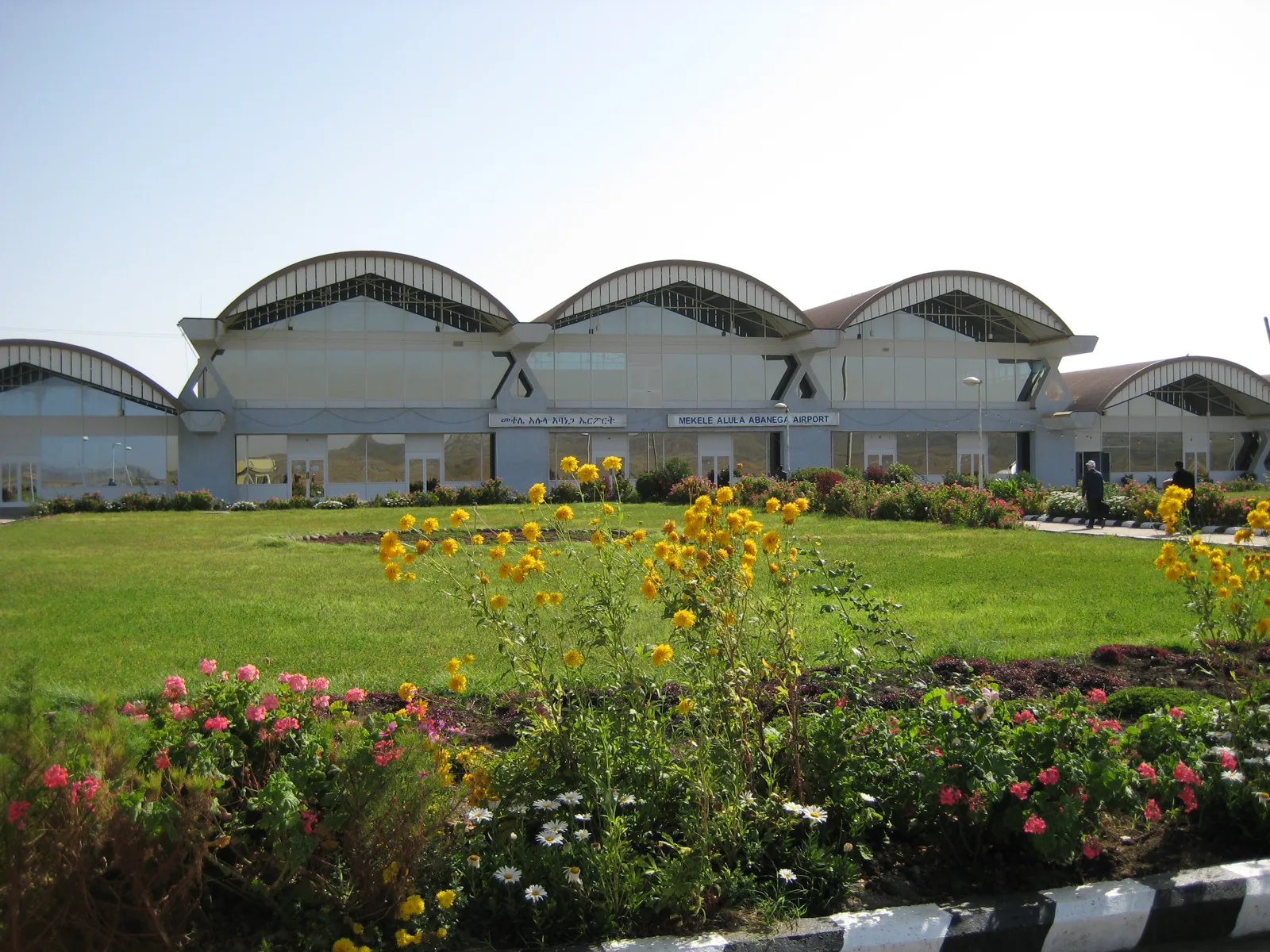
According to a CNBC Africa report dated 23 September, Tigrayan forces seized Mekelle airport overnight and Ethiopian Airlines suspended flights to Mekelle, Shire and Axum; OkayAfrica wrote the same day that all three airports had changed hands, but control of Axum and Shire could not be independently verified. The move came only 3 days after the declaration, announced by Africanews on 21 September, of the 7-group Ethiopian People's Forces Alliance for Survival. The US Ambassador in Addis Ababa on 23 September described the offensive in the north as an unwinnable war and warned of additional sanctions.
On the same 23 September, Libya's National Oil Corporation (NOC) announced that the Petroleum Facilities Guard had cut access to the Zawiya refinery and to Brega Petroleum Marketing, and that the refinery had stopped. According to SEE News, Zawiya's capacity is about 120,000 barrels a day and the country's theoretical total refining capacity about 380,000 barrels; in other words, a single blockade took roughly 32% of installed capacity offline. Valve No. 7 on the Sharara line, closed on 21 September, was also still shut as of 23 September.
In Sudan the break came from outside: according to a report by The National on 22 September, the US State Department said it regards neither the army (SAF) nor the RSF as legitimate rule and did not grant Burhan a UN General Assembly visa. According to 2 sources cited by Daily Nation on 23 September, the visa was tied to a 90-day ceasefire proposal on which the army had raised reservations in July; this condition was not officially confirmed by the United States.
The common denominator: who holds the chokepoint
What connects these three developments is not the war itself but the state's inability to hold on its own 3 kinds of chokepoint that generate revenue and legitimacy (airport, refinery, international podium). Our previous report of 22 September looked at the last mile of fuel; this time the question is who opens and closes the channels that lead to the state's own treasury. In Libya the guards' demand is that their allegiance be transferred from the Defence Ministry to the NOC on a timetable; in other words, the armed structure has put valve, field and refinery on the bargaining table in turn over 10 days since 13 September.
In Ethiopia the picture is graver: an article published in Horn Review on 23 September reads the 7-organisation alliance as a proxy coalition built by Eritrea, but its key evidence rests on anonymous sources and there is no Eritrean response. According to Africanews, the 7 groups stretch from Tigray in the north to the Somali region in the south, and a regional expert says a war on 4 to 5 fronts could strain federal forces. With about 750,000 people still displaced in Tigray according to OkayAfrica, the resumption of fighting turns the humanitarian burden back into a budget line.
Ethiopia: war, the IMF calendar and the bond
Ethiopia's external economic anchor is the 3.4 billion dollar IMF programme approved on 29 July 2024, the same day the currency was floated. According to The Rio Times, with the fifth review completed on 1 July 2026 cumulative disbursements reached about 2.65 billion dollars, and the latest tranche was 464 million dollars. According to a CNBC Africa compilation, the government agreed on a formula of a new 880 million dollar bond, to be repaid in instalments through 2029, for the 1 billion dollar bond on which it defaulted in June 2026; this is a step that comes 30 months after the 33 million dollar coupon default of December 2023.
The exchange rate is the item most exposed to the war. According to The Rio Times, the birr stood at 161.05 to the dollar on 3 September 2026, having lost 12.59% in 12 months; before the float it was around 57 birr, and in August the selling rate at independent bureaux was close to 177 birr. According to the same source, headline inflation rose to 15.3% in July 2026, moving away from a trough of 9.7% in December 2025. The 2020–2022 war took Ethiopia into the G20 Common Framework in January 2021; a second northern war is loading the same channels before the programme has even completed 4 years.
For comparison, Nigeria: according to P.M. News, the CBN cut its policy rate by 350 basis points on 22 September, from 26.5% to 23%. In the same week that one African central bank found room for 350 basis points of easing, Ethiopia's policy calendar is being set by the front line; the axis of divergence on the continent is state capacity, not income level.
Libya: the Italy-bound barrel and the Mediterranean product balance
Libya's crude flows to Europe, especially to Italy. According to a Libya Herald report citing Nova, Libya sold 13,434,662 tonnes of crude to Italy in 2025, covering about a quarter of imports and ranking first; according to UNEM data cited by The Libya Observer, this share rose to 26.8% in January–April 2026, while Italy's total imports were 18.6 million tonnes. The same Libya Herald report notes that in the first 9 months of 2024, 71% of Libya's crude exports went to 5 European countries, led by Italy and Spain.
This means the loss of 130,000 barrels a day at Sharara (about 9% of national output according to SEE News) directly touches the crude basket of Italian refineries. The halt at Zawiya opens a second channel: as long as Libya cannot produce its own products, the west coast turns to product imports, and light crude supply in the Mediterranean shrinks while product demand rises. The daily revenue loss of about 13 million dollars that SEE News calculated on an assumption of 100 dollars a barrel was not confirmed by the NOC; but in a country where 97% of public revenue comes from oil, this loss feeds straight into the payroll.
The Red Sea and Türkiye's two fronts
Ethiopia's war began at a moment when Bab el-Mandeb was already fragile. According to the Al Jazeera Centre for Studies, after taking Mokha on 10 September the Houthis brought a coastal strip of about 5,400 square kilometres under their control; the strait carries about 8% of global oil trade and 15% of total trade. Horn Review's Eritrea framing carries the risk that an escalation between Addis Ababa and Asmara ties 2 separate coasts (Yemen and Eritrea) to the same narrow strait.
Türkiye is directly present in two places in this picture. In Somalia there is the TURKSOM base, naval cooperation and, according to the Somali Digest, a hydrocarbon agreement granting cost recovery of up to 90%; TCG Göksu docked in Mogadishu on 5 September, but according to Somali Guardian anti-Türkiye protests spread in Jubaland in early September. In the Red Sea, according to SETA, Türkiye is a member of the Multinational Maritime Defence Alliance founded in Riyadh on 30 July with 14 founding members. In Libya, exploration agreements signed in 2026 with companies including TPAO put the operational risk of recurring guard blockades on Ankara's agenda.
Probabilities
Scenarios
| Scenario | Probability | Trigger | Market impact |
|---|---|---|---|
| H1The two breaks stay separate | 50% | In Libya, Tripoli announces a timetable for transferring the guards to the NOC and Zawiya and Sharara reopen within days; in Ethiopia fighting stays confined to Tigray and Afar. | Libya's loss of 130,000 barrels a day stays temporary; even if flights in Ethiopia stay suspended, the IMF calendar and the 880 million dollar bond formula are preserved. |
| H2A drawn-out northern war, force majeure in Libya | 35% | Several fronts open between the federal army and the 7-group alliance; the NOC declares force majeure and the blockade spreads to fields such as Wafa and El Feel. | In Ethiopia war spending delays the IMF's sixth review and the birr slides well beyond 161; in Libya salary and fuel distribution is disrupted. |
| H3The Horn links up with the Red Sea | 15% | Addis Ababa ties the alliance to Eritrea and takes a cross-border step; fighting spreads to the Eritrean coast and the Bab el-Mandeb line. | The 5,400-square-kilometre Houthi-held coast and an Eritrean front put the same strait at risk from both sides; Ethiopia's foreign trade via Djibouti is disrupted. |
Module A
Constraints Matrix
STRUCTURAL AVG 4.3 · TACTICAL AVG 2.7Structural constraints dominate: the outcome is set more by these limits than by the actors' preferences.
Hard structural constraintspersistent · beyond the actors' will
Oil-dependent public revenue
5/5In Libya 97% of public revenue comes from oil and gas; oil revenue was 96.1 billion dinars in January–August 2026. With every blockade the state treasury becomes a direct object of bargaining.
The guards' chain of allegiance
4/5The Petroleum Facilities Guard still reports to the Defence Ministry; since 13 September the refinery, valve and fields have been shut in turn around this institutional demand.
FX anchor tied to the IMF programme
4/5About 2.65 billion dollars of Ethiopia's 3.4 billion dollar programme has been drawn; the remaining tranches depend on performance criteria, and war spending is testing them.
Territorial control at Bab el-Mandeb
4/5Since 10 September the Houthis have held about 5,400 square kilometres of coast; the strait carries about 8% of global oil trade.
Tactical frictiontemporary · eases over time
Unverifiable front-line information days
3/5Control of the Axum and Shire airports and the alliance's joint command could not be independently verified; the federal government did not comment in the early hours of 23 September.
Parallel exchange rate gap weeks
3/5In August the birr was around 177 at independent bureaux against an official rate of 161.05 on 3 September; the gap could widen with war news.
The visa condition is not official weeks
2/5That Burhan's visa was tied to a 90-day ceasefire rests on 2 anonymous sources; the United States did not confirm the condition, leaving the frame of the bargaining unclear.
Module B
Signal vs Noise
SIGNAL 75% · NOISE 25%
- SIGNAL
Ethiopia's peace framework collapsed at airport level
On 23 September Mekelle airport changed hands and flights to 3 cities stopped; the 7-group alliance had been declared 3 days earlier.
CNBC Africa — Ethiopian Airlines suspends flights to Tigray region after takeover of Mekelle airport
- SIGNAL
In Libya the blockade has moved from crude to product supply
The Zawiya refinery of about 120,000 barrels a day stopped on 23 September; the loss of 130,000 barrels a day at Sharara continues.
Data: Brent crude oil (futures) ›SEE News — How Sharara and Zawiya closures threaten Libya's oil supply
- SIGNAL
Libya's loss directly touches Italy's crude basket
In January–April 2026 Libya supplied 26.8% of Italy's crude imports.
The Libya Observer — Libya remains Italy's top oil supplier in early 2026
- NOISE
US visa pressure has brought a Sudan ceasefire closer
The army had raised reservations on the 90-day proposal in July; on 23 September a government source called the visa refusal a breach of international law, and the condition was not confirmed by the United States.
Daily Nation — US ties Sudanese army leader's UN visa to ceasefire plan, sources say
Module C
Asset-Class and Positioning Implications
| Asset class | Exposure | Transmission channel | H1 | H2 | H3 | Expected | Conviction | Horizon | What to watch |
|---|---|---|---|---|---|---|---|---|---|
| Sovereign debt | Ethiopia dollar-denominated restructured debt | War spending tests the IMF review calendar and the capacity for instalment repayments through 2029 | − | −− | −− | −1.50 | ●●● | 3–12 months | IMF sixth review announcement and the official–parallel birr gap |
| FX | East African local currencies | Risk on the Red Sea and Djibouti route raises import costs and demand for foreign currency | − | − | −− | −1.15 | ●●● | 0–3 months | Pace at which the official birr rate moves away from 161.05 |
| Commodities | Mediterranean light crude and refined product premium | Sharara and Zawiya losses tighten the crude and product balance of Mediterranean refineries, Italy first | + | ++ | + | +1.35 | ●●● | 0–3 months | NOC force majeure notice and the operating status of the Zawiya refinery |
| Freight & insurance | Red Sea and Bab el-Mandeb routes | Ethiopia–Eritrea escalation, together with the Houthi-held coast, puts the same strait at risk from both sides | 0 | + | ++ | +0.65 | ●●● | 3–12 months | Weekly Bab el-Mandeb transit count and military movement on the Eritrean border |
Second-order effects
And then what?
Starting point
On 23 September Tigrayan forces took Mekelle airport and flights to 3 cities stopped; the peace framework built by the Pretoria Agreement in 2022 became de facto defunct 3 days after the 7-group alliance was declared.
- 1
Public financeswithin days
The federal government commits resources to several fronts in the north and in Afar; the prospect of a war on 4 to 5 fronts makes defence spending the budget's priority item, and the humanitarian burden of about 750,000 displaced people grows.
Watch: Whether Ethiopian Airlines reopens Mekelle services, and any supplementary budget announcement
- 2
FX and inflationwithin weeks
Spending pressure and war news raise demand for foreign currency; the gap between the official birr at 161.05 on 3 September and the parallel rate of about 177 in August widens, and inflation, which rose to 15.3% in July, accelerates.
Watch: Official–parallel birr gap and August–September inflation data
- 3
Sovereign debtwithin months
The sixth review under the IMF's 3.4 billion dollar programme is delayed or its conditions tighten; this weakens the anchor underpinning the new 880 million dollar bond repayable in instalments through 2029 and the agreement with official creditors.
Watch: Announcement of a staff-level agreement on the IMF sixth review
What breaks the chain
If the front freezes on the current line through African Union or US mediation and Mekelle flights reopen, the chain stops at the first step; as long as IMF tranches and gold exports sustain foreign currency supply, the second step stays limited.
Triggers
Thresholds to watch
| Indicator | Threshold | Today | What it means |
|---|---|---|---|
| Brent crude oil (futures) | > 105 | 105.28 | The threshold is crossed if the loss in Libya turns into a force majeure declaration and the gap in Mediterranean light crude supply passes through to the global price. |
| Bab el-Mandeb transits | weekly −20% | 26 | If Ethiopia–Eritrea tension spreads to the Red Sea coast, a second wave of decline in transits is expected. |
| Suez Canal transits | weekly −15% | 42 | If risk in the strait feeds into Suez traffic, costs rise for Türkiye's and Mediterranean ports' trade with Asia. |
Sources
- CNBC Africa — Ethiopian Airlines suspends flights to Tigray region after takeover of Mekelle airport
- OkayAfrica — Today in Africa, 23 September 2026: Tigray forces shatter Ethiopia's peace deal
- The Reporter Ethiopia — US ambassador condemns resumption of 'unwinnable war' in the north
- Africanews — Ethiopia: seven armed groups form anti-government alliance
- Horn Review — The Alliance for Survival as Eritrea's proxy coalition
- The National — SAF and RSF do not represent legitimate rule for Sudan, US says
- Daily Nation — US ties Sudanese army leader's UN visa to ceasefire plan, sources say
- Arab News — Protesting guards shut down major Libya oil refinery
- SEE News — How Sharara and Zawiya closures threaten Libya's oil supply
- Libya Herald — Libya supplied nearly a quarter of Italy's total crude oil imports in 2025
- The Libya Observer — Libya remains Italy's top oil supplier in early 2026
- CNBC Africa — Key events in Ethiopia's journey towards debt restructuring
- The Rio Times — Ethiopia's economy grapples with 161 birr per dollar as IMF support grows
- Al Jazeera Centre for Studies — Expansion and exposure: the paradox of Houthi control of Bab al-Mandeb
- Somali Guardian — Anti-Türkiye protests spread in Somalia after Doolow air strike
- The Somali Digest — Kismayo burns Turkish flags while a warship docks in Mogadishu
- SETA — A new security architecture in the Red Sea?
- P.M. News — CBN cuts interest rate to 23% from 26.5%
Sourcing and verification rules: methodology · Report an error: contact
Related reports
IGeo-Economics·Analysis·Sub-Saharan Africa
On the Indian Ocean's western rim, the same fuel gap is paid with three separate bills: refinery capital, maritime security and an IMF tranche
On 26 September 2,930 tonnes of refinery machinery landed at Lamu; on 25 September Puntland freed Sibu 1, carrying 228,000 barrels of diesel, after 36 days; on 26 September the IMF mission moved to Islamabad. The common denominator is the cost of depending on imported refined products.
Africa Desk · 27 September 2026 · 7 min
IIIConflict & Defence·Analysis·Middle East and North Africa
Yanbu's shield goes multinational: the US held back on 21 September, Greek Patriots and French radar arrived, Türkiye at the table without parliament's approval
With only 9 transits through Hormuz on 24 September, Yanbu, the second gateway for Gulf exports, saw 3 waves of attacks in 14 days. Its protection no longer depends on a single ally: Greece, France and the three chiefs of staff of the Mecca pact stepped in the same week.
Middle East Desk · 26 September 2026 · 7 min
IIIConflict & Defence·Analysis·Türkiye and Its Neighbourhood
Türkiye's military presence becomes a bargaining chip at three tables: the Bashiqa handover, parliamentary approval in Syria, 226 ships in the Black Sea
On 22–23 September Iraq tied the phased handover of the Bashiqa base to Sinjar and the 1,200 km Development Road, Damascus proposed parliamentary approval for Turkish bases, and the Cairo trilateral agreed to jointly protect energy infrastructure. Ships attacked in the Black Sea reached 226.
Türkiye & Neighbourhood Desk · 24 September 2026 · 7 min