VI Energy Politics & Supply Security·Analysis·Middle East and North Africa
Oil's binding constraint is now ships, not barrels
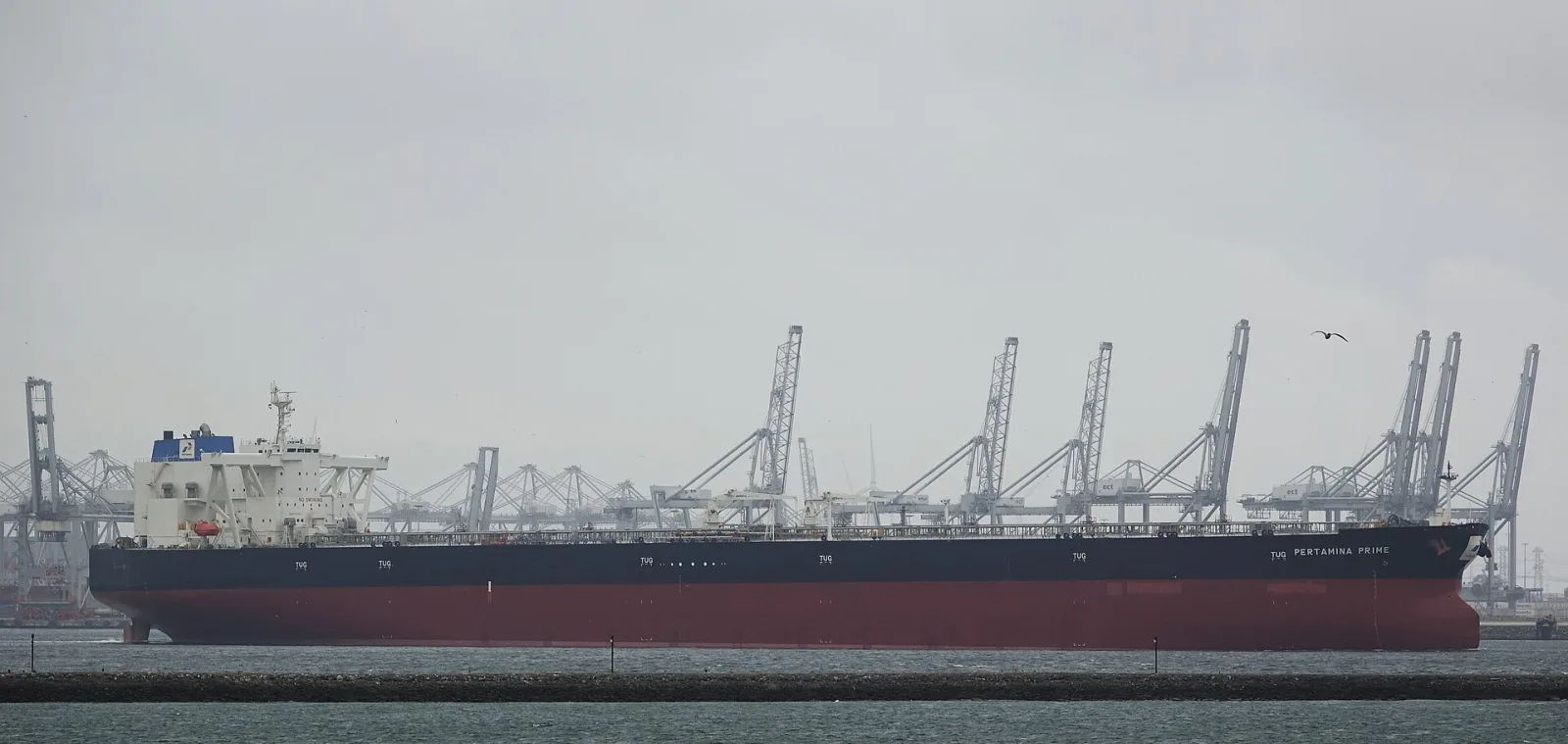
Supertanker hire from the Gulf to East Asia hit a record $1.4 million a day on 7 October, against roughly $30,000 in January. The workaround for Hormuz is tying up the fleet, freight now exceeds a quarter of delivered cost, and US crude is being priced out of Asia.
Energy & Shipping Desk · 12 October 2026 · 7 min read · 13 sources
Why it matters
The noise: Middle East crude exports briefly topped pre-war levels in late September, so the supply problem is solved. The signal: the constraint has moved from barrels to ships. Gulf–East Asia supertanker hire reached $1.4 million a day on 7 October, against roughly $30,000 in January. Freight now accounts for 27% of delivered cost. US–China freight is close to $40 a barrel, and Asia is paying an $11 premium over Dubai for Murban. The threshold is no longer volume but the number of ships available.
Implications
- Supertanker hire on the Gulf–East Asia route set a record of about $1.4 million a day on 7 October. Rates rose 40% in the first week of October alone and are more than 40 times their early-January level.
- A 2-million-barrel November voyage from the US Gulf to China was fixed at $80 million, or about $40 a barrel, against $8.60 before the war. Asian refiners are switching from US crude to Murban.
- Türkiye's August energy bill rose 33.8% to $6.46 billion even as crude import volumes fell 1.1%. Freight spilling over into smaller tankers is likely to sustain that pattern through September and October.
Noise
Middle East exports have topped pre-war levels, so the supply problem is solved.
Signal
The constraint has moved from barrels to ships.
The noise is in volumes, the signal in ships
The headlines are about volumes. Fearnleys data cited by Oilprice on 8 October show regional Middle East crude exports exceeding pre-war levels for a few days in late September. Kpler data in our 8 October event record put exports from the Gulf of Oman and Red Sea outlets at 6.7 million barrels a day. That is more than double the pre-war figure. The barrels appear to be reaching the market.
The shipping market told a different story the same week. Bloomberg data show hire for a VLCC, a supertanker carrying 2 million barrels, on the Gulf–East Asia route hitting an all-time high of about $1.4 million a day on 7 October. According to an Oilprice analysis on 10 October, the rate rose about 40% in the first week of October alone. September's record had been just above $1 million a day. Poten & Partners data cited by Gulf News put the same route at about $30,000 a day in early January. Clarksons puts average global VLCC spot earnings close to $642,000 a day.
The constraint sits in the transshipment system
What is swallowing ships is not Hormuz itself but the system built to get around it. UKMTO data in our 10 October event record show 129 exits and 146 entries through the strait in the 7 days to 9 October, 275 transits in all. Before the war, ABC News reports, more than 100 merchant vessels passed each day. Kpler data cited by Al Jazeera put crude moving through the strait at 8.5 million barrels a day in the week to 7 October, roughly 40% below normal.
According to Oilprice, much of the global tanker fleet is now tied to ship-to-ship transfers outside the strait, and more vessels get locked in as flows recover. A 2-million-barrel cargo loaded inside Hormuz and transferred to a second ship outside ties up 2 vessels for one barrel, plus extra waiting time. Vitol chief executive Russell Hardy told the FT the arrangement is highly inefficient and there are not enough ships to go round. Sparta Commodities analysis cited by the Daily Caller shows US Gulf–Asia rates up more than 300% since mid-August.
The threshold: once freight exceeds the price spread, the route closes
The threshold for this constraint shows up in routes rather than prices. Simpson Spence Young data cited by the Daily Caller show a 2-million-barrel November voyage from the US Gulf to China fixed at $80 million in early October. That is about $40 a barrel, against $8.60 before the war. Japan's Cosmo Oil provisionally took a supertanker at $81 million for 19–21 November loading. According to Oilprice, the arbitrage for shipping US crude to Asia has effectively closed at these levels.
Asia's answer has been to turn back to the Gulf, and that turn has been priced. Reuters reports that ADNOC set Murban's official selling price for November at an $11 premium to Dubai on 8 October. According to Oilprice, the market premium also climbed back above $11 the same day. EIA data put US crude exports at about 4.8 million barrels a day in the week to 2 October. If the Asian door closes, that volume swings back to the Atlantic.
Freight has become a price component in its own right. On Poten's numbers, a rate of $1.3 million a day equates to about $33 a barrel, assuming $120 Brent, or 27% of delivered cost. In January the share was 3% and the cost $1.73. Matching contract months, ICE Brent's December future (LCOZ6) settled at $100.58 on 6 October, while the EIA Brent spot series stood at $125.44. The $24.86 gap shows how much more a physical barrel costs to deliver than a paper one.
Second-order effects · from the Atlantic to the Mediterranean bill
The VLCC shortage is spilling over into smaller ships. Oilprice reported on 8 October that Suezmax and Aframax day rates also rose as buyers and sellers moved to smaller tankers. Argus, cited in Oilprice's 10 October analysis, says freight premiums are adding tens of dollars a barrel to the cost of delivered crude. Both classes that carry crude into the Mediterranean are now part of the same shortage.
Türkiye sits at the end of this chain. According to AA, the energy import bill rose 33.8% year on year in August to $6.46 billion, while crude import volumes fell 1.1% to 2.84 million tonnes. The Trade Ministry's preliminary September data show total imports up 5.9% at $31.2 billion. Exports covered 83.2% of imports, and 100.3% excluding energy. Energy accounts for almost the entire external gap. The detail of September's energy bill will come with TÜİK's release on 30 October.
What would disprove this reading
Our thesis is that over the next 3 months the binding constraint on Gulf oil will be ships rather than volume, with the cost passing through freight into delivered prices. We see this as the most likely path, at 50%. The first disconfirmer: if UKMTO's weekly Hormuz count rises from 275 transits to above 500, the need for transshipment falls and ships are released. The second: if VLCC hire on the Gulf–East Asia route drops below $500,000 a day within 4 weeks while transits stay low, the constraint is not in ships.
The third disconfirmer is on price. If ADNOC's December Murban price, due in early November, comes in at a premium below $5 to Dubai, Asia is not paying a ship-scarcity premium for Gulf barrels. The risk in the other direction is clear. The tanker fire off Fujairah on 8 October and strikes on 2 outbound tankers on 10–11 October show that the transfer zone is also a target. If that zone is hit, the constraint shifts from ships back to physical supply.
Probabilities
Scenarios
| Scenario | Probability | Trigger | Market impact |
|---|---|---|---|
| H1Ship scarcity becomes entrenched | 50% | The transshipment system persists, UKMTO's weekly transit count stays below 300 and VLCC hire holds above $1 million a day. | Asia stays locked into Gulf barrels and US crude swings back to the Atlantic. The constraint is carried through freight and delivered prices. |
| H2The transfer zone becomes a target | 30% | Strikes on tankers continue in the Gulf of Oman transfer zone and off Fujairah, and owners pull their ships out of the area. | Ship scarcity turns into a loss of physical supply. Gulf exports fall at the outlets beyond Hormuz as well. |
| H3Direct passage resumes | 20% | A transit arrangement between the US and Iran is announced and UKMTO's weekly count exceeds 500 transits. | The need for transshipment fades, tied-up ships are released and US crude reaches Asia again. |
Module A
Constraints Matrix
STRUCTURAL AVG 4.3 · TACTICAL AVG 2.8Structural constraints dominate: the outcome is set more by these limits than by the actors' preferences.
Hard structural constraintspersistent · beyond the actors' will
Direct passage is narrow · Iran
5/5UKMTO counted 275 Hormuz transits in the 7 days to 9 October; before the war, more than 100 merchant vessels passed each day. Crude moving through the strait was 8.5 million barrels a day in the week to 7 October.
Transshipment ties up the fleet
4/5Ship-to-ship transfers outside the strait mean 2 vessels and extra waiting time for a single 2-million-barrel cargo. According to Vitol, there are not enough ships to go round.
Distant-route economics have broken down · United States
4/5US Gulf–China freight was about $40 a barrel in early October, against $8.60 before the war. According to Oilprice, the arbitrage has effectively closed.
Attacks have moved closer to the transfer zone · Iran
4/5A tanker caught fire 40 km off Fujairah on 8 October; on 10 and 11 October 2 outbound tankers were hit. UKMTO did not name a perpetrator.
Tactical frictiontemporary · eases over time
Record VLCC hire weeks
4/5Gulf–East Asia VLCC hire was $1.4 million a day on 7 October, against about $30,000 in early January. Freight is 27% of delivered cost.
Scarcity has spread to smaller tankers weeks
3/5According to Oilprice, Suezmax and Aframax rates also rose in the week of 8 October. Argus says freight premiums add tens of dollars a barrel to delivered cost.
Transit counts depend on method days
2/5IMF PortWatch's AIS-based count showed 4 transits on 4 October, while UKMTO's 7-day count equates to an average of about 39 transits a day.
Premium measures diverge months
2/5Murban's November official price is Dubai +$11; according to Energies Media, the spot premium for East Asia delivery exceeded $30 in September.
Module B
Signal vs Noise
SIGNAL 67% · NOISE 33%
- NOISE
Middle East exports have topped pre-war levels, so the supply problem is solved.
According to Fearnleys, regional crude exports exceeded pre-war levels for a few days in late September; Kpler puts Gulf of Oman and Red Sea outflows at 6.7 million barrels a day. VLCC hire set a record the same week.
- SIGNAL
The constraint has moved from barrels to ships.
Gulf–East Asia VLCC hire is about $1.3–1.4 million a day, against roughly $30,000 in January. Freight is $33 a barrel and 27% of delivered cost, up from 3% in January.
- SIGNAL
Freight is closing the distant route.
A 2-million-barrel November voyage from the US Gulf to China cost $80 million, about $40 a barrel, against $8.60 before the war. Rates are up more than 300% since mid-August.
Daily Caller (Reuters) — Record $80,000,000 Shipping Bills Are Pricing American Oil Out Of Asia
- SIGNAL
Asia is paying a premium for Gulf barrels loading outside Hormuz.
On 8 October ADNOC set Murban's November official price at an $11 premium to Dubai; the market premium also topped $11 the same day.
Dawn (Reuters) — UAE's ADNOC raises Murban crude oil price to $11 over Dubai quotes
- NOISE
Only 4 ships a day are passing through Hormuz.
IMF PortWatch's AIS-based count shows 4 transits on 4 October; UKMTO's 7-day count to 9 October shows 275. The gap comes from ships switching off their transponders and from method.
Data: Strait of Hormuz transits ›Straits.live — Strait of Hormuz Status, October 11, 2026 (IMF PortWatch data)
- SIGNAL
The gap between physical and paper barrels reflects delivery cost.
On 6 October EIA Brent spot was $125.44 and ICE Brent's December future $100.58, a gap of $24.86.
Data: Brent crude oil (spot) ›FRED (EIA) — Crude Oil Prices: Brent - Europe (DCOILBRENTEU)
Module C
Asset-Class and Positioning Implications
| Asset class | Exposure | Transmission channel | H1 | H2 | H3 | Expected | Conviction | Horizon | What to watch |
|---|---|---|---|---|---|---|---|---|---|
| Freight & insurance | VLCC time-charter rates | The transshipment system outside Hormuz tying up the fleet | ++ | ++ | −− | +1.20 | ●●● | 0–3 months | Gulf–East Asia VLCC daily hire relative to the $1 million level |
| Freight & insurance | Suezmax and Aframax freight | VLCC scarcity spilling over to smaller ships on Atlantic and Mediterranean routes | + | ++ | − | +0.90 | ●●● | 0–3 months | Fearnleys and Clarksons weekly Suezmax and Aframax earnings |
| Commodities | Physical crude premium | Freight feeding into delivered prices | + | ++ | −− | +0.70 | ●●● | 0–3 months | The gap between EIA Brent spot and ICE Brent's December future relative to $10 |
| Commodities | Middle East crude price differentials | Asian demand moving from US crude to Gulf barrels loading outside Hormuz | + | + | − | +0.60 | ●●● | 0–3 months | ADNOC and Aramco official selling prices for December |
| Credit | Credit of energy-importing emerging economies | Energy bills and FX demand growing with delivered costs | − | −− | + | −0.90 | ●●● | 3–12 months | TÜİK's September energy import bill, due on 30 October |
Second-order effects
And then what?
Starting point
Gulf–East Asia supertanker hire hit a record $1.4 million a day on 7 October. The transshipment system outside Hormuz is tying up the fleet, and freight has risen to about 27% of delivered cost.
- 1
Crude price differentialswithin weeks
With US Gulf–Asia freight nearing $40 a barrel, the distant route closes. Asian refiners turn to barrels from the Gulf's outlets beyond Hormuz, and the premium on those barrels rises.
Watch: Where ADNOC's December Murban price, due in early November, lands relative to Dubai +$11
- 2
Freight and insurancewithin weeks
Demand for Gulf barrels again runs through the transshipment system. More VLCCs are drawn into the region, Atlantic business shifts to Suezmaxes and Aframaxes, and smaller-tanker rates rise too.
Watch: Clarksons and Fearnleys weekly Suezmax and Aframax spot earnings
- 3
External balancewithin months
Dearer small tankers bringing crude into the Mediterranean enlarge importers' bills even as volumes fall. In Türkiye, August's $6.46 billion pattern carries on into September and October.
Watch: TÜİK's September energy import bill and crude import volumes, due on 30 October
What breaks the chain
If UKMTO's weekly Hormuz count rises from 275 transits to above 500, the need for transshipment falls, ships are released, VLCC hire drops and the chain stops at the first step.
Triggers
Thresholds to watch
| Indicator | Threshold | Today | What it means |
|---|---|---|---|
| Strait of Hormuz transits | > 20 transits/day | 4 | If IMF PortWatch's AIS-based daily count rises from 4 transits on 4 October to above 20, direct passage is visibly returning and the need for transshipment is easing. |
| Brent crude oil (futures) | > $110 | 104.72 | A move in ICE Brent's December future (LCOZ6) above $110, from its $104.72 settlement on 9 October, would show the ship shortage turning into a loss of physical supply. |
| Brent crude oil (spot) | Spot−futures < $10 | 125.44 | A narrowing of the gap between EIA Brent spot and the same day's December future below $10, from $24.86 on 6 October, would signal that the delivery constraint is easing. |
Sources
- Oilprice — Supertanker Rates Hit Record $1.4 Million a Day
- Oilprice — Tanker Rates Soar to Record as Oil Crisis Becomes Shipping Crisis
- Oilprice — Asian Refiners Ditch U.S. Oil as Supertanker Rates Hit $82 Million
- Gulf News — Tanker costs soar 43-fold as Hormuz tensions reshape global oil trade (Poten, Clarksons data)
- Daily Caller (Reuters) — Record $80,000,000 Shipping Bills Are Pricing American Oil Out Of Asia
- Dawn (Reuters) — UAE's ADNOC raises Murban crude oil price to $11 over Dubai quotes
- Al Jazeera — Hormuz attacks intensify as efforts to end war on Iran stall
- ABC News (Australia) — Shipping companies offering captains $US100k a month to transit Strait of Hormuz
- Straits.live — Strait of Hormuz Status, October 11, 2026 (IMF PortWatch data)
- FRED (EIA) — Crude Oil Prices: Brent - Europe (DCOILBRENTEU)
- Investing.com — Brent Oil Futures Historical Data (LCOZ6, December 2026 contract)
- AA — Energy import bill rose 33.8% in August
- Trade Ministry of Türkiye — Foreign Trade Data Bulletin, September 2026
Sourcing and verification rules: methodology · Report an error: contact
Related reports
VIEnergy & Supply·Analysis·Eurasia
Russian diesel has its licence; refineries and terminals remain the bottleneck
On 9 October the US licensed Russian diesel until April 2027, and Moscow approved 500,000 tonnes of exports the next day. Russian exports had fallen to 190,000 barrels a day in the third quarter. That same night a 2.5 million-tonne export terminal in Rostov went up in flames.
Energy & Shipping Desk · 11 October 2026 · 8 min
VIEnergy & Supply·Analysis·Eurasia
Four-fifths of Kazakhstan's oil hangs on one terminal in a war zone
Kazakhstan exported 64.8 million tonnes of oil through the CPC terminal at Novorossiysk in 2025. When storage filled in July, output fell 21% the next day. A trans-Caspian route would at best carry half that volume; the near-term alternative is capped at 100,000 tonnes a month.
Energy & Shipping Desk · 10 October 2026 · 8 min
VIEnergy & Supply·Analysis·Middle East and North Africa
Iranian oil hinges on reservoirs and tankers, not on a peace deal
Iran's output fell to 2.16 million barrels a day in August, close to domestic demand. Washington blacklisted 17 more tankers on 8 October. Even if a deal reopens Hormuz, Iran's early exportable surplus is a small fraction of its pre-war level.
Energy & Shipping Desk · 9 October 2026 · 8 min