HighI Geo-Economics & Chokepoints14 October 2026, Wednesday
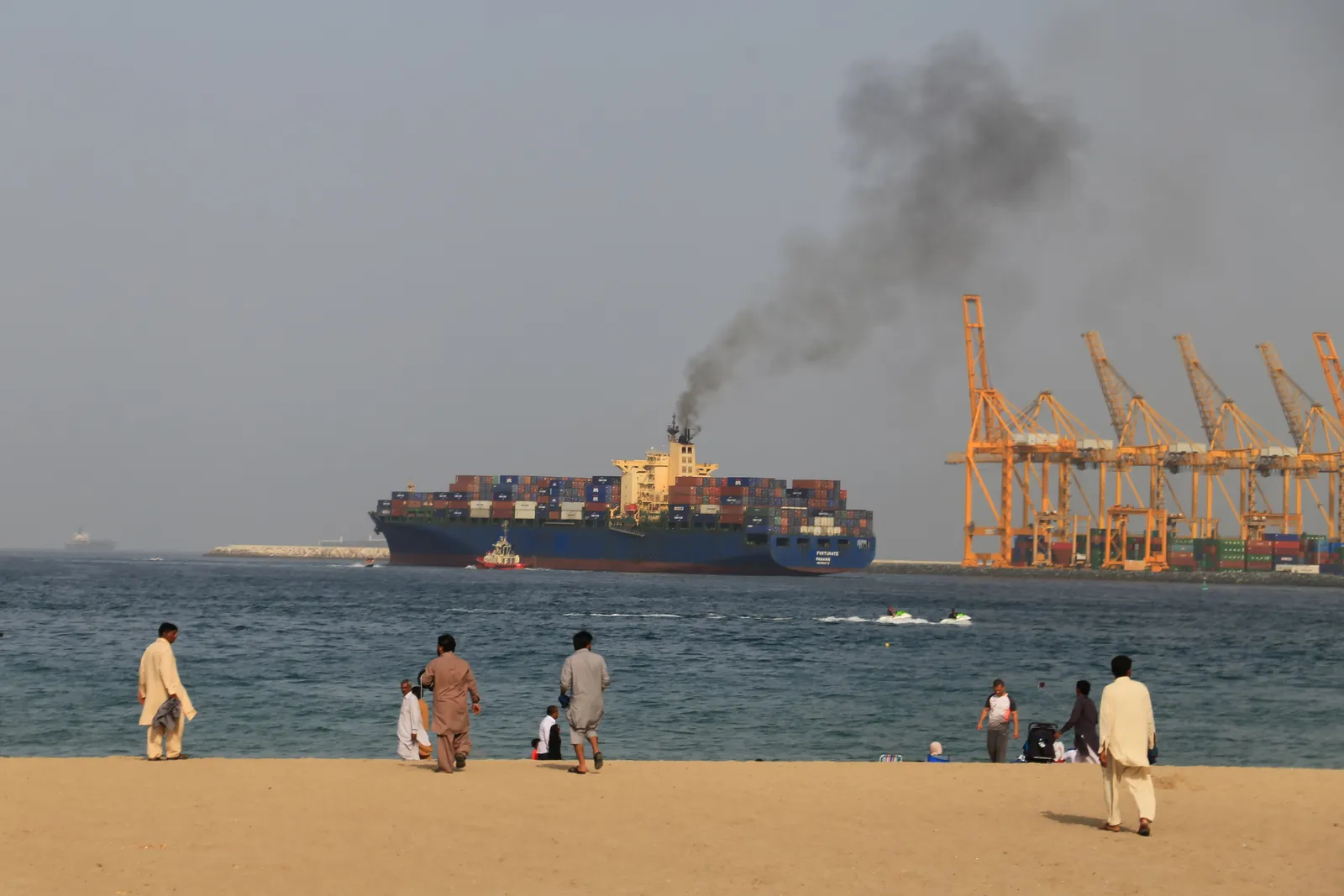
Container ship GFS Pride sinks after being struck in Hormuz
The Singapore-flagged GFS Pride, a 2,824 TEU vessel, was hit by a projectile on 13 October and sank on 14 October; all 21 crew were rescued. According to JMIC, US-escorted transits ran at about 30 a day between 11 and 14 October, against a pre-war average of 138.
According to a Reuters report on 14 October citing maritime security sources, GFS Pride is a 2,824 TEU container ship operated by UAE-based GFS Ship Management FZE. The National says the vessel was struck on 13 October by an unidentified projectile, caught fire and sank on 14 October. Singapore's maritime authority says all 21 crew were evacuated unharmed. Sister ship GFS Giselle was damaged in the same wave of attacks but reached anchorage. Reuters adds that the Antigua and Barbuda-flagged Cape Dao, struck on 23 September, is also sinking near the strait.
The two sides give conflicting accounts of the sinking. The Revolutionary Guards said the ship hit a mine on an unauthorised route and was carrying more than 2,500 containers; the cargo claim could not be verified. CENTCOM said on 15 October that the ship was hit by a Revolutionary Guards projectile and that the main routes are clear of mines. JMIC says it has found no evidence to support the mine claim but maintains its warning of possible mining near the traffic separation scheme. According to the Reuters report carried by The National, 2 senior Iranian officials said ships would not be safe outside the strait either.
Transit data also vary by source. JMIC data cited by gCaptain show 121 US-escorted transits between 11 and 14 October, about 30 a day and roughly 22% of the 2025 pre-war average. CENTCOM said more than 40 commercial vessels passed in the previous 24 hours; the period differs, and independent tracking shows single-digit daily movements. JMIC has recorded 149 verified vessel incidents since 1 March, while the IMO counted 113 incidents and 24 seafarer deaths as of 14 October. Some 180 ships are waiting at anchor off Fujairah and Khor Fakkan.
Talay assessment
Bottom line
Attacks have widened from tankers to container ships, and for the first time a container ship has sunk. With transits at roughly a fifth of pre-war levels, Iran is blaming the sinking on a mine, casting the route itself as dangerous. The mine claim is unverified, but the claim alone feeds into underwriters' pricing; the most likely path is that transits stay low.
Likely effects
- Container shippingNegativeWeeks
The loss of a container ship spreads war-risk pricing beyond tankers; container services to Gulf ports face added premiums and a higher risk of delay.
- Hormuz transitsNegativeWeeks
JMIC's figure of about 30 transits a day is 22% of the pre-war 138; with 180 ships waiting off Fujairah, the bottleneck is security, not capacity.
- TürkiyeNegative1–6 months
Added premiums and delays on container cargo from the Gulf raise Turkish importers' costs for intermediate goods and lengthen delivery times.
Possibilities, ranked
- 1Siege continues with low transits55%
Attacks continue at a few ships a week, and US-escorted transits stay in a 20–40 a day range.
Watch: JMIC weekly advisory notes and UKMTO incident reports
- 2Mine threat cuts transits30%
Mines are confirmed in the traffic separation scheme and escorted transits fall below 20 a day.
Watch: A JMIC or CENTCOM statement on mine detection
- 3Transit arrangement curbs attacks15%
A transit arrangement between the US and Iran makes progress and attacks become less frequent.
Watch: The IMF PortWatch daily Hormuz transit series
Probabilities are calibrated judgement based on the sources, not measurement, and are revised as new information arrives. Not investment advice.
Market reaction
Indicators affected
- US-escorted transits (11–14 Oct)▼ ~30 a day
- Vessel incidents since March (JMIC)▼ 149
Historical context
Strait of Hormuz transits, last 6 months
- 109/09 · US and Iran strike tankers in the largest wave of attacks on shipping since the war began
- 213/09 · Panama-flagged tanker El Gaia struck off Oman, two crew members missing
- 314/09 · Ship-tracking data at Hormuz contradict the US Energy Secretary's claim of 10 million barrels a day in flows
- 417/09 · European gas storage enters winter 68.5% full as TTF traded in a 77-79 euro band on 17 September
- 522/09 · Brent falls from 104.82 dollars on 17 September to 100.05 dollars on 22 September as Hormuz transit data conflict
- 622/09 · Iran puts an offer to reopen Hormuz within 7 days on the table; the same day a parliamentary committee approves fines of 20% of cargo for violators
- 722/09 · Trump meets 12 regional countries including Türkiye at the UN, US and Iranian delegations talk for 3 hours; Tehran sets 3 conditions on Hormuz
- 823/09 · Bulk carrier Cape Dao hit by two projectiles in the Strait of Hormuz, 1 Indian seafarer killed; IMO counts 83 attacks and 23 deaths since the conflict began
- 923/09 · Iran raises its conditions for reopening Hormuz to 7; according to Kpler, only 3 commodity vessels transited the strait on 22 September
- 1024/09 · 10 commodity vessels crossed the Strait of Hormuz on 23 September, 9 of them inbound to the Gulf; preliminary data for 22 September revised from 3 to 7 ships
- 1124/09 · Tracked Hormuz transits fell to 9 on 24 September, 8 of them outbound; 23 September revised from 10 to 14, while The National gave 13 for the same day
- 1226/09 · Trump says 29 ships left Hormuz overnight; independent tracking data show single-digit transits, barrel estimates range from 3.7 to 16.4 million
- 1328/09 · More than half of Hormuz transits now happen with transponders off
- 1429/09 · Tankers are hit in Hormuz, yet transits still rise to 17
- 1504/10 · Hormuz tanker attacks turn almost daily, yet transits still rise
- 1605/10 · Estimates of oil flowing through Hormuz diverge by up to fivefold
- 1707/10 · Tanker struck off Qatar as attacks move deeper into the Gulf
- 1807/10 · Iran threatens to close Hormuz routes along Oman's coast
- 1908/10 · Hormuz transits fall to a two-month low